
Choosing an office chair might seem simple, but many people overlook a key detail: weight capacity. Office chairs are not all the same. If you pick a chair that cannot support your body weight, it can break, cause injuries, or lead to back pain. This guide explains everything about office chair weight capacity—why it matters, how to choose the right one, and what happens if you make the wrong choice. You’ll also learn about different chair types, special features, and the best practices for safe, comfortable seating at work.
What Is Office Chair Weight Capacity?
The weight capacity of an office chair is the maximum weight the chair is designed to support safely. Manufacturers test chairs for strength and durability, then set a limit. Most standard office chairs have a weight capacity between 250 and 300 pounds (113–136 kg). Some chairs are built for heavier users, with limits up to 500 pounds (227 kg) or more.
Weight capacity is not just about avoiding breakage. Exceeding the limit can also cause the chair’s parts to wear out faster, reduce comfort, and increase the risk of injury. Always check the chair’s specifications before buying, especially if you or your staff have different body types.
Why Weight Capacity Matters
Ignoring weight capacity can lead to real problems:
- Safety Risks: Sitting on a chair that cannot support your weight may cause sudden failure. This can result in falls, injuries, and even legal issues at work.
- Warranty Issues: Using a chair over its capacity often voids the warranty. If it breaks, you might have to pay for repairs or replacement.
- Comfort and Ergonomics: Chairs designed for higher weight limits usually have thicker cushions, stronger frames, and better support. This helps prevent discomfort and health issues.
- Longevity: An overloaded chair wears out faster. Investing in the right weight capacity extends the life of your office furniture.
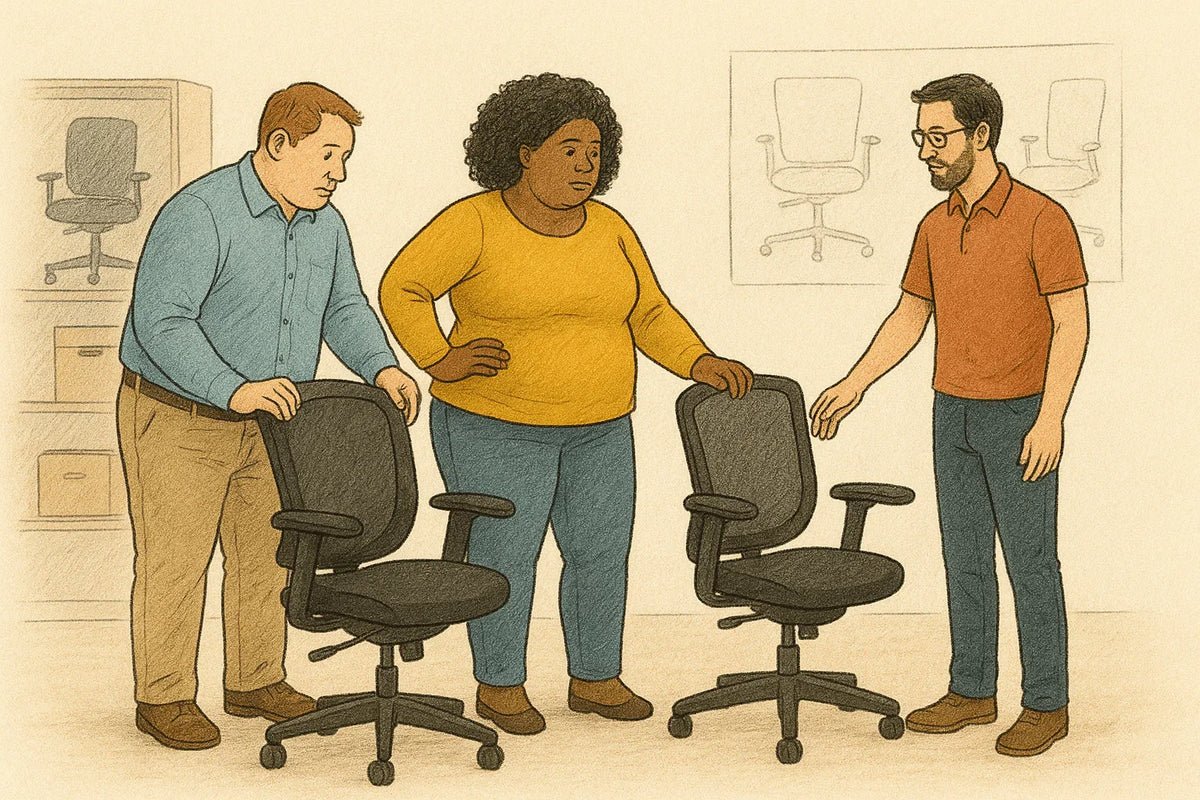
Many beginners miss that weight capacity is not the same as “comfortable for any user. ” Even if you fit, the wrong chair can cause back pain or posture problems.
Credit: sunaofe.com
Standard Office Chair Weight Limits
Most workplaces use standard office chairs. Here’s a breakdown of common limits:
| Chair Type | Typical Weight Capacity | Who It’s For |
|---|---|---|
| Standard Task Chair | 250–275 lbs (113–125 kg) | General office workers |
| Executive Chair | 250–300 lbs (113–136 kg) | Managers, executives |
| Big and Tall Chair | 350–500 lbs (159–227 kg) | Larger or heavier users |
| Stool or Drafting Chair | 200–250 lbs (90–113 kg) | Artists, architects, labs |
You can see that big and tall chairs have much higher limits, while stools usually support less. Always check with the manufacturer for the exact number.
How To Find The Right Chair For Your Weight
Choosing the best office chair is about more than style. Here’s what you should do:
- Know Your Weight: Be honest about your body weight, including clothes and shoes.
- Check the Chair’s Limit: Look for the manufacturer’s specifications online or on the box.
- Allow a Margin: It’s wise to choose a chair with a capacity at least 10–15% higher than your actual weight. This ensures extra safety and comfort.
- Consider Future Needs: If your weight changes or others will use the chair, pick a higher capacity.
- Test the Chair: If possible, sit in the chair before buying. Feel for sturdiness and comfort.
Example
If you weigh 220 pounds (100 kg), a standard chair (250 lbs) might work, but a 300-lb capacity gives extra safety. For shared spaces, always choose the higher capacity.
Types Of Office Chairs By Weight Capacity
There are several categories of office chairs. Each one has a different design focus.
Standard Office Chairs
These are the most common and cost-effective. They use lighter materials and basic padding. Most support up to 250 lbs (113 kg). Good for average users, but not for heavier people.
Big And Tall Chairs
Big and tall chairs are specially built for larger users. They have:
- Wider seats and backs
- Heavier frames (often steel)
- Thicker cushions
- Reinforced wheels and bases
Their weight limits range from 350 to 500 lbs (159–227 kg). These chairs also offer better ergonomic support for heavier people, reducing back strain.
Heavy-duty (24/7) Chairs
Some jobs require sitting for long hours, such as call centers or security desks. 24/7 chairs use industrial-grade materials. They often support 400–500 lbs and are tested for continuous use. These are ideal if the chair will be used by many people in shifts.
Specialty Chairs
Certain chairs, like saddle stools or kneeling chairs, have lower weight capacities (usually 200–250 lbs). They are not designed for all-day use or heavy users.
Key Features That Affect Weight Capacity
Not all chairs with the same weight limit feel the same. The following features make a big difference:
- Base Material: Steel and aluminum bases support more weight than plastic.
- Gas Lift Cylinder: The cylinder (for height adjustment) must be rated for high weight.
- Casters/Wheels: Larger, reinforced wheels roll better under heavy loads.
- Seat Width and Depth: Wider seats provide stability for larger users.
- Armrests and Back Support: Strong, well-attached armrests add safety.
Many buyers forget to check if the gas lift and casters are also rated for higher weight. Weak points in these parts cause most failures.
Credit: nulifechairs.com
What Happens If You Exceed The Weight Limit?
Exceeding the weight limit can cause:
- Sudden breakage (legs, base, or backrest)
- Sinking seat or stuck height adjustment
- Loose or bent armrests
- Worn-out wheels
- Unstable feeling
It also voids most warranties and may not be covered by office insurance. If you share chairs at work, always choose models with the highest expected user weight.
How Manufacturers Test Weight Capacity
Reputable brands use industry standards like BIFMA (Business and Institutional Furniture Manufacturers Association) for testing. They place heavy loads on the chair thousands of times to simulate years of use.
Some common tests include:
- Static load test (placing a heavy weight for several minutes)
- Drop test (sudden weight impact)
- Backrest and armrest strength tests
Always look for chairs with BIFMA or similar certifications. They are safer and last longer.
Comparison: Standard Vs. Big And Tall Chairs
Here’s a quick side-by-side look at how standard and big and tall chairs differ:
| Feature | Standard Chair | Big and Tall Chair |
|---|---|---|
| Weight Capacity | 250–300 lbs | 350–500 lbs |
| Seat Width | 18–21 inches | 22–30 inches |
| Base Material | Plastic/Aluminum | Steel/Heavy Aluminum |
| Cushion Thickness | 2–3 inches | 3–5 inches |
| Price Range | $100–$300 | $250–$800 |
The extra cost of big and tall chairs is worth it for comfort, safety, and durability.
Common Mistakes When Choosing Chair Weight Capacity
Many buyers, especially first-timers, make these errors:
- Only checking the seat, not the base or wheels. The weakest part usually fails first.
- Ignoring shared use. If more than one person uses the chair, pick for the heaviest user.
- Assuming all chairs are equal. A cheap chair with a “high” limit may not be as safe as a certified model.
- Overlooking certifications. BIFMA or ANSI certification means better safety.
- Choosing by price only. Saving money on the wrong chair leads to higher costs later.
A non-obvious tip: Some people put extra pressure on a chair’s armrests when standing up. If you do this, make sure both the arms and the frame are reinforced, not just the seat.
Signs Your Chair Is Overloaded
It’s not always obvious when a chair is struggling. Watch for these signs:
- Creaking or popping noises during use
- Seat cushion flattening quickly
- Wobbly armrests or base
- Difficulty rolling across the floor
- Height adjustment slipping
If you notice any of these, it’s time to upgrade to a more suitable chair.
Tips To Extend Chair Life
No matter the weight limit, you can make your chair last longer:
- Use a chair mat on carpet to reduce wheel stress
- Tighten screws every few months
- Clean and lubricate moving parts
- Avoid leaning back too far or sitting on the edge
- Distribute weight evenly when sitting
Most people never check the screws or casters, but these small actions prevent early failure.
Credit: nulifechairs.com
How To Check A Chair’s Weight Capacity Before Buying
Here’s how to find the real limit:
- Read the label: Most chairs have a sticker under the seat.
- Check the manual: Look for “maximum weight capacity.”
- Visit the manufacturer’s website: Find the model and specs.
- Ask customer support: For older or second-hand chairs, send a photo and ask.
- Look for certifications: BIFMA, ANSI, or ISO testing means the weight limit is real.
If you cannot find a clear answer, do not risk it—choose a different chair.
Popular Office Chairs And Their Weight Capacities
To help you compare, here are some well-known chairs and their limits:
| Model | Weight Capacity | Best For |
|---|---|---|
| Herman Miller Aeron | 350 lbs (159 kg) | Design, comfort, durability |
| Steelcase Leap | 400 lbs (181 kg) | All-day work, heavy use |
| HON Ignition 2.0 | 300 lbs (136 kg) | Standard offices |
| Flash Furniture Big & Tall | 500 lbs (227 kg) | Larger users, heavy duty |
| Office Star ProGrid | 250 lbs (113 kg) | Budget, small offices |
Always compare models and check user reviews for real-world durability.
Extra Insights For Office Managers
If you buy chairs for a team or company, consider these:
- Survey your team for height and weight before ordering.
- Order a mix of standard and big and tall chairs for flexibility.
- Keep records of each chair’s specs for maintenance and insurance.
- Train staff on proper chair use and adjustments.
Many offices forget that chair failures can cause workplace injuries and downtime. Smart planning saves money and improves employee comfort.
Frequently Asked Questions
What Does “weight Capacity” Mean On An Office Chair?
Weight capacity is the maximum weight a chair can safely hold. It includes your body weight, clothes, and sometimes anything you carry. Never exceed this limit to avoid accidents or damage.
Can Two People Sit On An Office Chair If Their Combined Weight Is Below The Limit?
No. Chairs are designed for one person at a time. Weight distribution changes with two people, which can break the frame or tip the chair over.
What Is The Best Chair For Someone Over 350 Pounds?
Choose a big and tall chair rated for at least 400–500 pounds. Look for reinforced steel frames, thicker cushions, and BIFMA certification. Popular options include the Steelcase Leap Plus or Flash Furniture Big & Tall.
Does Weight Capacity Affect Chair Warranty?
Yes. Most warranties require you to use the chair within its listed weight limit. If you exceed this, any damage may not be covered. Always read the warranty details before buying.
Where Can I Find Certified Office Chairs?
Look for chairs tested by BIFMA or ANSI standards. Reputable brands list this on their websites or manuals. For more info, see this BIFMA standards page.
Making the right choice on office chair weight capacity protects your safety, comfort, and budget. Invest the time to check specs, ask questions, and pick a chair that fits your needs. Your back—and your wallet—will thank you for years to come.
