
High-traffic areas in the home—like entryways, hallways, living rooms, and kitchens—face constant wear and tear. Choosing the right rug material for these spaces is essential. The wrong choice can leave you with a faded, stained, or damaged rug in just a few months.
But with the right material, your rug can stay beautiful, easy to clean, and comfortable underfoot for years. Let’s explore the best rug materials for high-traffic areas, how they compare, and what you should consider before buying.
Why Rug Material Matters In High-traffic Spaces
Not all rugs are made the same. The material decides how a rug looks, feels, and survives daily use. In busy spaces, rugs face dirt, shoes, pets, spills, and furniture movement. Some fibers wear down quickly; others resist stains, hide dirt, and bounce back from compression. Understanding these differences helps you avoid common mistakes, such as choosing a pretty rug that can’t handle your lifestyle.
Key Factors When Choosing A Rug For High-traffic Areas
Before you look at materials, it’s smart to know what really matters:
- Durability: Can the rug handle heavy foot traffic without losing its shape or color?
- Stain resistance: Will the rug repel stains from spills and dirt?
- Ease of cleaning: Is the rug simple to vacuum, spot clean, or wash?
- Comfort: Does it feel good underfoot, even with shoes on?
- Appearance retention: Will the rug look nice for years or flatten and fade quickly?
- Cost: Is the rug material affordable for your budget?
Many beginners only focus on looks or softness, missing the importance of durability and cleaning. For high-traffic areas, these practical factors matter more.

Credit: restorationandrenovation.com
Top Rug Materials For High-traffic Areas
Let’s break down the best materials, their pros and cons, and real-life examples to help you decide.
1. Nylon
Nylon is one of the most popular synthetic fibers for rugs in busy spaces.
Why it works: Nylon is extremely durable, resists abrasion, and springs back after being crushed by furniture or feet. It also repels mold and mildew, which is helpful in damp entryways or kitchens.
Stain resistance: Modern nylon is often treated with stain-blocking technology, making it easier to clean spills before they set.
Cleaning: Most nylon rugs are easy to vacuum and spot clean. Some are even machine washable.
Downsides: Nylon can be more expensive than other synthetics, and very low-quality nylon may pill or fuzz.
Best for: Hallways, entryways, family rooms—anywhere with constant activity.
2. Polypropylene (olefin)
Polypropylene is another synthetic favorite, especially for budget buyers.
Why it works: Polypropylene is naturally stain-resistant, does not absorb water, and is resistant to fading from sunlight.
Cleaning: Most polypropylene rugs can be hosed off outdoors, making them perfect for mudrooms or porches.
Durability: While not as resilient as nylon, it’s still tough and holds up well in busy spaces, though it can flatten over time.
Best for: Indoor-outdoor areas, kitchens, playrooms, and homes with pets.
3. Wool
Wool is a classic natural fiber known for its luxury and strength.
Why it works: Wool is naturally resilient, meaning it springs back after being crushed. It’s also naturally stain-resistant thanks to lanolin oils in the fiber.
Comfort: Wool is plush, warm, and comfortable underfoot.
Cleaning: Regular vacuuming is enough for most dirt, but wool does require gentle cleaning for spills.
Downsides: Wool is more expensive than synthetics and can be damaged by strong chemicals or too much water.
Best for: Living rooms, bedrooms, dining areas where comfort and durability matter.
4. Polyester
Polyester is a common synthetic fiber with a soft texture.
Why it works: Polyester is resistant to stains and fading, making it great for sunlit rooms or those prone to spills.
Durability: It’s not as strong as nylon or wool but holds up well with moderate traffic.
Cleaning: Easy to vacuum and spot clean.
Downsides: Polyester can flatten in very high-traffic areas and may shed over time.
Best for: Bedrooms, living rooms, low to medium traffic areas.
5. Triexta (smartstrand)
Triexta is a newer synthetic fiber made from corn glucose.
Why it works: Triexta is extremely stain-resistant, even more so than nylon or polyester, and very soft to the touch.
Durability: It’s tough and bounces back well, ideal for homes with kids and pets.
Cleaning: Most stains come out with just water.
Best for: Busy family rooms, playrooms, homes with pets and children.
6. Seagrass
Natural fibers like seagrass offer a unique look and feel.
Why it works: Seagrass is tough and naturally stain-resistant due to its waxy coating.
Appearance: It brings a casual, organic style to entryways and sunrooms.
Cleaning: Easy to vacuum but not suitable for wet cleaning.
Downsides: Seagrass is not soft underfoot and can be slippery, so it’s not ideal for stairs or children’s areas.
Best for: Entryways, mudrooms, sunrooms, covered patios.
7. Sisal
Sisal is another plant-based fiber, known for its strength.
Why it works: Sisal is very durable and can handle lots of foot traffic.
Appearance: It has a natural, earthy look that fits modern or rustic homes.
Cleaning: Sisal must be kept dry, as water can stain it.
Downsides: Sisal is rough on bare feet and can stain easily if not protected.
Best for: Hallways, entryways, offices.
8. Jute
Jute is a natural fiber that’s popular for eco-friendly homes.
Why it works: Jute is soft and thick, offering a cozy feel.
Appearance: It brings warmth and texture, perfect for layering under other rugs.
Durability: Jute is not as tough as sisal or seagrass and stains easily.
Best for: Low-traffic living rooms, bedrooms—not ideal for high-traffic areas, but fine if used as a base layer with another durable rug on top.
9. Cotton
Cotton rugs are lightweight and easy to clean.
Why it works: Cotton is washable and affordable, making it a good choice for kitchens and playrooms.
Durability: Cotton wears down faster than synthetic or wool and can fade with washing.
Best for: Kids’ rooms, kitchens, bathrooms—where you need easy washing.
Comparing Rug Materials For High-traffic Areas
It’s easier to compare the main options side by side. Here’s a quick overview:
| Material | Durability | Stain Resistance | Comfort | Cleaning Ease |
|---|---|---|---|---|
| Nylon | Excellent | Very Good | Good | Easy |
| Polypropylene | Good | Excellent | Average | Very Easy |
| Wool | Excellent | Good | Excellent | Moderate |
| Polyester | Average | Good | Good | Easy |
| Triexta | Very Good | Excellent | Excellent | Very Easy |
| Seagrass | Very Good | Very Good | Low | Easy |
| Sisal | Excellent | Average | Low | Difficult |
| Jute | Average | Low | High | Easy |
| Cotton | Low | Average | High | Very Easy |
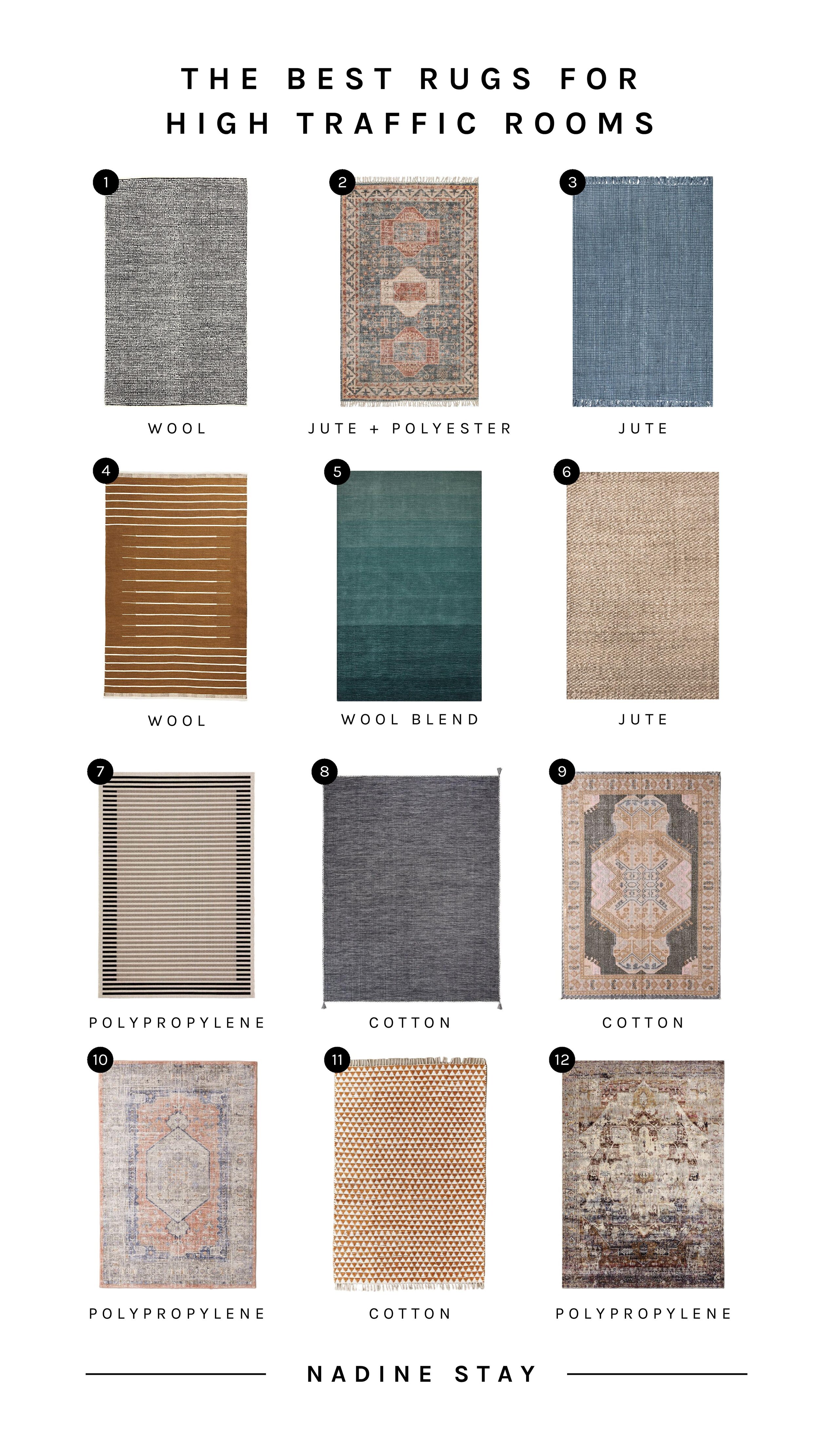
Credit: nadinestay.com
Real-life Scenarios: Choosing The Right Rug Material
Let’s look at common situations and the best options for each:
Busy Entryway
- Best: Nylon, polypropylene, or seagrass
- Why: These materials hide dirt, resist stains, and are easy to clean.
Family Room With Kids And Pets
- Best: Triexta, nylon, or wool
- Why: They stand up to spills, rough play, and constant use.
Kitchen
- Best: Cotton or polypropylene
- Why: Both can handle food spills and are easy to wash or hose off.
Hallways
- Best: Nylon, sisal, or polypropylene
- Why: These resist flattening and are easy to vacuum.
Sunroom Or Indoor-outdoor Space
- Best: Polypropylene or seagrass
- Why: Both handle sunlight and moisture well.
Practical Tips For Maximizing Rug Life In High-traffic Areas
Even the toughest rug benefits from smart care:
- Use a rug pad: A pad prevents slipping and reduces wear, which many overlook.
- Rotate your rug: Turn the rug every few months to distribute traffic and fading.
- Vacuum regularly: Dirt acts like sandpaper; frequent vacuuming keeps fibers healthy.
- Tackle stains quickly: Blot, don’t rub, and use gentle cleaners.
- Choose darker colors or patterns: They hide dirt better than light, solid colors.
- Avoid fringes in high-traffic spots: Fringes wear out and look messy quickly.
Cost Comparison: Rug Materials
Price matters, especially if you need to replace rugs often. Here’s a rough cost guide per square foot:
| Material | Average Price (per sq. ft.) |
|---|---|
| Nylon | $2 – $7 |
| Polypropylene | $1 – $3 |
| Wool | $5 – $20 |
| Polyester | $1.5 – $4 |
| Triexta | $3 – $8 |
| Seagrass | $2 – $6 |
| Sisal | $4 – $8 |
| Jute | $2 – $7 |
| Cotton | $1 – $4 |
Remember: A higher upfront cost for a durable material often saves money in the long run, since you won’t replace the rug as often.
Common Mistakes When Choosing A Rug For High-traffic Areas
Many people choose the wrong rug material because they focus only on style or price. Here are common mistakes:
- Picking a delicate material (like silk or rayon) for a busy hallway.
- Choosing a high-pile or shag rug that traps dirt and is hard to clean.
- Ignoring cleaning instructions—some natural fibers can be ruined with water.
- Forgetting about rug pads, which prevent slips and extend rug life.
- Not checking the warranty—some materials come with guarantees against staining or wear.
Additional Insights Most Beginners Miss
- Pile height matters: Low-pile rugs are usually better for high-traffic areas because they’re easier to clean and don’t flatten as much.
- Edge binding: Rugs with strong, tight edges resist fraying, especially in doorways and halls.
- Backing material: Non-slip or rubber-backed rugs are safer in entryways and kitchens.
When To Replace Your Rug
No rug lasts forever, especially in busy spots. Signs it’s time to replace include:
- Worn spots or holes that don’t improve with cleaning.
- Permanent stains that ruin the look.
- Odors that don’t go away after washing.
- Flattened pile that never bounces back.
If your rug has these issues, a new one with the right material will make your space look and feel fresh.
Credit: elephantfloors.net
Where To Learn More
For further reading on rug materials, durability ratings, and cleaning tips, the Wikipedia page on Carpets provides a deep dive into fiber types and manufacturing.
Frequently Asked Questions
What Is The Most Durable Rug Material For High-traffic Areas?
Nylon and wool are widely considered the most durable. Nylon is tough, stain-resistant, and bounces back from compression. Wool is naturally resilient and can last for decades with good care.
Which Rug Material Is Easiest To Clean?
Polypropylene is the easiest to clean, as it resists most stains and can be washed with water, even outdoors. Cotton rugs are machine washable, but less durable.
Are Natural Fiber Rugs Good For High-traffic Spaces?
Some, like seagrass and sisal, are strong and handle foot traffic well. However, they can stain with water and aren’t as soft as synthetic or wool rugs.
Can I Use A Wool Rug In A Busy Family Room?
Yes, wool is an excellent choice for family rooms with heavy use. It resists crushing and hides dirt well, but needs gentle cleaning and care with spills.
How Often Should I Replace A Rug In A High-traffic Area?
With good care, a quality nylon or wool rug can last 10 years or more in a busy space. Lower-quality or less durable materials may need replacing every 2–5 years.
A smart rug choice means less stress, easier cleaning, and a welcoming home—even in the busiest spots. By understanding the materials, you can invest in beauty and durability that lasts.
