
Water is an essential part of our daily lives, but clean drinking water is not always easy to find. In many homes, the tap water may have chemicals, bacteria, or an unpleasant taste. To solve this, many people choose water purifiers. Two of the most popular types are reverse osmosis and carbon filter water purifiers. But which one should you choose? Both have their strengths and weaknesses, and the right choice depends on your needs, water quality, and budget. Let’s explore the differences, advantages, and practical tips for picking the best water purifier for your home.
How Reverse Osmosis Works
Reverse osmosis (RO) is a powerful water purification method. It uses a semi-permeable membrane to remove contaminants from water. When water is pushed through this membrane under pressure, only pure water molecules pass through. Contaminants like dissolved salts, heavy metals, and most microorganisms are left behind.
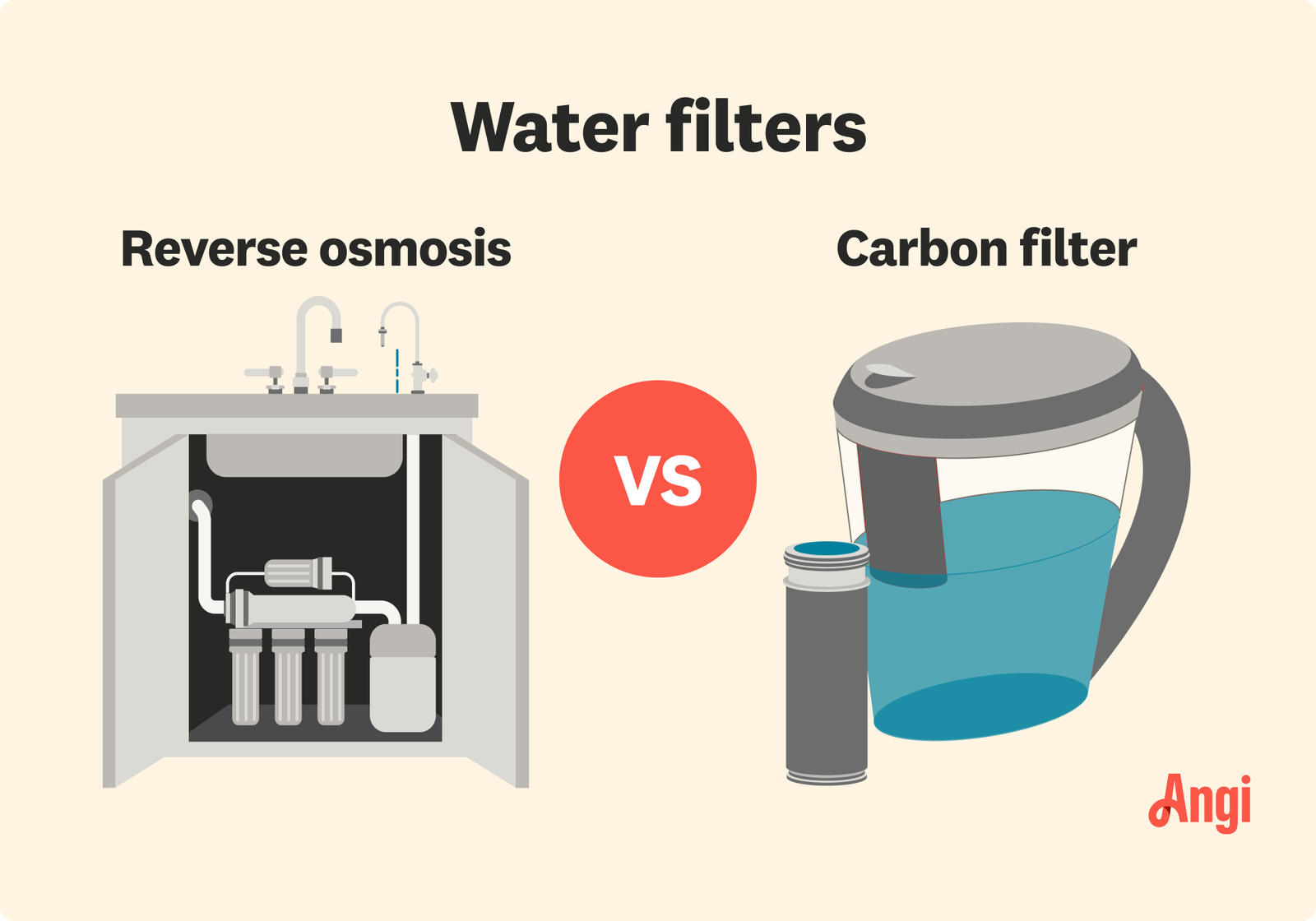
RO systems often include several stages:
- Sediment filter to catch dust and large particles.
- Carbon filter to remove chlorine and chemicals that can damage the RO membrane.
- RO membrane for removing dissolved solids and tiny particles.
- Sometimes, a post-carbon filter for taste improvement.
These steps ensure water is not just safe, but also tastes clean and fresh. However, RO systems also produce some wastewater, as the membrane rejects impurities.
How Carbon Filter Water Purifiers Work
Carbon filters use activated carbon, a highly porous form of carbon with a large surface area. Water passes through the carbon, which traps chemicals, chlorine, and some heavy metals. Carbon filters are excellent at improving taste and removing odors.
There are two main types of carbon filters:
- Granular activated carbon (GAC)
- Carbon block filters
Both types work by adsorption, meaning contaminants stick to the surface of the carbon. Carbon filters don’t require electricity and don’t create wastewater. They are simple to use and maintain.
What Each System Removes
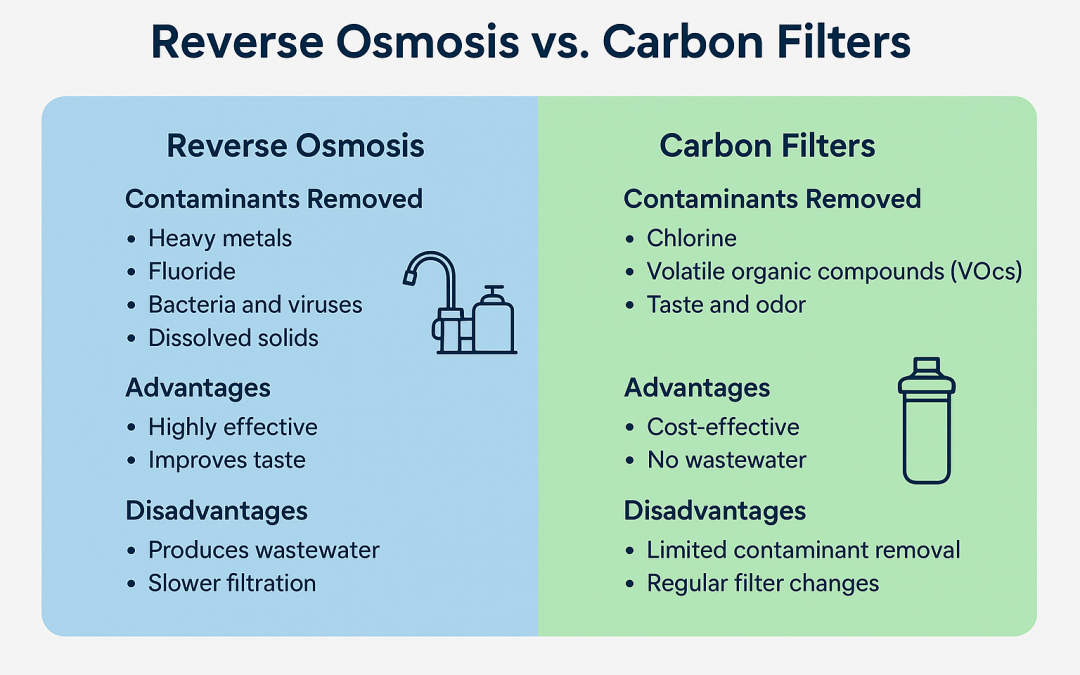
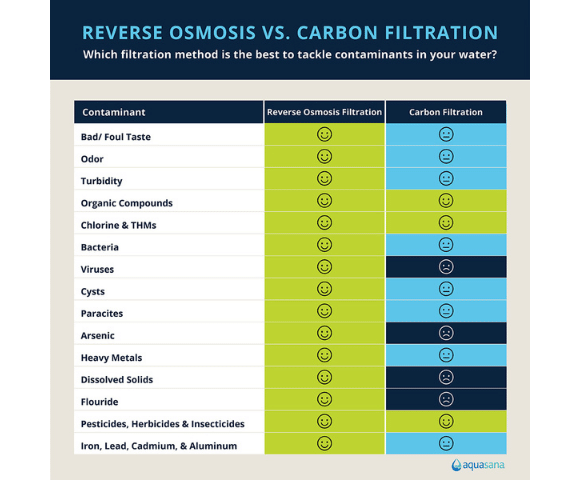
The main difference between RO and carbon filters is the range of contaminants they remove. Here’s a quick comparison:
| Contaminant Type | Reverse Osmosis | Carbon Filter |
|---|---|---|
| Dissolved Salts (TDS) | Removes | Does not remove |
| Chlorine & Chemicals | Removes (with pre-filter) | Removes |
| Heavy Metals (Lead, Arsenic) | Removes | Partially removes |
| Bacteria & Viruses | Removes most | Does not remove all |
| Taste & Odor | Removes | Removes |
| Fluoride | Removes | Does not remove |
Key Benefits Of Reverse Osmosis Water Purifiers
RO systems are popular for homes with water that has high contamination or salinity. Here’s why:
1. Removes Most Contaminants
RO purifiers remove up to 95-99% of dissolved salts, heavy metals, and chemicals. This makes them ideal for places with hard water or industrial pollution. If your local water has a high TDS (total dissolved solids) reading, an RO system is usually the best choice.
2. Safe Drinking Water
Most bacteria, viruses, and harmful microorganisms are blocked by the RO membrane. This makes water safe for drinking, especially in areas where waterborne diseases are common.
3. Improves Taste And Odor
By removing chemicals and metals, RO water tastes fresh and clean. This is important if your tap water smells or tastes unpleasant.
4. Useful For Cooking And Appliances
RO water is gentle on kettles, coffee makers, and other appliances. It prevents scaling and extends the life of your devices.
Non-obvious Insight
Many people don’t realize that RO water can remove beneficial minerals like calcium and magnesium. If you rely only on RO water, you may need to get these minerals from food or supplements.
Key Benefits Of Carbon Filter Water Purifiers
Carbon filters are great for people who want better taste and basic safety without the complexity of RO systems.
1. Improves Taste And Removes Odor
Activated carbon is excellent for removing chlorine, which causes bad taste and smell in tap water. Your water will taste much better, even if it was safe to drink before.
2. Easy To Use And Maintain
Carbon filters are simple to install and require only regular filter changes. They don’t need electricity or high water pressure.
3. Keeps Beneficial Minerals
Unlike RO, carbon filters do not remove healthy minerals. The natural taste of water is preserved, which many people prefer.
4. Environmentally Friendly
No wastewater is produced, and energy use is minimal. For eco-conscious homes, this is a plus.
Non-obvious Insight
Many users overlook that carbon filters don’t handle microbial contamination well. If your water comes from a source with bacteria, a carbon filter alone is not enough.
Limitations And Drawbacks
No system is perfect. Here’s what you should consider:
Reverse Osmosis
- Wastes water: For every liter of clean water, 2-3 liters may be wasted.
- Needs electricity: Not ideal for places with unreliable power.
- Removes minerals: May need remineralization for taste and health.
- Maintenance costs: Membranes and filters require regular replacement, and can be costly.
Carbon Filter
- Limited contaminant removal: Does not reduce TDS, fluoride, or all heavy metals.
- Bacteria and virus risk: Not reliable for removing all pathogens.
- Frequent filter changes: Carbon can get saturated quickly, especially with poor water quality.
Cost Comparison
Let’s compare the typical costs for both systems.
| Feature | Reverse Osmosis | Carbon Filter |
|---|---|---|
| Initial Price | $150 – $500 | $30 – $120 |
| Annual Maintenance | $80 – $150 | $20 – $50 |
| Installation | May need plumber | User-friendly |
| Electricity Cost | Yes | No |
| Water Waste | High | None |
Which One Should You Choose?
The best system depends on your needs and local water quality.
When To Choose Reverse Osmosis
- Your tap water has high TDS or salinity.
- You want to remove heavy metals like lead, arsenic, or fluoride.
- You live in an area with industrial or agricultural pollution.
- You need maximum safety against bacteria and viruses.
When To Choose Carbon Filter
- Your water is already safe but has bad taste or smell.
- You want to keep healthy minerals.
- You want a low-cost, eco-friendly solution.
- You don’t want to deal with complex maintenance.
Practical Tip
Test your water before buying any purifier. Many local labs offer water testing. Knowing your TDS level and major contaminants will help you choose the right technology.
Credit: brownsplumbing.ca
Can You Use Both Together?
Yes. In fact, many advanced RO systems include a carbon filter stage. Carbon removes chlorine and chemicals before the water reaches the RO membrane. This extends the membrane’s life and improves taste. Some people use a simple carbon filter for daily drinking, and an RO system for cooking and baby formula.
Common Mistakes When Choosing A Water Purifier
- Ignoring water test results: Don’t guess. Test first.
- Not changing filters on time: Old filters can become sources of contamination.
- Choosing the cheapest option: Poor-quality filters can do more harm than good.
- Overlooking installation needs: RO systems need space and good water pressure.
- Not considering maintenance costs: Filters and membranes are recurring expenses.
Credit: www.angi.com
Real-world Examples
- In cities like Mumbai or Manila, tap water often has high TDS and pollution. Here, RO is almost always recommended.
- In places with clean mountain water, a carbon filter is often enough to improve taste.
- In the US, many homes use both: A carbon filter for the whole house, and RO for drinking water at the kitchen sink.
Environmental Impact
RO systems waste a significant amount of water. In drought-prone regions, this is a serious concern. Some new RO systems recover more water, but the cost is higher. Carbon filters are more eco-friendly, but used filters must be disposed of properly as they can harbor contaminants.
Credit: www.aquasana.com
Quick Comparison Table
Here’s a summary to help you decide:
| Feature | Reverse Osmosis | Carbon Filter |
|---|---|---|
| Removes Salts & Metals | Yes | No |
| Improves Taste | Yes | Yes |
| Needs Electricity | Yes | No |
| Wastes Water | Yes | No |
| Keeps Minerals | No | Yes |
| Maintenance Cost | High | Low |
Frequently Asked Questions
What Is The Main Difference Between Reverse Osmosis And Carbon Filter Water Purifiers?
The main difference is that reverse osmosis removes almost all dissolved solids and heavy metals, while carbon filters focus on removing chemicals, chlorine, and improving taste. RO systems are best for highly polluted or salty water, while carbon filters are suitable for water that is already microbiologically safe.
Do Reverse Osmosis Purifiers Waste A Lot Of Water?
Yes, RO systems typically waste 2-3 liters for every 1 liter of purified water. This is a concern in areas where water is scarce. Some newer RO units have better water recovery rates, but they are more expensive.
Can I Use A Carbon Filter And Reverse Osmosis Together?
Yes, many RO systems include a carbon filter as a pre-treatment stage. You can also use a carbon filter for all taps and an RO system just for drinking water. This provides both safety and good taste.
How Often Should I Change The Filters In These Systems?
For RO systems, replace pre-filters every 6-12 months and the RO membrane every 2-3 years. For carbon filters, change every 3-6 months, depending on water quality and usage. Always follow the manufacturer’s instructions.
Where Can I Learn More About Water Purification Technologies?
A reliable source for further reading is the Wikipedia page on water purification, which explains different technologies, contaminants, and health effects.
Finding the right water purifier is not just about clean water—it’s about your health, comfort, and peace of mind. By understanding the differences between reverse osmosis and carbon filters, you can make a confident choice for your family’s needs. Always check your local water quality, consider your lifestyle, and don’t forget regular maintenance for the best results.