
Quick answer: wash blankets that touch your body in bed every 1 to 2 weeks. Wash living-room throw blankets every 2 to 4 weeks, guest blankets after each guest or before storage, and comforters or duvets 2 to 4 times per year when a sheet or duvet cover protects them. Wash any blanket sooner after sweat, spills, pet use, illness, or allergy flare-ups.
The right schedule depends less on the word “blanket” and more on how the blanket is used. A blanket on your bed collects body oils and skin flakes every night. A folded throw on a sofa may only need a monthly wash unless people eat, nap, or let pets use it. A wool or electric blanket also needs gentler handling than a basic cotton or fleece blanket.
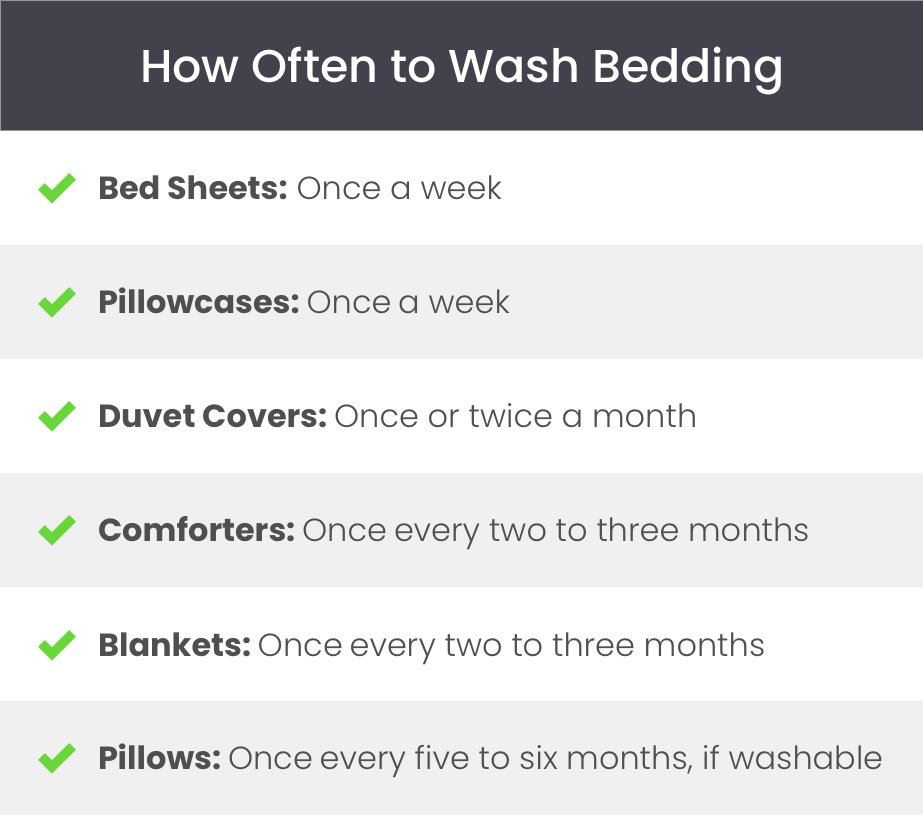
Blanket Washing Frequency By Use
| Blanket use | Practical washing schedule | Wash sooner when |
|---|---|---|
| Everyday bed blanket | Every 1 to 2 weeks | It touches skin nightly, you sweat, or allergies are active |
| Living-room throw blanket | Every 2 to 4 weeks | People nap under it, food spills happen, or pets use it |
| Guest blanket | After each guest, or before and after storage | The guest was sick, the room is dusty, or the blanket smells stale |
| Comforter or duvet insert | 2 to 4 times per year if protected by a sheet or cover | There is no cover, there are spills, or it touches skin directly |
| Electric blanket | Once or twice a month during heavy seasonal use, if the care label allows washing | It has body odor, stains, or frequent nightly use |
| Wool blanket | Only when needed, often seasonally, unless the label says otherwise | It is visibly dirty, smells, or was stored for months |
If you also want the sheet schedule, see how often to wash bedsheets and pillowcases. Sheets usually need a stricter routine because they sit directly against your skin all night.
For Allergies, Treat Bed Blankets Like Bedding
For a normal household, every 1 to 2 weeks is a useful bed-blanket baseline. If dust mites, asthma, or allergies are part of the problem, wash bed blankets weekly when the care label allows it. The Asthma and Allergy Foundation of America advises washing sheets, pillowcases, and blankets weekly in hot, soapy water for bedroom allergen control, and Mayo Clinic gives similar dust-mite guidance for bedding.
Do not ignore the care tag just to use hotter water. If the blanket cannot be washed hot, use the warmest safe setting, dry it fully, and clean it more consistently. Damp storage is worse than a slightly gentler wash because trapped moisture can leave odor and mildew.
How Often To Wash Blankets On The Bed
Wash the blanket on your bed every 1 to 2 weeks if it is part of your nightly bedding. Choose weekly if you sleep hot, skip a top sheet, share the bed with pets, have seasonal allergies, or recently had a cold. Choose every two weeks if the blanket sits above a clean top sheet and does not touch skin much.
Think of the top sheet as a washable barrier. If you remove that barrier, the blanket becomes closer to a sheet in hygiene terms. When a blanket starts to feel less breathable, smells like body oil, or looks flattened in the areas where you sleep, it is due for laundry even if the calendar says it can wait.
How Often To Wash Living-Room Throw Blankets
Wash a living-room throw every 2 to 4 weeks in a typical home. Move closer to weekly when the throw is used for naps, pets, movie-night snacks, or by children. A throw that is mostly decorative can go longer, but it should still be washed before storage and anytime it smells dusty.
Living-room blankets often collect crumbs, pet hair, and hand oils rather than overnight sweat. Shake them outside before washing, pretreat food spots, and avoid overloading the washer. Maytag’s washer product guidance notes that bulky items such as bedding and blankets are better suited to bulky or sheets/bedding cycles than normal or rapid cycles.
Comforters, Wool, Weighted, And Electric Blankets
Comforters and duvet inserts do not always need the same schedule as thin blankets. Maytag says a protected comforter is often fine with 2 to 4 washes per year, but blankets or covers that directly touch skin should be washed more often. Always check washer capacity first because a packed drum can leave detergent behind and can keep the blanket from rinsing evenly.
For wool, keep this page as the frequency guide and use the dedicated wool blanket washing guide when deciding whether machine washing is safe. Wool can shrink or felt, so the care label should decide whether you wash, spot clean, air out, or dry clean.
For electric blankets, unplug and remove controllers before washing, and follow the manufacturer’s label. Maytag advises reading the care tag, avoiding bleach and fabric softener, drying completely before use, and washing electric heated blankets once or twice a month during heavier cold-weather use if the label allows it.
When A Blanket Needs Washing Right Away
- It smells musty, sweaty, smoky, or stale.
- There are food, drink, makeup, or body-oil stains.
- A pet sleeps on it or sheds heavily on it.
- Someone used it while sick.
- It came out of storage or a guest room.
- It feels stiff, less fluffy, or dusty against your skin.
How To Wash Blankets Without Ruining Them
Start with the care label. Sort by fabric and color, shake off lint or pet hair, pretreat stains, and use a mild detergent. Use a bulky, bedding, delicate, or gentle cycle when the label calls for it. Do not pack the washer tight; the blanket needs room to move so water and detergent can pass through it.
If the blanket is large, heavy, or still wet at the end of the cycle, move it to a larger washer or laundromat instead of forcing another normal cycle. For related laundry routines, see how to wash bed sheets in a washing machine properly and how to deep clean bed sheets at home.
Drying Matters As Much As Washing
A blanket should be fully dry before it goes back on the bed, sofa, closet shelf, or storage bag. Use low heat, air dry, or a bulky cycle when the care label recommends it. Pause and fluff thick blankets during drying so the middle does not stay damp. If a blanket still feels cool or heavy in the center, keep drying it before storage.
Simple Household Rule
Use this rule when you do not want to overthink it: bed blankets every 1 to 2 weeks, sofa throws every 2 to 4 weeks, guest blankets after use, and bulky comforters seasonally unless they touch skin directly. Then adjust faster for pets, sweat, illness, allergies, stains, and odor.