
Choosing the right mop can make cleaning floors much easier and faster. But with so many types out there, it’s hard to know which one really works best. Two popular options are the spin mop and the flat mop. Both claim to clean well, but they work in different ways and have their own strengths. If you want cleaner floors with less effort, it’s important to understand which mop fits your home, cleaning style, and the types of messes you often face.
Many people choose a mop without thinking about these details. Later, they may find the mop doesn’t reach under furniture, leaves streaks, or is hard to wring out. These small problems add up and can make cleaning frustrating. This article will compare spin mops and flat mops in depth, so you can decide which one is really better for your needs.
Spin Mop vs Flat Mop: Quick Verdict
A spin mop usually cleans better for wet messes, sticky spills, tile, and deep cleaning because it holds more water and is easy to wring. A flat mop is better for daily dust, pet hair, hardwood, laminate, corners, and quick maintenance because the flat microfiber pad covers more area with less water.
| Cleaning Need | Better Choice | Why |
|---|---|---|
| Sticky spills | Spin mop | The wetter head lifts messes and scrubs better. |
| Dust and pet hair | Flat mop | The wide microfiber pad traps fine debris quickly. |
| Tile deep cleaning | Spin mop | More water and wringing power help with dirt buildup. |
| Hardwood or laminate | Flat mop | It uses less water and lowers streak or swelling risk. |
| Corners and edges | Flat mop | The rectangular head reaches walls and corners more easily. |
We’ll look at cleaning results, ease of use, cost, durability, and practical tips that most beginners miss. By the end, you’ll know exactly which mop can help you keep your floors spotless.
What Is A Spin Mop?
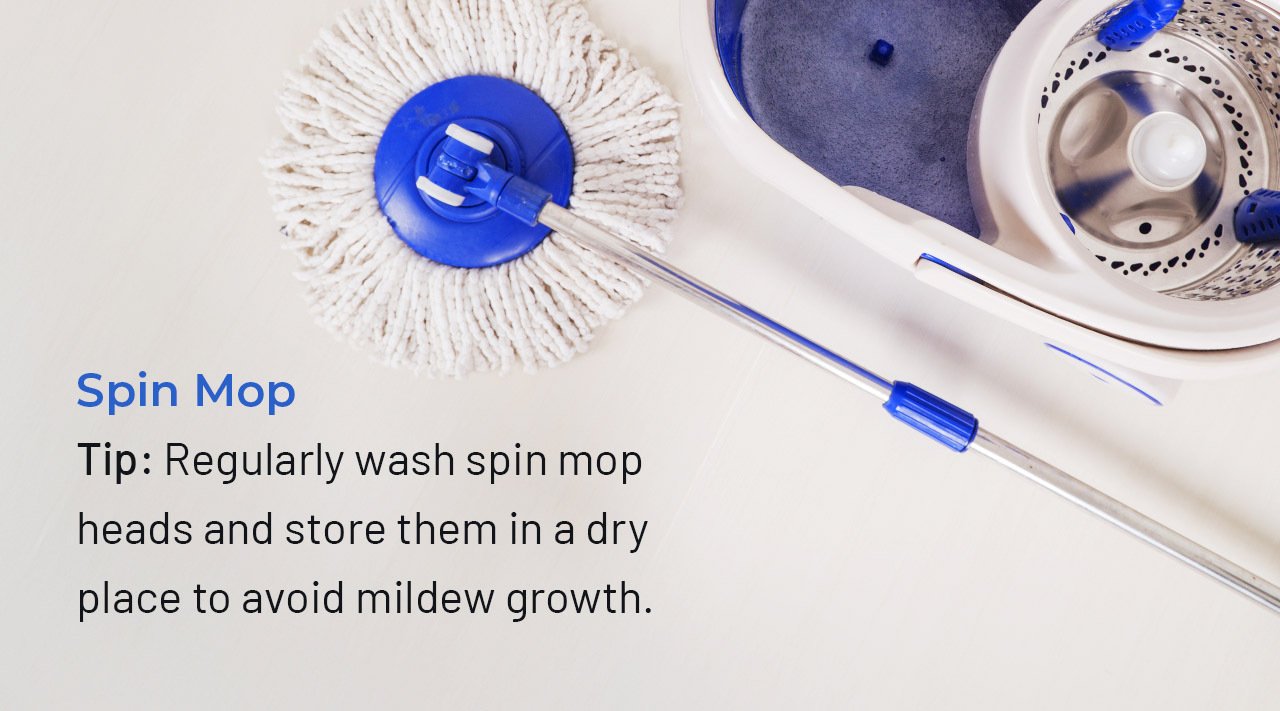
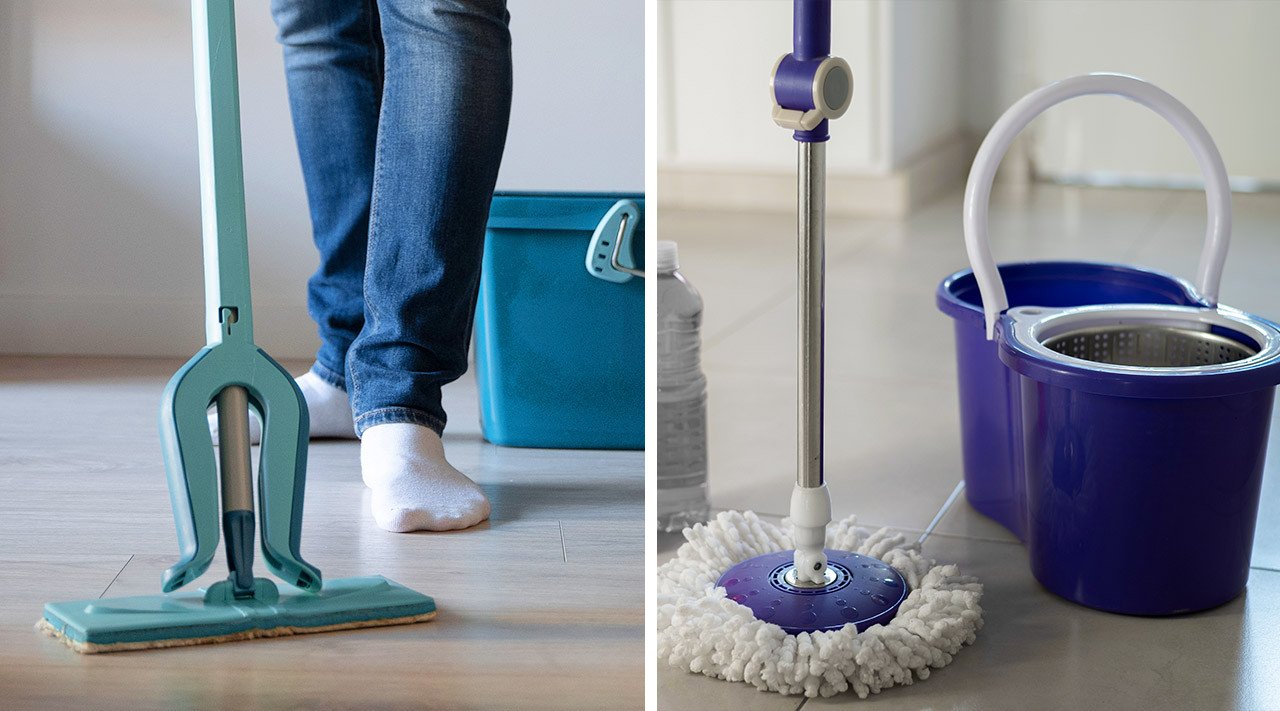
A spin mop uses a round, absorbent head made from microfiber or cotton strands. The key feature is the spinning bucket system. You push the handle or use a foot pedal, and the head spins quickly, wringing out water without touching it by hand. This design helps remove dirt and keeps your hands dry.
Spin mops have become very popular because they are easy to use and make mopping less messy. Some models have extra features like splash guards, soap dispensers, or wheels for moving the bucket. They are often used for tile, laminate, vinyl, and hardwood floors.
How Spin Mops Work
- Fill the bucket with water and floor cleaner.
- Dip the mop head into the water.
- Place the mop in the spinning basket.
- Spin using a pedal or handle action to wring out water.
- Mop the floor using circular or back-and-forth motion.
- Rinse and repeat as needed.
What Is A Flat Mop?
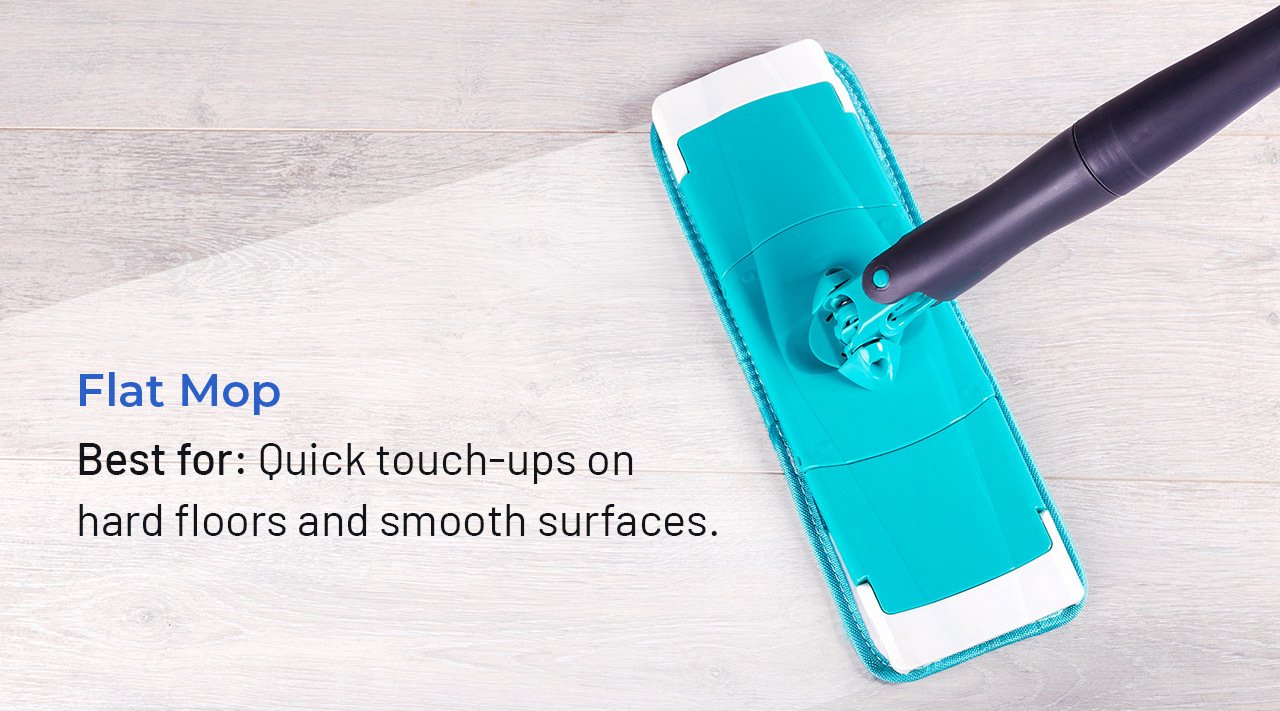
A flat mop has a flat, rectangular base covered with a microfiber pad. The pad attaches with velcro or pockets. Flat mops do not use a spinning bucket. Instead, you remove the pad to rinse or wash it, or some systems have a wringer built into the bucket.
Flat mops are lightweight and cover more floor area with each swipe. They are great for picking up dust, hair, and small debris. You can use them dry for dusting or wet for mopping. Flat mops are common in homes, schools, and hospitals.
How Flat Mops Work
- Wet the pad with water and cleaner.
- Attach the pad to the mop base.
- Mop in straight lines, overlapping each stroke.
- Rinse or swap the pad as needed.
- Wash the pad in the washing machine after use.
Cleaning Performance: Which Mop Cleans Better?
The main question is, which mop actually cleans better? The answer depends on the type of mess, floor, and how often you clean. Let’s compare both in different cleaning situations.
Everyday Dust And Dirt
- Flat mops are excellent at picking up dust, pet hair, and light dirt. The large pad traps fine particles and can clean a big area quickly.
- Spin mops also pick up dust, but the round head is smaller. They may miss edges or corners if not used carefully.
Sticky Spills And Stains
- Spin mops do well with sticky messes because the wet, absorbent head lifts and holds spills. You can use more pressure to scrub tough spots.
- Flat mops can handle spills but may need several passes or pre-spraying with cleaner.
Corners And Edges
- Flat mops reach into corners and along walls better due to their square shape.
- Spin mops have round heads, so they might miss tight spots unless you angle the mop carefully.
Deep Cleaning
- Spin mops are better for deep cleaning because you can use a lot of water and scrub harder. The spinning system removes dirt from the mop head, so you aren’t just spreading it around.
- Flat mops are good for regular cleaning, but pads can get dirty quickly and may need to be changed or washed during the job.
Bacteria And Hygiene
Both mop types can use microfiber, which removes bacteria better than traditional cotton. However, spin mops often use thicker strands that may trap more germs if not cleaned well. Flat mop pads are easier to remove and wash in hot water.
Cleaning Power Comparison
Here’s a quick side-by-side look at cleaning abilities:
| Cleaning Task | Spin Mop | Flat Mop |
|---|---|---|
| Dust & Pet Hair | Good | Excellent |
| Sticky Messes | Excellent | Good |
| Corners & Edges | Average | Excellent |
| Deep Cleaning | Excellent | Good |
| Hygiene | Good (if cleaned well) | Excellent |
Ease Of Use And Comfort
Cleaning shouldn’t be hard on your body. Let’s see how each mop scores for ease of use.
Spin Mop
- Hands stay dry because you never touch dirty water.
- The bucket can be heavy when full.
- Some models need you to push down hard to spin, which may be tiring.
- The mop head swivels and can clean under furniture, but the round shape sometimes makes it harder to reach tight spots.
Flat Mop
- Very lightweight and easy to carry around.
- No spinning or pushing required.
- The pad is easy to remove and wash.
- Some buckets have a built-in wringer, but many people just rinse under the tap.
- The flat shape slides under couches and cabinets easily.
User Comfort Comparison
| Feature | Spin Mop | Flat Mop |
|---|---|---|
| Weight | Medium-Heavy | Very Light |
| Hand Dryness | Excellent | Good |
| Reach | Good | Excellent |
| Effort to Use | Medium | Low |
Credit: thecleaningstation.com
Cost And Value For Money
Price matters, but so does long-term value. Here’s what to expect:
- Spin mops usually cost more upfront ($25-$50 for a good set). Replacement heads cost $5-$10 each. The bucket and spinning parts can wear out over time.
- Flat mops are cheaper ($10-$30 for a basic set). Microfiber pads are reusable and last through dozens of washes. Replacement pads are $2-$8 each.
If you mop often, flat mops are cheaper to maintain. Spin mops may need new parts (like the spinner or pedal) after a year or two.
Durability And Maintenance
Both mop types can last years if cared for, but there are differences.
Spin Mop
- The spinning mechanism can break after heavy use.
- Mop heads need to be replaced when worn.
- Buckets can crack if dropped.
- Always rinse and air-dry the mop to prevent smells and germs.
Flat Mop
- No moving parts, so less to break.
- Pads last longer if washed properly.
- Handles may bend if used with too much force.
- Dry the pads completely before storing.
A common beginner mistake is leaving either mop wet after cleaning. This causes mold and bad odors. Always let the mop dry fully.
Credit: thecleaningstation.com
Floor Compatibility
Some mops can damage certain floors if too wet or abrasive. Here’s what to know:
- Spin mops are safe for tile, vinyl, and sealed wood. On unsealed wood, too much water can cause swelling.
- Flat mops are gentle on all floors, including laminate and delicate hardwood.
If you have many floor types, a flat mop is more versatile. For tough tile or outdoor cleaning, a spin mop’s scrubbing power is useful.
Common Mistakes Beginners Make
- Using too much water: Both mops work best with a damp (not soaking) head, especially on wood or laminate.
- Not rinsing pads/mop heads often: Cleaning with a dirty mop just spreads grime.
- Ignoring manufacturer care instructions: Some pads shrink in hot water, and some buckets are not meant for bleach.
- Not replacing pads or heads: Worn-out mops clean poorly and can scratch floors.
- Storing mops wet: Always air-dry to prevent mold.
Many people think more water means cleaner floors. In fact, it can damage floors and leave streaks.
Which Mop Is Right For You?
Choosing between a spin mop and a flat mop comes down to your home and habits:
- Choose a spin mop if:
- You have large, hard floors (like tile or stone).
- You deal with sticky, tough messes.
- You want your hands to stay dry.
- You don’t mind a heavier bucket or learning the spinning action.
- Choose a flat mop if:
- You want something lightweight and quick.
- You clean mostly dust, hair, or light dirt.
- You need to reach under furniture or into corners.
- You have delicate floors or want easy pad washing.
A surprising tip: Many professional cleaners keep both mops on hand. They use the flat mop daily for dust and quick cleaning, and the spin mop for deep cleaning once a week.
Real-world Example
Maria lives in a two-bedroom apartment with tile and wood floors. She has a cat and two kids. At first, she bought a spin mop for deep cleaning. It worked well on sticky spills but was heavy to move. Later, she added a flat mop for daily dusting.
Now, she uses the flat mop every other day and the spin mop for big cleaning jobs once a week. This mix keeps her floors clean without extra work.
Environmental Impact
Both mops can be eco-friendly if used right. Choose reusable microfiber pads for flat mops and wash them with mild soap. For spin mops, pick heads made from recycled materials if possible. Avoid disposable pads unless needed for big messes.
Microfiber pads save hundreds of paper towels per year. Plus, you can use less cleaning chemical because microfiber lifts more dirt with just water.
Expert Opinions And Studies
Studies show that microfiber mops (flat or spin) remove up to 99% of bacteria with just water, while traditional string mops need chemical cleaners for the same effect. Hospitals and schools often use flat mops for this reason. For details, check this study from the Centers for Disease Control and Prevention.
Credit: thecleaningstation.com
Frequently Asked Questions
Do Spin Mops Or Flat Mops Clean Faster?
Flat mops usually clean large areas faster because the head is wider and covers more floor with each swipe. Spin mops take more time to wring out but are better for deep cleaning.
Which Mop Is Better For Pet Hair?
Flat mops are better for picking up pet hair and dust. The microfiber pad traps hair and can be easily washed afterward.
Can I Use Both Mops Together?
Yes. Many people use a flat mop for regular cleaning and a spin mop for deep cleaning or tough messes. This gives the benefits of both types.
Are Spin Mops Or Flat Mops Better For Allergies?
Flat mops are slightly better for allergies because they trap dust and pollen in the pad, preventing it from going back into the air.
How Often Should I Replace Mop Heads Or Pads?
Replace spin mop heads every 3-6 months, depending on use. Flat mop pads can last 6-12 months if washed and cared for properly.
Both spin mops and flat mops can give you a clean, healthy floor. The best choice depends on your cleaning style, home type, and what feels most comfortable for you. With the right mop, you’ll spend less time cleaning and enjoy better results.