
Placing a rug under your dining table seems simple at first. But if you’ve ever tripped over a rug corner, struggled with sliding chairs, or found crumbs stuck in a rug too small, you know there’s more to it. The right rug can make your dining space look bigger, warmer, and more inviting.
But the wrong choice, or the wrong placement, can create daily annoyances or even damage your floor.
If you want your dining area to look great and be practical, understanding how to place a rug under your dining table correctly is essential. This guide will help you get every detail right, from choosing the perfect size and shape, to laying the rug so it stays put and looks balanced.
We’ll cover common mistakes, practical tips, and real examples—so you can create a comfortable and stylish dining space you’ll love.
Why Use A Rug Under A Dining Table?
A rug under your dining table does much more than just add color or pattern. It creates a defined space in open plan homes, softens noise, and protects your flooring from scratches. Rugs also catch crumbs and spills, making clean-up easier—especially if you choose the right material. For homes with kids or pets, a well-placed rug can be a smart choice to keep floors looking new.
Some people worry rugs under dining tables are hard to clean. But with modern materials and a few practical habits, maintaining a dining rug is easier than you might think.
How To Choose The Right Rug Size
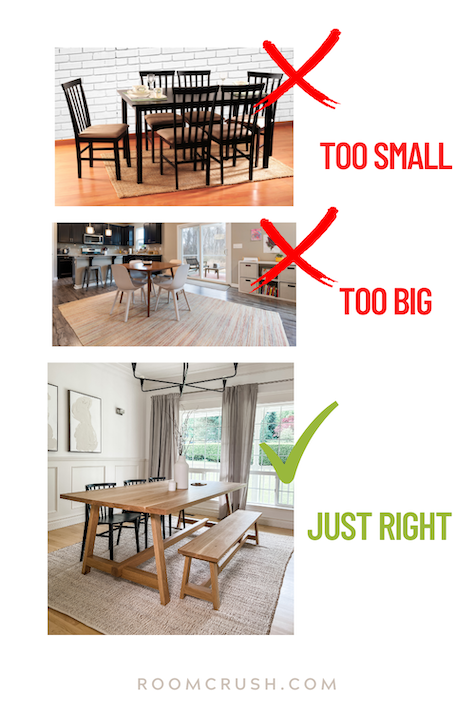
Size is the most important factor in placing a rug under your dining table. Too small, and chairs catch on the edge. Too big, and it can overpower the space or touch walls awkwardly.
The General Rule
The rug should be large enough so that all chair legs stay on the rug, even when you pull chairs out to sit. This usually means the rug should extend at least 24 inches (60 cm) beyond each side of the table.
Example:
- If your table is 36″ x 60″ (about 90 x 150 cm), your rug should be at least 84″ x 108″ (about 210 x 270 cm).
Standard Rug Sizes For Common Tables
Here’s a quick comparison to help you decide:
| Table Shape | Table Size | Suggested Rug Size |
|---|---|---|
| Rectangular | 36″ x 60″ (6 seats) | 8′ x 10′ |
| Rectangular | 42″ x 72″ (8 seats) | 9′ x 12′ |
| Round | 48″ diameter (4 seats) | 8′ round |
| Square | 42″ x 42″ (4 seats) | 8′ x 8′ |
Measuring Tips
- Measure your table, then add at least 48 inches (120 cm) to both length and width.
- If in doubt, go larger rather than smaller. A slightly oversized rug usually looks better than one that’s too small.
Credit: roomcrush.com
Picking The Best Rug Shape
Rug shape should match your table shape and room layout for the most pleasing look.
- Rectangular tables: Rectangular rugs work best.
- Round tables: Choose a round rug for symmetry.
- Square tables: Square or round rugs can both work—pick what suits your room.
- Oval tables: Use a large rectangular or oval rug.
Matching rug and table shape creates a sense of unity. But sometimes, a contrasting shape (like a round rug under a square table) can give a modern, playful feel—just make sure the rug is large enough.
Centering The Rug And Table
Balance is key. The table should always be centered on the rug—not off to one side. If your dining set is near a wall or window, keep the rug centered under the table, not the room, unless your space is perfectly symmetrical.
Here’s a simple method:
- Place the rug down first.
- Measure to ensure equal space on all sides.
- Then set the table and chairs centered on the rug.
If your room is small and the rug can’t be centered in the room, it’s okay—just focus on centering the table and rug together.

Credit: missamara.nz
Choosing The Right Rug Material
Dining rooms see lots of foot traffic, spills, and chair movement. Not every rug material is suitable. Here’s what to look for:
| Material | Pros | Cons |
|---|---|---|
| Wool | Durable, easy to clean, soft underfoot | More expensive, may shed at first |
| Synthetic (Polypropylene, Nylon) | Stain-resistant, affordable, many styles | Less natural look, can flatten over time |
| Flatweave (Cotton, Jute) | Easy to clean, chairs move easily | Less soft, can shift without pad |
| Indoor/Outdoor | Highly stain-resistant, easy to hose off | Rougher texture, fewer design options |
Wool and synthetic rugs are top choices for dining rooms. Flatweave rugs are also popular because chair legs don’t catch on thick piles.
How To Keep The Rug In Place
Rugs that slide or bunch up are annoying and can be dangerous. Here’s how to keep your dining rug secure:
- Rug pad: Always use a high-quality, non-slip rug pad. It prevents slipping and adds cushioning.
- Furniture weight: The table and chairs help anchor the rug, but a pad is still needed for safety.
- Correct size: A larger rug is less likely to move than a small one.
- Low pile: Choose rugs with short fibers (flatweave or low pile) so chairs move easily and the rug doesn’t bunch.
Cleaning And Maintenance Tips
Dining rooms are messy—especially with kids or frequent guests. The right care keeps your rug looking good for years.
- Vacuum regularly: Use a vacuum without a beater bar to avoid damaging the rug.
- Spot clean spills: Blot, don’t rub. Use mild soap and water for most materials.
- Deep clean: Steam clean wool or synthetic rugs once or twice a year.
- Rotate: Turn the rug every six months to avoid uneven wear from sunlight or foot traffic.
If you choose a machine-washable rug, cleaning is even easier—just follow manufacturer instructions.
Style And Color Considerations
You want your rug to look good, not clash with your table or chairs. Here’s how to pick a color and pattern:
- Neutral colors (beige, gray, navy) are versatile and hide stains well.
- Bold patterns can hide small spills and add energy to the room.
- Dark colors hide food stains but can show dust or pet hair.
- Light colors make a small space feel bigger but need more cleaning.
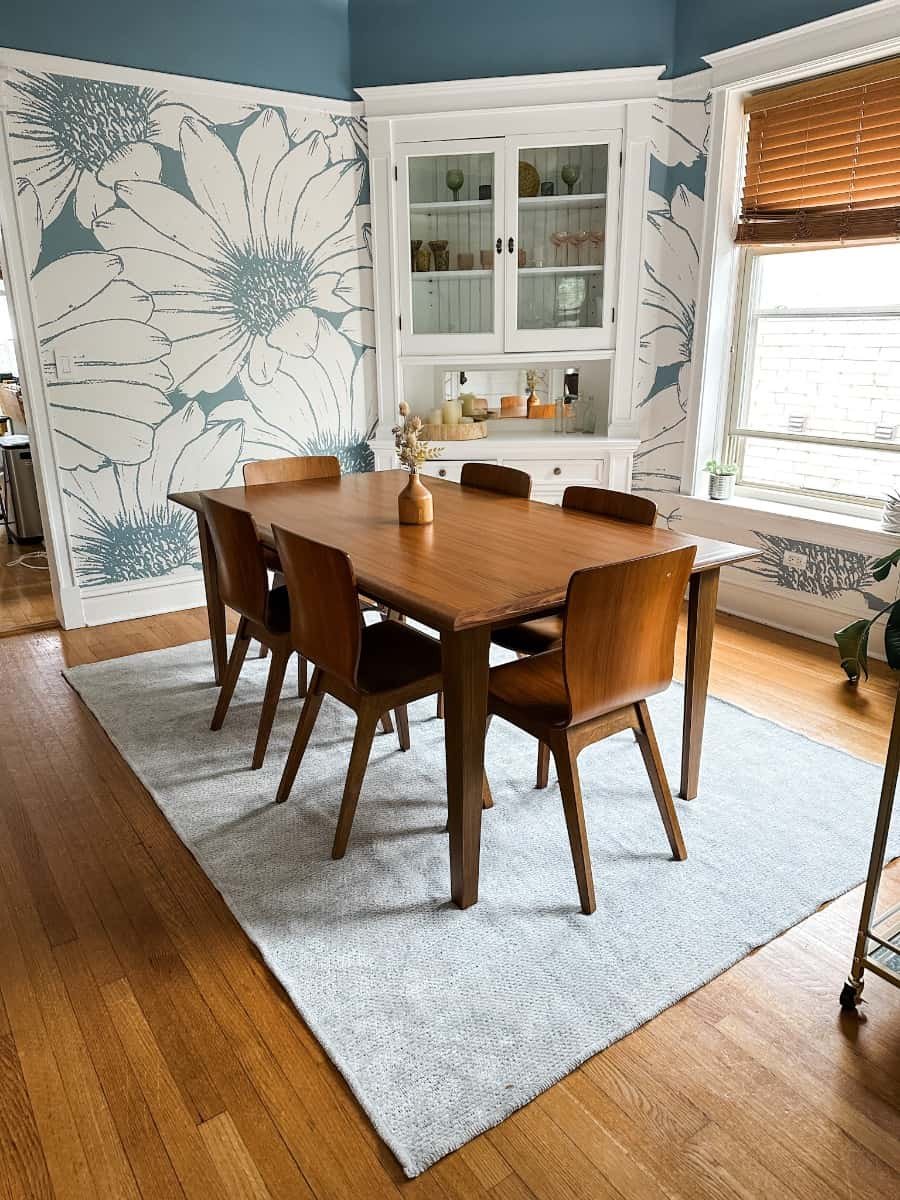
If your table and chairs are busy or colorful, choose a simple rug. If your furniture is plain, a patterned rug adds style.
Credit: livinglargeinasmallhouse.com
Common Mistakes To Avoid
Many people make mistakes when placing a rug under their dining table. Here are the most common, and how to avoid them:
- Rug too small: Chair legs catch on the edge, causing trips and damage. Always measure and size up.
- No rug pad: The rug slips, bunches, or wears out faster. Always use a pad.
- Wrong material: Shag or high-pile rugs are hard to clean and make it tough to move chairs.
- Ignoring room layout: Placing the rug off-center with the table looks awkward.
- Overly bold patterns: Too much pattern can make the room feel busy and distract from your dining set.
- Choosing by look only: A rug must be practical for dining—don’t choose only based on color or design.
- Neglecting regular cleaning: Without care, rugs trap crumbs and allergens.
Real-life Example: Fixing A Common Problem
Imagine a family with a 6-seat rectangular table in a 12×10 foot dining room. They buy a 5×8 rug because it fits the floor space. But every time someone pulls out a chair, it catches on the rug edge. The rug also slides as kids run past, and spills soak into the fibers.
How To Fix It?
- Choose an 8×10 rug instead, so all chairs stay on the rug, even when pulled out.
- Add a non-slip rug pad.
- Switch to a flatweave synthetic rug, making cleaning up spaghetti night simple.
- Place the table in the center of the rug for balance.
This small change improves safety, style, and daily comfort.
When Should You Skip The Rug?
While rugs add style and comfort, they’re not always the right choice:
- If your dining area is very small, a rug may make it feel cramped.
- In high-humidity areas, rugs can trap moisture and cause mold.
- If you have rolling chairs, rugs may get in the way.
- For open-concept homes with frequent spills, consider an easy-clean flooring instead.
Weigh the pros and cons for your space and lifestyle before adding a rug.
Extra Tips For A Professional Look
- Layering: In large rooms, you can layer a patterned dining rug over a neutral, larger rug for depth and interest.
- Edge space: Leave at least 12 inches (30 cm) of bare floor between the rug and walls for the room to “breathe.”
- Chair pads: For added protection, use felt pads under chair legs to prevent scratching the rug and floor.
- Test before buying: Tape out the rug size on your floor with painter’s tape to visualize the look and fit.
Non-obvious Insights Most Beginners Miss
- Chair Movement Matters: Many beginners only measure the table. Always measure with chairs pulled out as if someone is sitting, not just tucked in.
- Pile Height Affects Sound: Low-pile and flatweave rugs help reduce chair scraping noise, making meals more pleasant.
Trusted Resource For More Guidance
For more detailed design and material guidance, you can visit the Architectural Digest Dining Room Rug Guide.
Frequently Asked Questions
What Size Rug Should I Use Under My Dining Table?
The rug should extend at least 24 inches (60 cm) beyond all sides of the table. This gives enough space for chairs to stay on the rug when pulled out. Measure your table and add 48 inches (120 cm) to both length and width for the best fit.
Can I Use A High-pile Or Shag Rug Under My Dining Table?
It’s not recommended. High-pile rugs make it hard to move chairs and trap food. Flatweave or low-pile rugs are better because they are easier to clean and chairs glide smoothly.
How Do I Keep My Dining Room Rug From Sliding?
Use a non-slip rug pad under your rug. This keeps it in place, protects your floor, and adds comfort. Make sure the pad fits the rug size exactly.
How Often Should I Clean A Dining Room Rug?
Vacuum at least once a week and spot clean spills immediately. For deeper cleaning, follow the rug manufacturer’s instructions—usually every six months, or more often if you have children or pets.
Should The Rug Match The Dining Chairs Or The Table?
The rug should complement both but doesn’t need to match exactly. Choose a rug that works with your overall color scheme and style. If your furniture is simple, a bolder rug adds interest; if your chairs and table are bold, pick a more neutral rug.
Placing a rug under your dining table the right way can transform your dining experience. With the right size, shape, material, and a few smart tips, you’ll create a space that’s both stylish and functional—ready for family dinners, celebrations, and everything in between.
