
Choosing between enameled cast iron and bare cast iron cookware can feel confusing, especially if you are new to cast iron cooking. Both types have strong reputations in kitchens around the world, but they are not the same. They differ in care, performance, appearance, and even in how they can change your cooking experience. Understanding these differences helps you pick the right pan or pot for your needs—and avoid costly mistakes.
If you have ever wondered whether to buy a shiny blue enameled Dutch oven or stick to the classic black skillet, this guide will help you make a confident choice. Let’s compare enameled cast iron and bare cast iron in detail, covering everything from how they cook to how they last, so you can decide which one belongs in your kitchen.
What Is Bare Cast Iron?
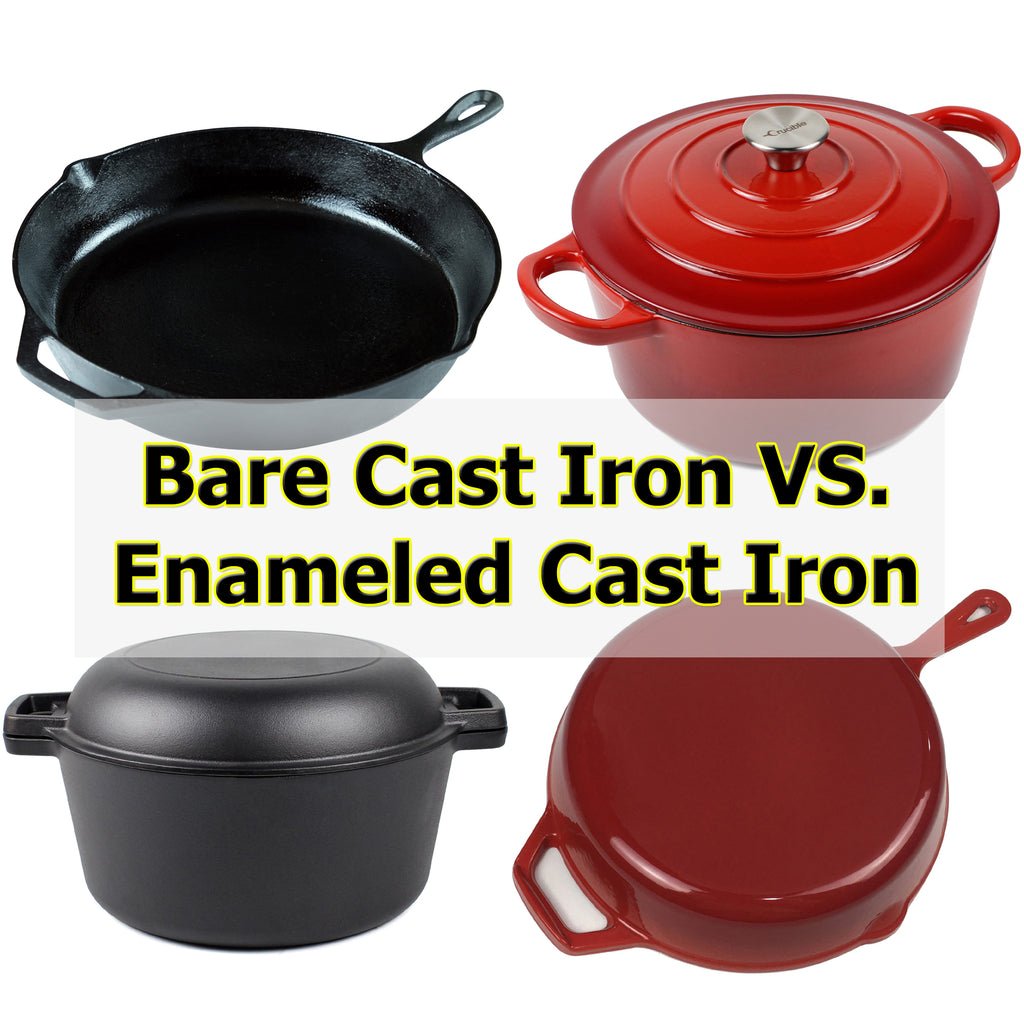
Bare cast iron refers to cookware made only from cast iron, without any extra coating. It usually looks black or dark gray and feels heavy. This type of cookware has been around for centuries. Many people love it for its durability and how it improves with use.
One key feature is seasoning. Bare cast iron needs to be coated with a thin layer of oil and heated, creating a natural non-stick surface. This process also protects the pan from rust. Regular cooking with oil keeps the seasoning strong and makes the pan better over time.
Bare cast iron is famous for:
- Retaining heat evenly
- Creating a natural non-stick surface after seasoning
- Lasting for decades, sometimes passed down as family heirlooms
What Is Enameled Cast Iron?
Enameled cast iron cookware is also made from cast iron, but it has a smooth, glass-like enamel coating. This enamel can be any color—bright red, blue, white, or classic cream. The enamel layer covers both the inside and outside, sealing the iron.
Enameled cookware does not need seasoning. The enamel layer:
- Prevents rust
- Makes the pot or pan easier to clean
- Allows for more colorful designs
Popular brands like Le Creuset and Staub make many enameled pieces. These pots are often seen in modern kitchens and are loved for their beauty and convenience.
Credit: cruciblecookware.com
Cooking Performance: Bare Vs Enameled Cast Iron
Cooking is where the differences between these two types really stand out.
| Feature | Bare Cast Iron | Enameled Cast Iron |
|---|---|---|
| Heat Retention | Excellent | Excellent |
| Heat Distribution | Good (can have hot spots) | Good (depends on brand) |
| Non-Stick Ability | Improves with seasoning | Enamel is smooth but not non-stick |
| Surface Reactivity | Can react with acidic foods | Non-reactive (safe for acidic foods) |
| Cooking Versatility | Great for searing, frying, baking | Great for braising, simmering, stews |
Bare Cast Iron In The Kitchen
Bare cast iron shines when you want a high-heat sear—think crispy steaks or golden cornbread. The surface, when well-seasoned, becomes nearly non-stick and can handle metal utensils. However, acidic foods like tomatoes or vinegar-based sauces can strip the seasoning and make the food taste metallic.
Enameled Cast Iron In The Kitchen
Enameled cast iron is perfect for slow cooking and recipes with lots of liquid, such as soups and braises. The enamel blocks any reaction with acidic ingredients, so you can cook tomato sauce or wine-based dishes without worry. However, the enamel coating is not truly non-stick. Some foods, like eggs, may stick if the pan is not well-oiled or preheated.
Maintenance And Care
How you care for your pan is a big factor in choosing between these two types.
Bare Cast Iron: Routine And Seasoning
Bare cast iron needs regular seasoning. This means rubbing a thin layer of oil on the surface and heating it so the oil bonds to the metal. Over time, this builds a slick, protective layer.
- Washing: Avoid soap or soaking in water. Instead, scrub with hot water and a brush.
- Drying: Always dry thoroughly to prevent rust.
- Re-seasoning: If food sticks or the pan looks dull, add another layer of oil and bake it.
Neglecting these steps can lead to rust or sticky surfaces. However, restoring a rusty skillet is possible—it just takes effort.
Enameled Cast Iron: Simple But Delicate
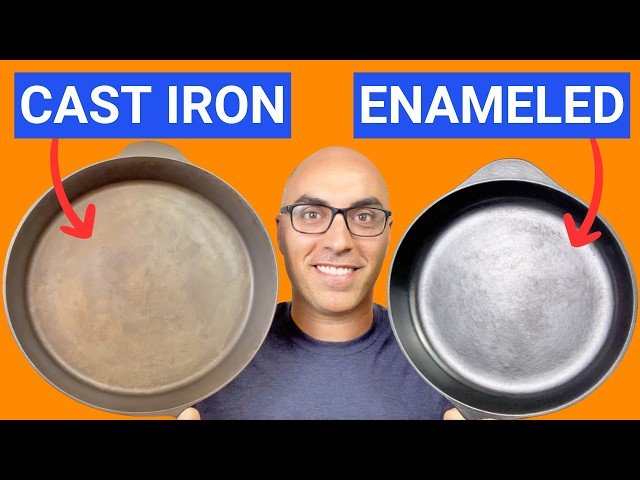
Enameled cast iron does not need seasoning. The enamel makes cleaning easy: just use soapy water and a soft sponge. Some pieces are even dishwasher-safe (but hand washing is gentler on the enamel).
- Avoid metal utensils: These can chip the enamel.
- No seasoning needed: The enamel is always ready to use.
- Watch for chips: Dropping or banging enameled cookware can crack or chip the surface, and repairs are difficult.
Credit: www.youtube.com
Durability And Longevity
Cast iron is famous for lasting a lifetime, but the coating makes a difference.
Bare Cast Iron: Built To Last
A well-cared-for bare cast iron pan can be used for decades or even centuries. It can survive very high heat, including open fires. If the pan rusts, it can usually be scrubbed and re-seasoned.
Enameled Cast Iron: Durable But Vulnerable
Enameled cast iron is also long-lasting, but the enamel coating is the weak spot. Chips or cracks in the enamel can expose the iron underneath, making the pan less safe and harder to clean. Once the enamel is damaged, it is usually not repairable at home.
Cooking Versatility
Let’s look at which tasks each type does best.
| Cooking Task | Bare Cast Iron | Enameled Cast Iron |
|---|---|---|
| Searing Meats | Excellent | Very Good |
| Baking Bread | Excellent | Excellent |
| Frying Eggs | Good if seasoned | Fair (can stick) |
| Cooking Acidic Sauces | Not recommended | Excellent |
| Deep Frying | Excellent | Excellent |
Bare cast iron is best for high-heat tasks and dry cooking. Enameled cast iron is more flexible for simmering, boiling, and acidic foods.
Cost Comparison
Price is a big factor for many buyers.
- Bare cast iron is usually much more affordable. A standard skillet can cost $20–$50.
- Enameled cast iron tends to be expensive, especially from top brands. A Dutch oven can cost $100–$400.
Some of this price difference comes from the enameling process and the brand name. However, both types are investments that can last for many years.
Health And Safety
Many people wonder which type is safer or healthier to use.
Bare Cast Iron
Bare cast iron can add a small amount of iron to your food, which is a benefit for many people (except those with iron overload conditions). However, cooking acidic foods in unseasoned pans can make food taste metallic.
Enameled Cast Iron
Enameled cookware does not leach iron, and the enamel is generally considered safe and non-reactive. High-quality brands use lead-free and cadmium-free enamel. It is important to buy from trusted sources to avoid low-quality, unsafe coatings.
Weight And Handling
Both types are heavy, but there are some differences.
- Bare cast iron skillets are usually a bit lighter, since they have no extra coating.
- Enameled cast iron pots (especially Dutch ovens) are heavy and can be hard to lift when full.
This is important for anyone with wrist or arm strength issues.
Appearance And Design
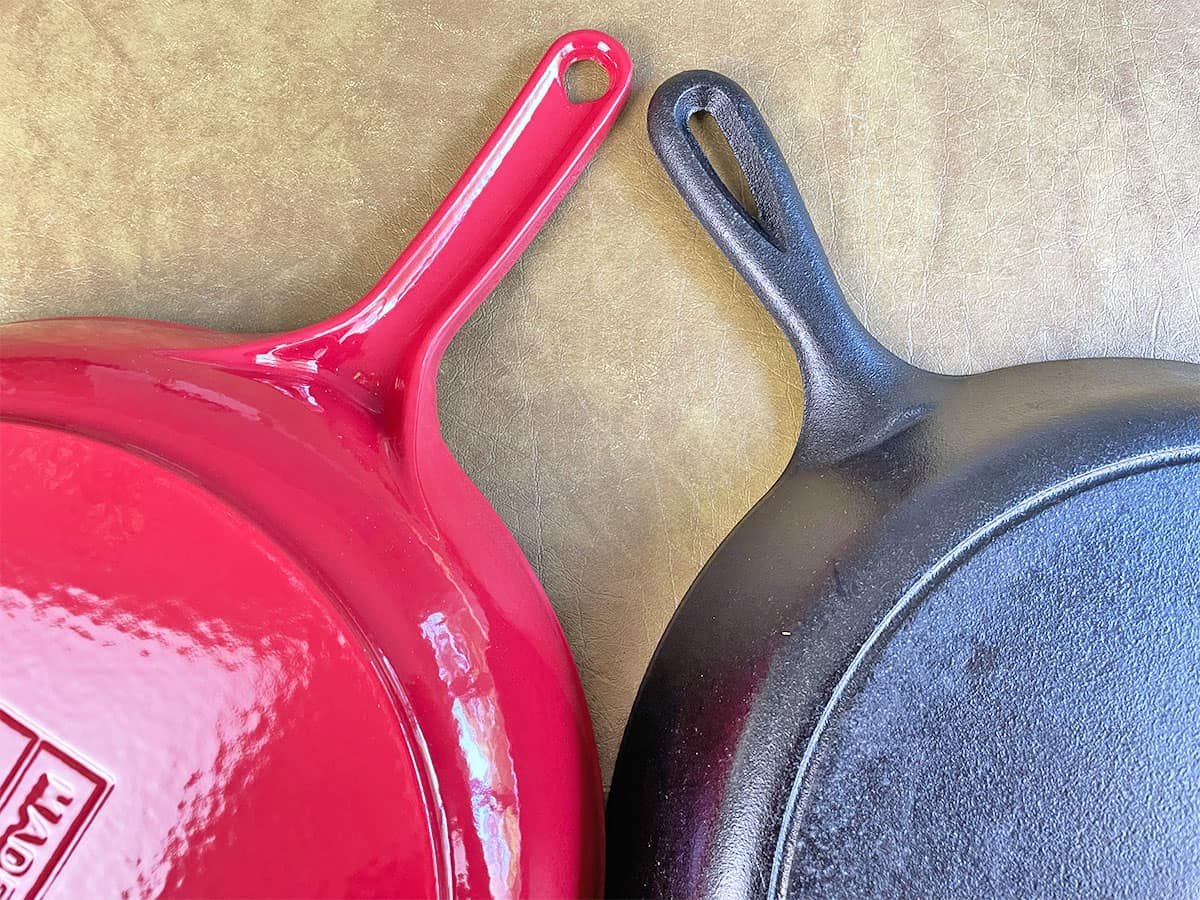
Bare cast iron looks rustic and traditional, often black or dark gray. Over time, it develops a unique patina, showing its history.
Enameled cast iron is available in many colors and shapes. It looks beautiful on the table and can match your kitchen style. The enamel also prevents stains and makes the cookware easier to keep looking new.
Common Beginner Mistakes
Many people make the same errors when starting with cast iron:
- Not drying bare cast iron after washing: This causes rust.
- Using metal utensils on enameled cast iron: This chips the coating.
- Cooking acidic foods in bare cast iron: This strips seasoning and changes flavor.
- Heating empty enameled cast iron pans: Rapid temperature changes can crack the enamel.
- Not preheating pans: Both types perform better when preheated slowly.
Which Should You Choose?
The best choice depends on your needs:
- Pick bare cast iron if you enjoy high-heat cooking, want a pan that lasts forever, and don’t mind regular seasoning.
- Choose enameled cast iron if you cook many acidic dishes, want easy cleaning, or love beautiful cookware.
Some cooks own both types, using each for different recipes.
Non-obvious Insights For Beginners
- Bare cast iron improves with age—the more you use and season it, the better it gets. Many people give up too soon, not realizing that a new pan will become non-stick with patience.
- Enameled cast iron can stain inside, especially with turmeric or tomato sauces. These stains do not affect performance but can be hard to remove. Baking soda or a gentle scrub can help.
- Both types can be used in the oven, but the lids of enameled pots often have a lower heat limit due to plastic knobs.
- Cooking over a campfire: Only bare cast iron is truly safe for outdoor fire use; enamel can crack with direct flame.
Frequently Asked Questions
How Do I Restore A Rusty Bare Cast Iron Pan?
Scrub the rust with steel wool until the surface is smooth. Wash, dry, and re-season the pan by applying oil and baking it upside down in an oven at 400°F (200°C) for one hour. Repeat if needed.
Can I Use Metal Utensils On Enameled Cast Iron?
It’s best to avoid metal utensils on enamel, as they can chip or scratch the coating. Use wood, silicone, or plastic tools to protect the enamel.
Is Enameled Cast Iron Safe For Induction Cooktops?
Yes, both bare and enameled cast iron work on induction cooktops because they are magnetic. Be gentle to avoid scratching glass surfaces.
Why Does My Enameled Cast Iron Have Gray Marks Inside?
These marks are often from metal utensils or stacking pans. They are usually cosmetic and do not affect cooking. To minimize them, use gentle tools and store cookware carefully.
Which Brands Are Most Trusted For Enameled Cast Iron?
Brands like Le Creuset, Staub, and Lodge are widely respected for quality and safety. Always check for independent reviews before buying lesser-known brands.
Choosing between enameled cast iron and bare cast iron comes down to your cooking style, maintenance preference, and budget. Both can give you years of great meals if you know their strengths—and their limits. With this knowledge, you’re ready to pick the perfect cast iron partner for your kitchen.
Credit: prudentreviews.com