
Color coding your wardrobe is not just about making your closet look pretty. It’s a way to save time, reduce stress, and help you find the right outfit fast. Imagine opening your closet and instantly seeing your favorite red shirt or the black pants you need for work.
If you often feel frustrated searching for clothes, or if your wardrobe feels messy, color coding can be a game changer.
Many people think color coding is only for fashion lovers or people with big closets. But actually, it works for everyone, no matter your style or the size of your wardrobe. By organizing your clothes by color, you also learn more about your personal style and what colors you wear most.
This can help you shop smarter in the future.
This guide will walk you through everything you need to know about how to color code your wardrobe. You’ll learn simple steps, get practical tips, and see how to avoid common mistakes. Whether you want a Pinterest-worthy closet or just want to save time getting dressed, this article gives you the tools to get started.
Why Color Code Your Wardrobe?
Color coding isn’t just for neat freaks. There are real benefits:
- Saves time: You can find what you need in seconds.
- Reduces stress: No more searching for matching pieces.
- Protects clothes: Less rummaging means less wear and tear.
- Reveals gaps: See what colors you have or need.
- Looks great: A color-coded wardrobe feels calm and organized.
Many people are surprised by how much easier mornings become. For example, if you know all your black pants are together, you won’t waste time digging. Or, if you love blue tops, you’ll see if you have too many and can mix up your choices.
Prepare Your Wardrobe For Color Coding
Before you start, you need to prepare. Don’t rush this step—good prep makes the process smoother.
- Empty your closet: Take everything out. Lay it on your bed or a clean surface.
- Clean the space: Wipe shelves, vacuum the floor, and dust hangers. A clean closet helps you see the results better.
- Sort by type: Make piles for shirts, pants, dresses, etc. This helps when you start color coding.
While sorting, notice any clothes you haven’t worn in a long time. This is a great moment to donate, sell, or recycle items you no longer need. Many beginners forget this step and end up color coding clothes they don’t even wear.
Choose A Color Order That Works For You
There’s no single rule for the best color order. The most popular system is the rainbow order, also called ROYGBIV:
- Red
- Orange
- Yellow
- Green
- Blue
- Indigo
- Violet
But you can adjust this order to fit your needs.
Common Color Orders
| Order Style | Description | Best For |
|---|---|---|
| Rainbow (ROYGBIV) | Red, Orange, Yellow, Green, Blue, Indigo, Violet | Colorful wardrobes, visual appeal |
| Light to Dark | White, creams, pastels first; black and navy last | Small closets, workwear |
| Neutral to Colorful | Neutrals (white, gray, black) first, then colors | Minimalist or classic styles |
Not every closet has every color. If you don’t own orange or violet, just skip them. The goal is to create a flow that makes sense to you.
How To Color Code Your Clothes: Step-by-step
Follow these steps for best results:
- Group by clothing type: Hang shirts with shirts, pants with pants, and so on. This makes it easier to find what you need.
- Sort each group by color: Within each category, use the color order you chose.
- Use the same hangers: Uniform hangers make colors stand out and your closet look neater.
- Face clothes the same way: All hangers should face the same direction for a tidy look.
- Handle patterns and multicolored items: Place patterned pieces where their main color fits in the order.
Example: Sorting Shirts
If you have six shirts—white, red, blue, black, green, and a blue-white striped shirt—sort them like this:
- White
- Red
- Green
- Blue (solid)
- Blue-white striped (with blue shirts)
- Black
Patterns often confuse people. The best tip is to place them with the color you see most. For a blue floral shirt with white, put it with blue. If colors are equally balanced, place it at the end of that color section.
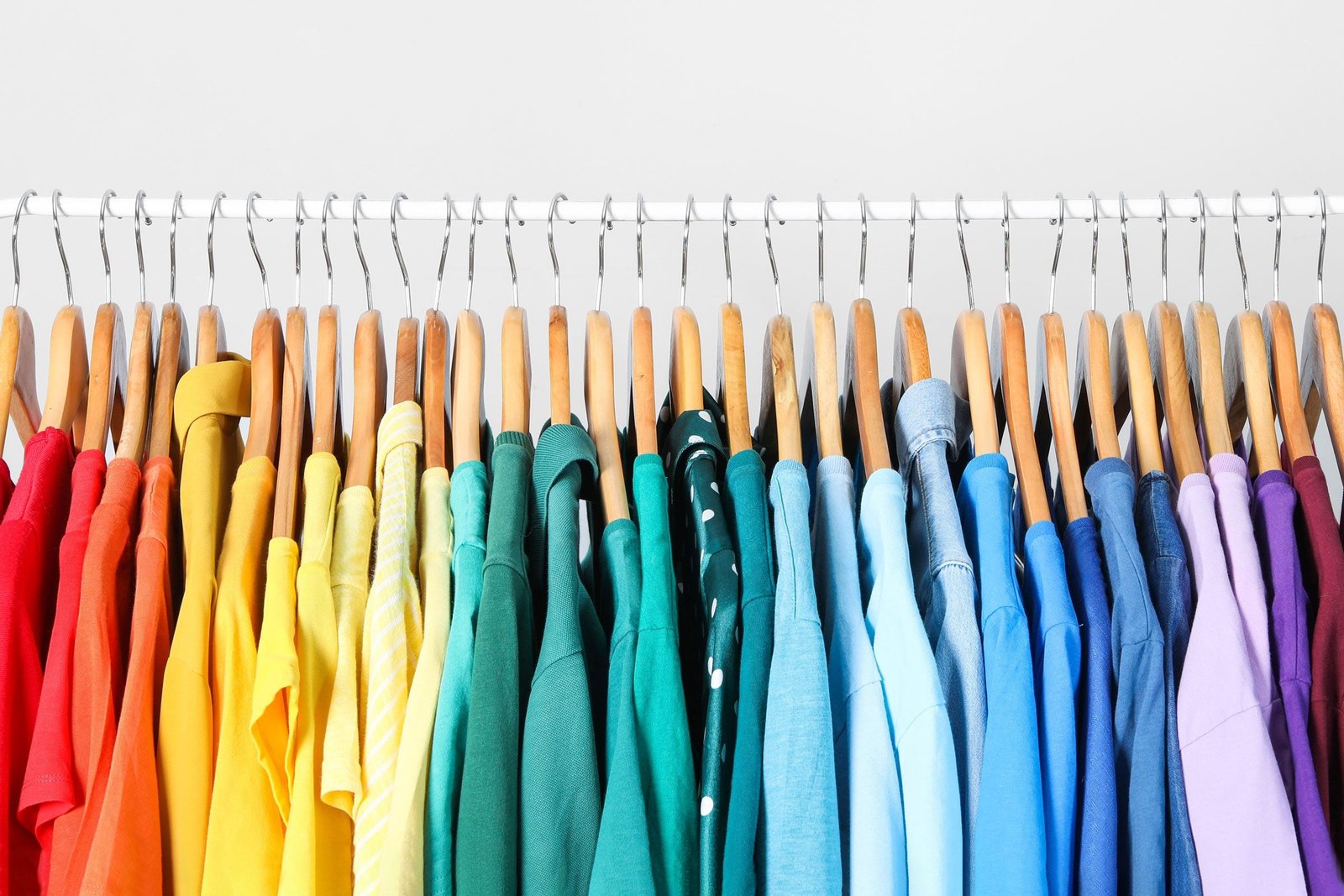
Credit: www.rd.com
Dealing With Special Clothing Items
Some items need special care when color coding.
Denim
Denim comes in many shades. You can group all denim together or sort by color (light wash to dark wash).
Outerwear
Jackets and coats take more space. Hang them at one end of your closet, color coded from light to dark. This keeps heavy items from squashing lighter clothes.
Accessories
Scarves, belts, and hats often get messy. Try these ideas:
- Use hooks or bins, organized by color.
- Fold scarves and store them in clear boxes by color.
- Hang belts on a rack, sorted light to dark.
Color Coding In Drawers And Shelves
If you don’t hang all your clothes, you can still color code folded items.
- Stack T-shirts or sweaters in piles by color.
- Use drawer dividers to separate colors.
- For open shelves, arrange folded clothes in color order.
A common mistake is forgetting to maintain the system. Each time you put away laundry, check that you’re keeping the order. This small habit keeps your wardrobe looking great.
Maintain Your Color-coded Wardrobe
Staying organized is key. Here’s how to keep your system working:
- Regularly review your clothes: Every few months, check for items you no longer wear.
- Tidy as you go: After laundry, return clothes to the correct color section.
- Adjust as needed: If you buy new colors, update your order.
Many people give up because they think it’s too much work. But once your system is in place, it only takes a minute to keep things in order.
Common Mistakes And How To Avoid Them
Even with the best intentions, people make mistakes. Here are two insights beginners often miss:
- Trying to fit all colors: You don’t need every color in the rainbow. Only use colors you actually own.
- Ignoring the types of clothes: Mixing all clothing types together by color looks confusing. Always sort by type first, then by color.
Some also make the mistake of buying more hangers or storage before starting. First, finish sorting. Then you’ll know exactly what you need.

Credit: www.youtube.com
When To Break The Rules
Color coding is flexible. If you find that rainbow order doesn’t work for you, change it. For example, someone who only wears black, white, and gray might use a simple light-to-dark order.
Also, if you share a closet, you may need to compromise on the system. Try using different sections for each person, each with their own color order.
How Color Coding Helps With Shopping
A color-coded wardrobe shows what you wear most. This can save money and prevent buying the same color over and over.
For example, if you see you have eight black shirts and only one green, you may decide to add more variety. Or, you might notice you never wear red and stop buying it.
This approach is used by professional stylists to help clients build better wardrobes. Over time, color coding can help you define your style and make smarter shopping choices.
Color Coding For Kids And Families
Families with kids can use color coding to make mornings easier. Assign a color to each child’s section or use colored bins for socks and underwear.
For example, one family uses blue bins for one child, red for another. This helps children learn independence and keeps laundry organized.
Tools And Products That Make Color Coding Easier
Some products can help, but you don’t need to spend much.
| Tool | Purpose | Estimated Cost |
|---|---|---|
| Uniform Hangers | Keep clothes even and tidy | $10–$30 per set |
| Drawer Dividers | Separate folded items by color | $5–$20 |
| Storage Bins | Organize accessories by color | $3–$15 each |
| Hanging Organizers | Store small items by color | $8–$25 |
For extra help, some people use wardrobe apps that allow you to track your clothes and colors digitally. For more about organizing methods, check this Wikipedia article on wardrobes.
Advanced Tips For A High-impact Color-coded Wardrobe
If you want your closet to really shine, try these advanced tips:
- Add color tags: Use colored stickers or tags for each section, especially helpful if your closet is dark.
- Light your closet: Good lighting makes colors pop and helps you see your system.
- Seasonal rotation: Move out-of-season clothes to another area, keeping only current season items color coded.
- Photograph your closet: A quick photo after organizing can help you maintain your system and spot when things slip.
One expert tip: if you wear uniforms or have a work dress code, keep those items at the front and color code the rest. This balances daily needs with visual order.
Frequently Asked Questions
How Long Does It Take To Color Code A Wardrobe?
For most people, it takes about 2–3 hours to fully color code a small-to-medium wardrobe. If you have many clothes or a walk-in closet, plan for half a day. The main time is spent on sorting and deciding what to keep.
What Do I Do With Clothes That Have Patterns Or Multiple Colors?
Place patterned clothes with the color you see most. If it’s a tie between two colors, pick the section where you’ll remember to look for it. For example, a shirt with equal blue and white can go with blue shirts if you wear it as a blue piece.
Is Color Coding Useful For Small Wardrobes?
Yes! Small wardrobes actually benefit more because you can see everything at a glance. Use a light-to-dark or neutral-to-color order to maximize your space.
How Do I Keep My Wardrobe Color Coded With New Clothes?
When you buy something new, immediately add it to the right color section and clothing type. If you do laundry, return clothes to the correct spot. This habit takes only a minute but keeps your system working.
Can I Color Code Folded Clothes And Hanging Clothes The Same Way?
Absolutely. Use the same color order for both hanging and folded clothes. Drawer dividers and shelf organizers make it easier to keep stacks neat and colorful.
Color coding your wardrobe is more than just a trend—it’s a practical system that saves time, reduces stress, and helps you love your clothes more. Once you try it, you’ll wonder how you ever managed without it.
:max_bytes(150000):strip_icc()/how-to-color-code-a-closet-5212524-hero-edeac55b8ead49239626b51c1f7f4097.jpg)
Credit: www.thespruce.com
