
Growing healthy indoor plants often feels like a challenge, especially when natural sunlight is limited. If you’ve ever watched your favorite houseplant get weak and leggy in a dim corner, you’re not alone. The right grow light for indoor plants can make a dramatic difference, transforming even the darkest rooms into lush, green spaces. But choosing and using grow lights isn’t as simple as plugging in a lamp. There are different types, colors, strengths, and setups to consider. This guide cuts through the confusion, giving you clear, practical advice to pick and use the best grow lights for your indoor jungle.
Why Indoor Plants Need Grow Lights
Most indoor plants come from forests, jungles, or deserts where light is plentiful. When you move them inside, the light intensity drops dramatically. Even a bright room can have just 5% of the sunlight that outdoor plants get. For many species, this isn’t enough for strong growth, flowering, or fruiting.
Grow lights act as an artificial sun. They provide the energy plants need for photosynthesis, helping them make food and grow. With the right grow light, you can grow herbs in your kitchen, start seeds in winter, or keep tropical plants thriving all year.
Some plants, like succulents and orchids, need a lot of light, while others like ferns and pothos can survive with less. But almost all indoor plants benefit from extra light during dark months or in low-light homes.
Types Of Grow Lights For Indoor Plants
Choosing the right type of grow light is essential. Each technology has pros and cons. Here are the main options you’ll see:
| Type | Lifespan | Efficiency | Best For |
|---|---|---|---|
| LED | 25,000–50,000 hours | Very High | Most indoor plants, all growth stages |
| Fluorescent (CFL/T5) | 7,000–20,000 hours | High | Seedlings, herbs, leafy greens |
| Incandescent | 750–2,000 hours | Low | Small decorative displays |
| HID (Metal Halide/HPS) | 10,000–24,000 hours | Medium–High | Fruit/flowering plants, large setups |
Led Grow Lights
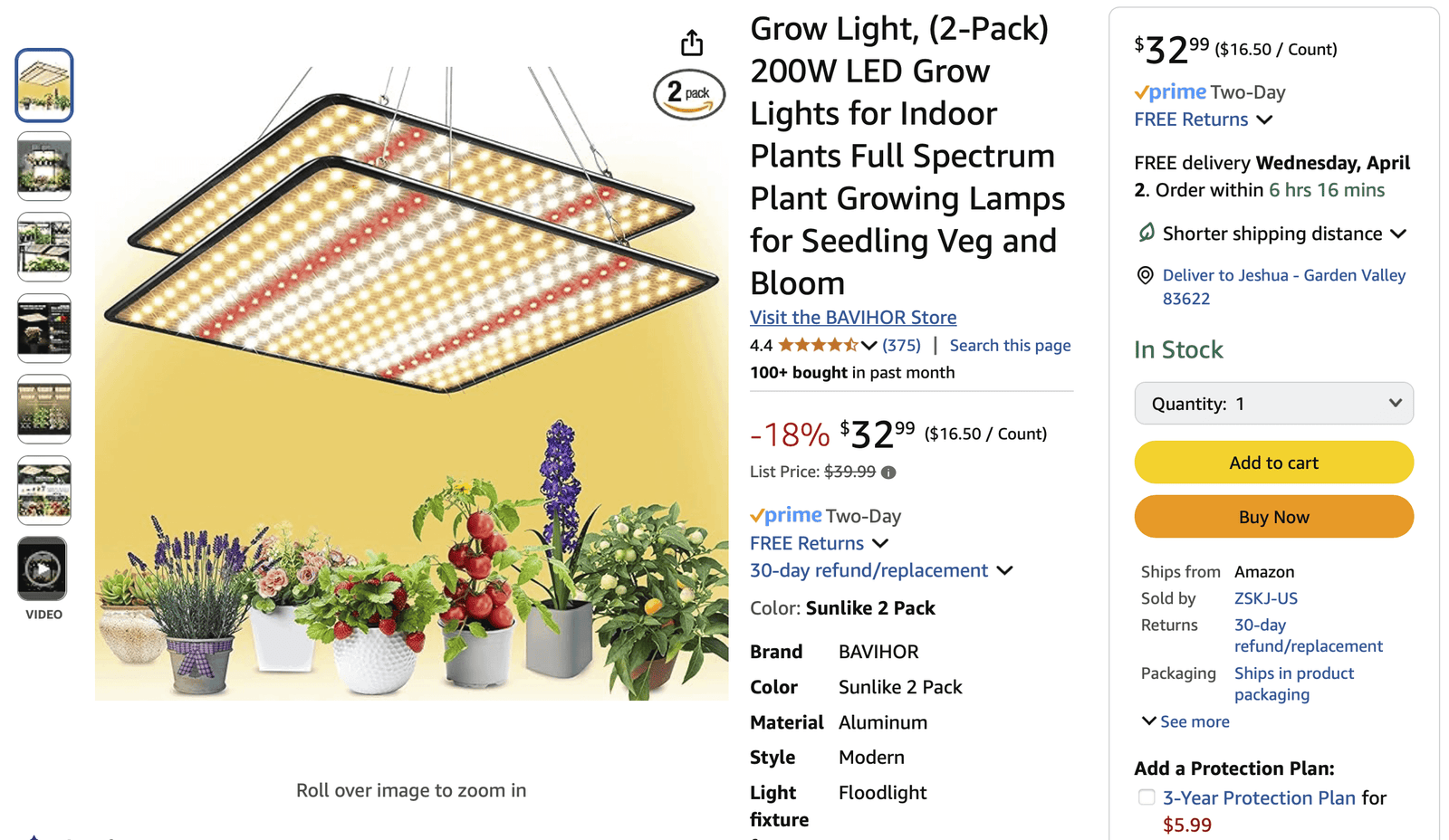
LED grow lights are the most popular choice today. They use less energy, produce less heat, and last much longer than older bulbs. LEDs can be tuned to give exactly the light spectrum plants need. They’re ideal for shelves, cabinets, or any space where heat could be a problem.
Fluorescent Lights
Fluorescent bulbs, especially T5 tubes and compact CFLs, are good for starting seeds, growing herbs, or small houseplants. They’re affordable and widely available. However, they’re less efficient than LEDs and need to be replaced more often.
Incandescent Bulbs
Standard incandescent bulbs are not recommended for growing plants. They produce a lot of heat, little useful light, and can burn leaves if placed too close. Their only advantage is low cost, but even for small projects, there are better choices.
Hid Grow Lights
High-intensity discharge (HID) lights like metal halide (MH) and high-pressure sodium (HPS) produce very strong light. They’re used mostly for large indoor gardens or professional growers. HIDs are powerful but use more energy and get very hot.
Understanding Light Spectrum And Plant Growth
Plants use specific parts of the light spectrum for different tasks. The two most important are blue light and red light.
- Blue light (400–500 nm): Promotes leafy growth, strong stems, and compact size. Essential for seedlings and leafy plants.
- Red light (600–700 nm): Encourages flowering and fruiting. Important for tomatoes, peppers, and blooming houseplants.
Many grow lights are labeled as full spectrum, meaning they cover the entire range plants need. For most home growers, full spectrum LEDs or fluorescents are the best option. Some advanced setups use separate blue and red lights to target specific growth stages.
Non-obvious insight: Many people don’t realize that plants see light differently than humans. What looks bright to you may be useless for your plant. That’s why grow lights are designed to deliver the right spectrum, not just brightness.
Measuring Light: Lumens, Par, And Ppfd
Choosing a grow light isn’t just about wattage. It’s important to understand how much usable light your plants actually receive.
- Lumens: Measures how bright a light appears to human eyes. Not the best for plants.
- PAR (Photosynthetically Active Radiation): The part of the light spectrum plants use for photosynthesis.
- PPFD (Photosynthetic Photon Flux Density): Measures how many photons in the PAR range hit a specific area per second. The higher the PPFD, the more usable light your plant gets.
For most indoor plants, a PPFD of 100–300 μmol/m²/s is enough for healthy growth. Fruiting and flowering plants may need 400+ μmol/m²/s.
Non-obvious insight: Placing a light closer to your plant increases the PPFD, but too close can burn the leaves. Always check the manufacturer’s recommended hanging height.
How To Choose The Right Grow Light For Your Plants
Buying a grow light can be confusing with so many options. Here’s a step-by-step process to help you decide:
- Identify your plant’s light needs.
- Succulents and cacti need intense light.
- Herbs, leafy greens, and most houseplants need medium light.
- Ferns and shade-lovers need low to medium light.
- Measure your space.
- Calculate the area you want to cover (length × width).
- Match the light’s coverage area to your setup.
- Choose the right type.
- For small spaces: LED or fluorescent.
- For large or commercial setups: Consider HID.
- Check for full spectrum output.
- Most plants do best under full spectrum light.
- Calculate power and efficiency.
- For most houseplants, 20–40 watts per square foot is enough with LEDs.
- Look for timer and dimming features.
- Timers automate day/night cycles, important for consistent growth.
- Read reviews and check warranty.
- Quality and reliability matter, especially for long-term use.
Here’s a simple comparison for three popular grow light options:
| Grow Light Model | Type | Coverage Area | Wattage | Best For |
|---|---|---|---|---|
| Spider Farmer SF-1000 | LED | 2×2 ft | 100W | Seedlings, herbs |
| Sunblaster T5HO 2ft | Fluorescent | 2×1 ft | 24W | Microgreens, starts |
| GE BR30 Grow Bulb | LED | Spotlight | 9W | Single houseplants |
Setting Up Your Grow Light System
Getting the right light is only half the battle. How you set it up makes a big difference:
Positioning
- Place lights directly above the plants for even growth.
- Keep the distance appropriate: LEDs usually 12–24 inches above the canopy, fluorescents 6–12 inches.
- Adjust as plants grow taller.
Timing
- Most plants need 12–16 hours of light per day.
- Mimic natural day/night cycles. Use a timer for consistency.
- Some flowering plants need periods of darkness to bloom.
Reflectors And Light Loss
- Use reflective materials (white walls, mylar, aluminum foil) to bounce light back onto plants.
- Avoid light leaks by making sure the area around the plants is well-lit.
Heat Management
- LEDs stay cool, but HID and fluorescent lights can raise temperatures.
- Ensure good airflow to prevent overheating and mold.
Practical tip: Clean your bulbs and fixtures every few months. Dust can reduce light output by 10–20%.
Credit: www.glowrium.com
Common Mistakes When Using Grow Lights
Even with a good light, it’s easy to make mistakes:
- Overheating plants. Too much heat from lights can dry out soil and burn leaves.
- Incorrect light cycle. Plants need darkness too. Leaving lights on 24/7 can stress them.
- Using the wrong spectrum. Regular bulbs may look bright but don’t have the right spectrum for growth.
- Hanging lights too far away. Light intensity drops quickly with distance.
- Ignoring plant signals. Leggy growth means not enough light; scorched leaves mean too much.
Cost Of Running Grow Lights
Worried about energy bills? Here’s what you can expect:
- A 100W LED running 16 hours a day uses about 48 kWh per month. At $0.13 per kWh, that’s about $6/month.
- Fluorescents are a bit less efficient but still affordable.
- HID lights are more expensive to run and may require extra cooling.
Tip: Use LEDs for the lowest long-term costs.
Credit: www.reddit.com
Grow Light Accessories And Extras
Some accessories can make your grow light setup even better:
- Timers: Automate light cycles, essential for forgetful gardeners.
- Light meters: Measure how much usable light your plants get.
- Hanging kits and racks: Adjust light height easily.
- Smart plugs: Control grow lights from your phone.
Best Practices For Different Indoor Plants
Every plant has unique needs. Here’s how to match your light to common indoor favorites:
- Succulents and cacti: Strong, bright light (full spectrum LED, high PPFD).
- Orchids: Medium to high light, avoid direct heat on leaves.
- Leafy greens: 12–14 hours/day, medium intensity.
- African violets: Low to medium light, avoid hot spots.
- Seedlings: Gentle light, keep close but not too hot.
Signs Your Plants Need More Or Less Light
Plants will show you if your lighting is right:
- Too little light: Pale leaves, long stems, slow growth.
- Too much light: Brown tips, scorched patches, crispy leaves.
Actionable advice: If in doubt, start with less light and increase gradually. Watch your plants closely and adjust as needed.
Where To Buy Quality Grow Lights
You can find grow lights at garden centers, hardware stores, or online. Look for reputable brands and read customer reviews. For more in-depth information, check out this grow light overview on Wikipedia.
Credit: www.lovethatleaf.co.nz
Frequently Asked Questions
How Many Hours Should I Leave Grow Lights On?
Most indoor plants do best with 12–16 hours of light each day, followed by 8–12 hours of darkness. Use a timer to maintain a consistent schedule.
Can I Use Regular Led Bulbs As Grow Lights?
Regular LEDs may help a little, but grow-specific LEDs provide the right spectrum and intensity for plant growth. You’ll get better results with bulbs labeled for plant use.
How Close Should Grow Lights Be To Plants?
It depends on the type of light:
- LEDs: 12–24 inches above the plants.
- Fluorescents: 6–12 inches.
- HID: 24–48 inches.
Always follow the manufacturer’s instructions and adjust if you see signs of burning or stretching.
Do All Indoor Plants Need Grow Lights?
Not all, but most benefit from extra light, especially in winter or dark rooms. Low-light plants like snake plants or pothos can survive without, but will grow faster with a grow light.
Are Grow Lights Safe For People And Pets?
Yes, grow lights are generally safe. However, avoid staring directly into high-intensity lights, and keep them out of reach of children and pets to prevent burns from hot bulbs.
A successful indoor garden starts with understanding your plants’ needs. With the right grow light, you can enjoy healthy, vibrant plants in any space—no sunny window required. Pay attention to light type, spectrum, and setup, and you’ll soon see the difference in your indoor oasis.