
When it’s time to buy a new comforter, the choice between down alternative and down can feel confusing. Both look fluffy and promise warmth, but they are very different inside. Which one is better for you? In this article, you’ll discover the real differences, the pros and cons, and how to choose the right comforter for your needs. Whether you care about allergies, want something eco-friendly, or just want the best sleep possible, this guide will help you make a clear, confident decision.
What Is A Down Comforter?
A down comforter is filled with the soft under-feathers found beneath the tougher outer feathers of ducks or geese. These tiny clusters trap air and make the comforter very light yet warm. Many people love down comforters because they feel luxurious and can last for years with the right care.
Most down comforters have a cotton or microfiber shell. The down is often divided into small pockets, called baffles or boxes, to keep it evenly spread. The higher the fill power (a measure of fluffiness and insulation), the warmer and loftier the comforter.
What Is A Down Alternative Comforter?
A down alternative comforter uses synthetic materials instead of natural down. The most common fillings are polyester fibers, microfiber, or other man-made materials designed to mimic the softness and insulation of real down. Some brands also use bamboo or recycled fibers for a more eco-friendly option.
Down alternative comforters are usually less expensive, easier to wash, and often marketed as hypoallergenic because they do not contain animal products that can cause allergies.
Credit: laylasleep.com
Key Differences At A Glance
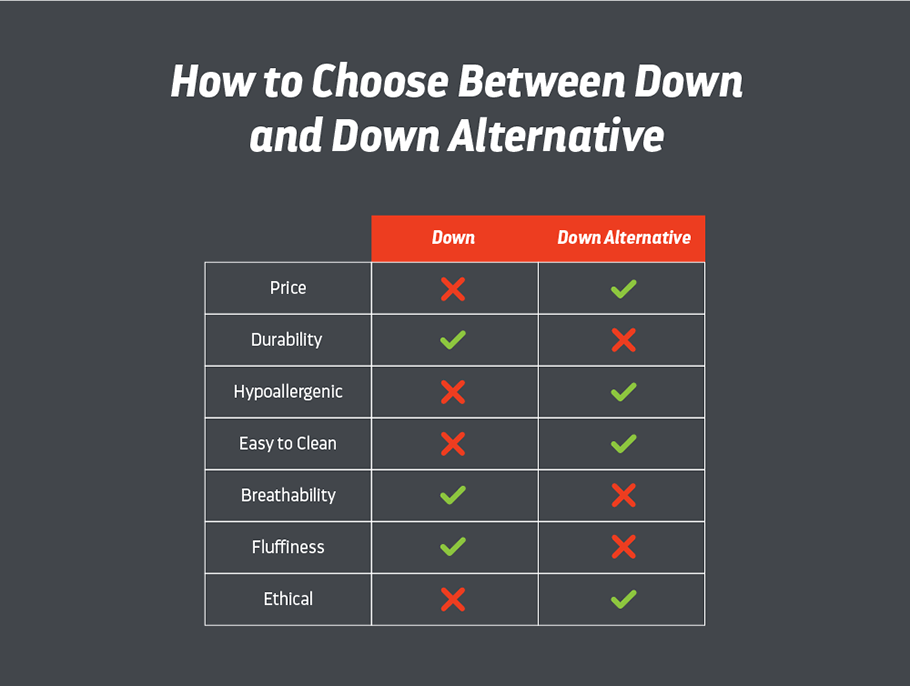
Here’s a simple side-by-side comparison for quick reference:
| Feature | Down Comforter | Down Alternative Comforter |
|---|---|---|
| Filling | Natural down (duck/goose) | Polyester or synthetic fibers |
| Warmth-to-Weight Ratio | High (very warm, lightweight) | Good, but heavier for same warmth |
| Hypoallergenic | Not always | Usually yes |
| Price | Expensive | Affordable |
| Care | Dry clean or gentle wash | Machine washable |
| Lifespan | 10-15 years | 3-7 years |
Warmth And Insulation
One of the biggest reasons people buy a comforter is to stay warm at night. Down comforters are famous for their warmth-to-weight ratio. This means they keep you very warm without feeling heavy. The down clusters trap warm air and create natural insulation.
Down alternative comforters can also be warm, but usually need more filling to reach the same level of insulation. This makes them heavier and sometimes less breathable. However, if you live in a mild climate or prefer more weight on your body, down alternative can still be a good choice.
Fill Power And Gsm Explained
- Fill power is used for down. It measures how much space one ounce of down takes up. The higher the number (for example, 600-800), the fluffier and warmer the comforter.
- GSM (grams per square meter) is used for down alternative. Higher GSM means more filling, which usually means more warmth.
Allergies And Sensitivities
Many people worry about allergies. Down comforters can cause problems for those sensitive to feathers or dust mites. Some down comforters are labeled “hypoallergenic” because the down is cleaned and treated, but it doesn’t guarantee zero reactions.
Down alternative comforters are often the safer pick for allergy sufferers. The synthetic fill does not attract dust mites as easily and is less likely to cause allergic reactions. If you have asthma, allergies, or sensitive skin, a down alternative is usually the better choice.
Care And Cleaning
How easy is it to wash your comforter? This matters more than most people think. Spills, sweat, and dust build up over time.
- Down comforters usually require special care. Most need to be dry cleaned or washed gently in a large machine, then dried with care (often with clean tennis balls to keep the down fluffy). Washing too often can damage the down.
- Down alternative comforters are much easier. Most can be tossed in a regular washing machine and dryer. They dry faster and keep their shape better after washing.
This difference is important for families with kids, pets, or anyone who wants a low-maintenance bedding option.
Cost And Value
The price gap between these two types is huge. A good down comforter can cost anywhere from $150 to over $1000, depending on the fill power, size, and whether it’s goose or duck down (goose down is usually pricier).
Down alternative comforters are much more affordable, with most options ranging from $30 to $200. For many people, the lower cost makes it possible to buy several comforters for different seasons or guest rooms.
However, down comforters tend to last much longer if cared for properly. Over 10-15 years, the total cost can be similar, but the upfront investment is higher with down.
Durability And Lifespan
Down comforters are known for their long life. With gentle use and care, they can stay fluffy and warm for over a decade. The natural oils in down help the clusters stay resilient, and quality stitching keeps the fill from shifting.
Down alternative comforters usually last 3-7 years. Synthetic fibers can flatten and clump over time, especially after repeated washing. If you want bedding that lasts for many years, down is the clear winner—but you must be willing to care for it.
Weight And Feel
If you love a light, cloud-like feeling, a down comforter is hard to beat. The high loft and light weight make it feel airy and soft. Many luxury hotels use down comforters for this reason.
Down alternative comforters are heavier when providing the same warmth, but some people actually prefer the extra weight. A heavier comforter can feel more secure, similar to a weighted blanket. However, some cheaper down alternatives may feel stiff or less breathable.
Ethical And Environmental Impact
Today, many people consider how their bedding choices affect animals and the environment.
- Down comforters come from animals. While some companies follow strict animal welfare standards (like the Responsible Down Standard), there are still concerns about how down is collected. If you care about animal rights, look for certified ethical sources.
- Down alternative comforters are vegan-friendly and do not use animal products. However, synthetic fibers are made from petroleum, which is not always environmentally friendly. Some brands now use recycled materials or plant-based fibers to reduce their impact.
This is an area where reading labels and company policies really matters.
Breathability And Moisture Management
Sleeping hot or cold can ruin a good night’s rest. Down is naturally breathable and helps wick away moisture, keeping you dry and comfortable. It adjusts well to different temperatures, which is why people use down in both winter and summer.
Down alternative comforters sometimes trap more heat and moisture because the fibers do not breathe as well as natural down. Some newer technologies have improved this, but if you sweat at night, real down might still be better.
Noise And Comfort
You might not think about noise until you try a comforter that rustles every time you move. Down comforters are usually very quiet, especially with soft cotton covers.
Some down alternative comforters can make more noise if the shell fabric is stiff or the filling shifts. If you are a light sleeper, pay attention to fabric reviews before buying.
Appearance And Loft
Both types can look fluffy and inviting at first. But over time, down comforters tend to keep their loft (fluffiness) longer. The natural clusters rebound even after being compressed.
Down alternative comforters can start fluffy, but many lose their loft after several washes or months of use. Some high-end versions use advanced fibers that resist flattening, but most budget options will look thinner after a while.
Choosing The Right Comforter For You
Your best choice depends on your needs, budget, and values. Here are some tips to help you decide:
- If you have allergies or want easy care: Go for a down alternative comforter. It’s washable, usually hypoallergenic, and good for kids or pets.
- If you want luxury, warmth, and long life: Choose a down comforter with high fill power and ethical sourcing. It’s an investment, but it can last many years.
- If you sleep hot: Down is more breathable, but some modern down alternatives also work well. Check for “cooling” or “breathable” features.
- If you’re on a tight budget: Down alternative is affordable and comes in many styles.
- If you care about animal welfare: Pick a down alternative, or only buy down from companies with animal welfare certifications.
Credit: www.youtube.com
Real-world Example: Comparing Two Popular Models
Here’s a direct comparison between a high-quality down comforter and a leading down alternative:
| Brand/Model | Type | Price (Queen) | Fill Power/GSM | Care | Lifespan |
|---|---|---|---|---|---|
| Brooklinen Down Comforter | Down | $249 | 650 Fill Power | Dry clean or gentle wash | 10+ years |
| Boll & Branch Down Alternative | Down Alternative | $180 | 300 GSM | Machine washable | 5 years |
Notice: The down option is pricier but lasts longer. The down alternative is easier to clean and costs less, but may need replacing sooner.
Two Insights Beginners Often Miss
- Fill quality matters as much as fill power or GSM. A down comforter with lower fill power but higher quality down can outperform a higher fill power with poor quality. The same is true for synthetics—brand reputation and customer reviews reveal a lot.
- Construction affects performance. Look for baffle-box construction (sewn squares) in both types. This keeps filling evenly spread and stops cold spots—something beginners rarely check but makes a big difference.
Making The Most Of Your Comforter
No matter which type you pick, a few tips help you get the best experience:
- Use a duvet cover to protect your comforter and reduce washing needs.
- Fluff your comforter regularly to keep it lofty.
- Store it in a breathable bag (not plastic) during off-seasons.
- Air out your comforter in sunlight once in a while—this keeps it fresh and reduces odors.
Frequently Asked Questions
What Is The Main Difference Between Down And Down Alternative Comforters?
Down comforters are filled with real duck or goose down, while down alternative comforters use synthetic fibers like polyester. Down is lighter and warmer for its weight, but down alternative is more affordable, easier to wash, and usually hypoallergenic.
Are Down Alternative Comforters Good For People With Allergies?
Yes, most down alternative comforters are hypoallergenic. The synthetic fill does not attract dust mites as easily and is less likely to cause allergic reactions compared to natural down.
How Do I Choose The Right Fill Power Or Gsm?
For down comforters, look for a fill power of 600 or higher for good warmth and loft. For down alternative comforters, check the GSM—higher numbers mean more warmth but also more weight. Consider your climate and how warm you sleep.
How Long Do Comforters Last?
A high-quality down comforter can last 10-15 years if cared for properly. Down alternative comforters usually last 3-7 years before the fill starts to flatten or clump.
Credit: www.thesleepjudge.com
Which Type Is More Environmentally Friendly?
It depends. Down comforters are natural but involve animal products, so check for certifications like Responsible Down Standard. Down alternative comforters are vegan but made from synthetic fibers, which can impact the environment unless recycled materials are used. For more details, see this Wikipedia article on down feathers.
Choosing between down and down alternative comforters is personal. Think about your needs, budget, and values. Both types can help you sleep well—if you pick the right one for your life.