
Buckwheat pillows are gaining attention as an alternative to traditional pillows filled with foam, feathers, or synthetic materials. These pillows, filled with buckwheat hulls, promise unique support, cooling comfort, and a natural approach to better sleep. But are they truly better? Understanding the benefits and drawbacks of buckwheat pillows can help you decide if they’re right for your sleep needs.
What Makes Buckwheat Pillows Unique?
Buckwheat pillows are filled with the hard outer shells of buckwheat seeds, known as hulls. These hulls give the pillow a firm, moldable quality. Unlike memory foam or polyester, buckwheat does not compress easily. You can adjust the amount of hulls to change the pillow’s firmness or height. This adjustability is one reason many people try buckwheat pillows.
The natural material also means buckwheat pillows have a different feel and performance compared to more common pillow types. Let’s explore their key benefits and drawbacks in detail.
Buckwheat Pillow Benefits
1. Excellent Support And Alignment
Buckwheat pillows provide firm and customizable support for the head and neck. The hulls shift and move, letting the pillow shape itself to your exact body structure. This can help keep the neck and spine in a neutral position, which is important for reducing neck and back pain.
People who sleep on their back or side often find this support especially helpful. A study published in the Journal of Manipulative and Physiological Therapeutics found that proper pillow support can reduce morning neck pain and improve sleep quality.
2. Adjustable Height And Firmness
Many buckwheat pillows have a zipper, so you can add or remove hulls. This means you can make the pillow thicker, thinner, firmer, or softer to match your preference. It’s a clear advantage over most foam or feather pillows, which have fixed height and firmness.
For example, some people prefer a low loft pillow for stomach sleeping, while side sleepers often need a higher loft. Adjusting a buckwheat pillow is simple—just add or remove hulls until it feels right.
3. Natural Cooling And Breathability
Buckwheat hulls do not hold heat like foam or synthetic fills. There are gaps between the hulls, allowing air to move freely. This natural airflow helps keep the pillow cool, even during warm nights.
Hot sleepers or those living in warm climates often notice less sweating and discomfort. The pillow does not trap body heat, making it a popular choice for those who dislike waking up hot.
4. Hypoallergenic And Eco-friendly
Buckwheat hulls are a natural, plant-based material. They are not treated with harsh chemicals and are biodegradable. Many buckwheat pillows use organic cotton covers, making them suitable for people sensitive to synthetic materials.
While not everyone with allergies will be safe (see “Drawbacks”), the lack of chemical smells and use of natural materials is a plus for many users. Also, buckwheat pillows are more environmentally friendly than memory foam or polyester pillows, which use petroleum-based products and can take centuries to break down.
5. Durable And Long-lasting
With proper care, buckwheat pillows can last five to ten years or more. The hulls do not break down quickly, and you can replace the hulls without buying a whole new pillow. This makes buckwheat pillows a good long-term investment.
Compare this with standard pillows, which often lose support and need replacing every one or two years. The replaceable fill is a unique advantage.
6. Reduced Odor And Off-gassing
Memory foam and some synthetic pillows release chemicals called volatile organic compounds (VOCs), which can cause a strong smell known as off-gassing. Buckwheat pillows rarely have this problem. They might have a light, earthy scent when new, but it usually fades quickly.
People who are sensitive to chemical smells often choose buckwheat for this reason.
7. Minimal Noise And Movement Transfer
The hulls inside a buckwheat pillow shift quietly compared to some feather pillows, which can rustle loudly. Also, the pillow stays in place rather than bouncing or moving like a springy foam pillow. This means fewer disturbances if you change position during the night.
8. Customizable Shape For Special Needs
Because the hulls move and hold their shape, you can create dips or curves that fit your body. Some people use buckwheat pillows for knee support, lumbar support, or even as bolsters. This flexibility is useful for people with special medical needs or those who want a pillow for more than just their head.
9. Good For Reducing Snoring
Proper head and neck alignment can open the airway and reduce snoring. Because you can adjust a buckwheat pillow for the right height, some users report less snoring and better breathing.
10. Simple To Clean And Maintain
You can wash the outer cover and replace hulls if they become dirty. Most manufacturers recommend airing out the hulls in sunlight every few months to keep them fresh.
Cleaning is easier compared to foam pillows, which can be damaged by washing.
Buckwheat Pillow Drawbacks
1. Heavier Than Most Pillows
Buckwheat pillows are much heavier. A standard size can weigh 4 to 5 pounds (1.8 to 2.3 kg), and a king-size pillow can weigh up to 10 pounds (4.5 kg). This makes them harder to move, shake, or adjust. Some users find this inconvenient, especially if they like to move their pillow during the night.
2. Noisy For Light Sleepers
While not as loud as some feather pillows, the hulls can make a rustling sound when you move. Most people get used to this, but very light sleepers may find it distracting, especially during the first few nights.
3. Can Be Too Firm For Some People
Buckwheat pillows are firmer than most foam or down pillows. Some people, especially those used to a soft, plush pillow, may find buckwheat uncomfortable at first. They do not have a “sinking in” feeling and can feel hard if overfilled.
Adjusting the amount of hulls can help, but people seeking a soft, cushiony pillow may not be satisfied.
4. Not Machine Washable
You cannot put a buckwheat pillow in the washing machine. Water damages the hulls and can cause mold. Only the outer cover is washable. The hulls must be removed and aired out instead. This adds extra steps to cleaning compared to pillows that are fully washable.
5. Potential Allergy Issues
While buckwheat hulls are natural, they can cause allergies in some people, especially if not cleaned properly before being used as pillow fill. Mold, dust, or leftover seed particles can be a problem if the pillow is not made by a reputable manufacturer.
If you have known allergies to seeds or pollen, consult a doctor before using a buckwheat pillow.
6. Takes Time To Adjust
Switching to a buckwheat pillow often requires an adjustment period. The support and feel are very different from regular pillows. It may take several nights or even weeks to get used to the firmness and noise.
7. Higher Price Tag
High-quality buckwheat pillows are more expensive than basic foam or polyester pillows. Prices range from $40 to over $100 depending on size and quality. While the long lifespan can balance out the cost, the initial investment is higher.
8. Can Lose Hulls Over Time
With frequent use, some hulls may escape from the pillow or break down. You may need to buy extra hulls to refill the pillow every few years. This is an added minor expense and effort.
9. Needs Regular Fluffing
Buckwheat hulls settle and compact over time, so you need to fluff the pillow regularly to maintain comfort and support. This is a bit more work than with some other pillow types.
10. Limited Availability In Stores
Most buckwheat pillows are sold online, not in local stores. This means you cannot test them before buying. Also, shipping adds to the cost because of the weight.
Buckwheat Pillow Vs. Other Pillow Types
To see how buckwheat pillows compare with common alternatives, look at this overview:
| Pillow Type | Support | Cooling | Weight | Lifespan |
|---|---|---|---|---|
| Buckwheat | Firm, adjustable | Excellent | Heavy | 5-10 years |
| Memory Foam | Medium, contouring | Poor to fair | Medium | 2-3 years |
| Down/Feather | Soft, compresses | Good | Light | 1-3 years |
| Polyester | Soft to medium | Fair | Light | 1-2 years |

Credit: www.pinetales.com
Who Should Try A Buckwheat Pillow?
Buckwheat pillows are not the perfect solution for everyone. Here’s when they make sense:
- You want firm, adjustable support for your head and neck.
- You suffer from neck pain or poor sleep posture.
- You are a hot sleeper and want a cooler pillow.
- You prefer natural, chemical-free bedding.
- You don’t mind a heavier pillow or a short adjustment period.
When To Avoid Buckwheat Pillows
Buckwheat pillows may not be ideal if:
- You want a soft, plush pillow.
- You are a very light sleeper who is bothered by noise.
- You need a pillow you can wash completely in a machine.
- You have allergies to buckwheat or seed dust.
Real User Experiences
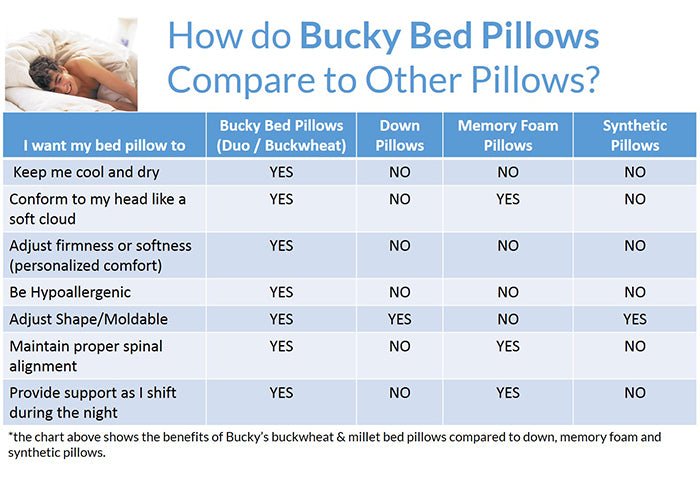
Many people praise buckwheat pillows for reducing neck pain and improving sleep quality. Some report less snoring or fewer headaches. Others say the cooling effect is noticeable during summer.
However, first-time users often mention a “breaking in” period, where the pillow feels too firm or noisy. Some people give up, while others adjust and never go back to traditional pillows.
Credit: bucky.com
How To Choose A Quality Buckwheat Pillow
- Look for organically grown hulls that have been properly cleaned and dusted.
- Pick a pillow with a removable, washable cover (preferably cotton).
- Check reviews to see if the company provides extra hulls for future refilling.
- If you’re unsure, start with a smaller size like a Japanese-style buckwheat pillow, which is narrow and easy to try out.
Price And Value Comparison
Here’s a quick price comparison of popular pillow types:
| Pillow Type | Average Price (Standard Size) | Replacement Frequency | Long-term Cost (5 Years) |
|---|---|---|---|
| Buckwheat | $50 – $100 | 5-10 years | $50 – $100 |
| Memory Foam | $30 – $80 | 2-3 years | $60 – $160 |
| Down/Feather | $40 – $120 | 1-3 years | $120 – $400 |
| Polyester | $10 – $30 | 1-2 years | $25 – $75 |
While the upfront price of a buckwheat pillow is higher, the long-term cost can be lower due to durability.
Non-obvious Insights
- Humidity Control: Buckwheat hulls can absorb a small amount of moisture from the air, helping to keep the pillow drier and less prone to mold compared to synthetic fills. However, they must not get wet directly.
- Pillow Shape Retention: Unlike foam, which can become lumpy or uneven, buckwheat hulls shift naturally, so the pillow rarely develops permanent dips or flat spots. This means you get consistent support night after night.
Frequently Asked Questions
What Is The Lifespan Of A Buckwheat Pillow?
A well-cared-for buckwheat pillow can last 5 to 10 years or more. You may need to add new hulls over time, but the pillow itself is highly durable compared to foam or polyester pillows.
Are Buckwheat Pillows Good For Neck Pain?
Yes, many people find relief from neck pain with buckwheat pillows because they provide firm, adjustable support. This helps keep the spine aligned during sleep. However, it may not work for everyone, especially those who prefer soft pillows.
How Do You Clean A Buckwheat Pillow?
Remove the hulls and wash the outer cover. The hulls should be aired out in the sun but never washed with water. If the hulls get wet, they can develop mold and must be replaced.
Can People With Allergies Use Buckwheat Pillows?
Most people with general allergies do well, but if you have a seed or grain allergy, check with your doctor. Make sure to buy pillows with cleaned, dust-free hulls from a reputable brand.
Where Can I Learn More About The Science Behind Buckwheat Pillows?
You can find more details and studies on pillow ergonomics at the Wikipedia buckwheat pillow page.
A buckwheat pillow offers a unique sleep experience—firm support, cooling comfort, and eco-friendly materials. However, it’s not for everyone. If you’re curious, try one for a few weeks and see if your sleep improves. Sometimes, a small change in your pillow can make a big difference in your health and comfort.
Credit: sweetzzzmattress.com