
Keeping your closet organized is not just about folding shirts or hanging dresses. Accessories—like belts, jewelry, scarves, hats, and bags—bring personality to your wardrobe, but they can quickly turn a neat closet into a messy tangle. Learning how to organize accessories in your closet can save you time every morning, protect your items, and even help you use what you already own in more creative ways.
Many people underestimate how much space accessories take up or how easily they get lost. The good news? With the right approach, you can transform even a chaotic accessory shelf into a stylish, functional area. Below, you’ll find practical steps, clever tricks, and expert advice for organizing every type of accessory in your closet—no matter the size of your space or the size of your collection.
Understanding Your Accessories
Before you start buying boxes or hooks, take a few minutes to understand what you have. Accessories can include:
- Belts
- Scarves
- Ties
- Jewelry (necklaces, bracelets, rings, earrings)
- Hats
- Bags and purses
- Sunglasses
- Watches
- Hair accessories (clips, headbands)
Knowing exactly what you own prevents wasted space and helps you pick the right organizing tools. Many people buy organizers that don’t suit their actual items and end up frustrated. Instead, group your accessories by type. Lay them out on your bed or a table.
This visual overview often surprises people—sometimes, you’ll find five black belts you forgot about or jewelry you haven’t worn in years.
Declutter Before Organizing
It’s tempting to jump straight to storage solutions, but decluttering is essential. Holding onto items you never use only creates mess and makes it harder to find what you love.
Steps to declutter:
- Pick up each item and ask yourself: Have I used this in the last year? Is it still in good condition?
- Sort into three piles: Keep, Donate/Sell, Discard.
- Be honest. If you have accessories with sentimental value but never use them, consider storing them outside your main closet.
A study from the National Association of Professional Organizers found that we only wear about 20% of our wardrobe regularly. Accessories are no exception. Decluttering lets you focus your energy and space on what you actually enjoy.
Maximize Closet Space For Accessories
Closets are designed for clothes, not for small items. To organize accessories efficiently, you need to create dedicated zones for each type.
Use Vertical Space
Walls and the back of closet doors are often wasted. Install hooks, racks, or pocket organizers. For example:
- Hooks for necklaces or hats
- Over-the-door organizers for scarves or belts
Add Shelves And Dividers
Small shelves or shelf dividers can turn wasted space into useful storage. Slim shelves are perfect for sunglasses, watches, or wallets.
Drawer Solutions
If your closet has drawers, use them for accessories that need to stay dust-free, like jewelry or silk scarves. Add small drawer organizers to keep items separated.
Organizing Belts, Scarves, And Ties
Belts, scarves, and ties can get tangled or lost if thrown in a drawer. The right method keeps them visible and in good shape.
Belt Organization
- Belt racks: These hang inside the closet and hold multiple belts.
- Hooks: Install a few on the wall or door.
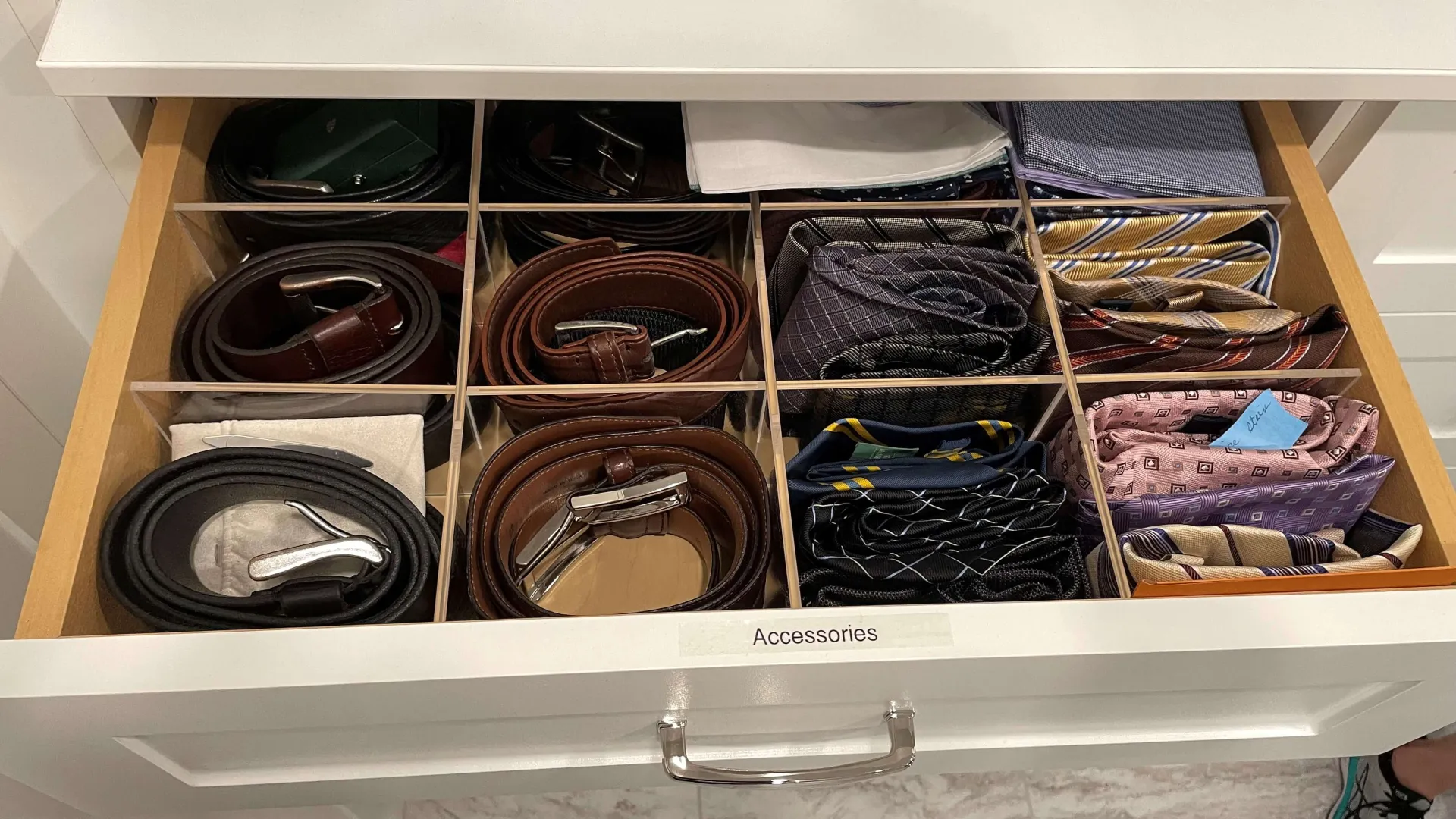
- Drawer dividers: Roll belts and store them upright in sections.
Scarf Organization
- Scarf hangers: Special hangers with loops hold many scarves.
- Drawer storage: Roll scarves and place in shallow drawers.
- Hanging pockets: Clear pockets on the back of a door keep scarves visible.
Tie Organization
- Tie racks: These come in spinning or stationary styles.
- Hangers: Some hangers have multiple bars for ties.
- Drawer inserts: Roll or fold ties into small sections.
Here’s a quick comparison of common options:
| Accessory | Best Organizer Type | Pros | Cons |
|---|---|---|---|
| Belts | Belt Rack | Easy to see, saves space | Needs wall/door space |
| Scarves | Scarf Hanger | Prevents wrinkles, visible | Limited to lighter scarves |
| Ties | Tie Rack | Keeps shape, quick access | Extra cost, wall required |
Credit: www.artisancustomclosets.com
Jewelry Storage Solutions
Jewelry needs special care to avoid tangling, tarnishing, or loss. The right system protects your pieces and makes getting ready easier.
Hanging Storage
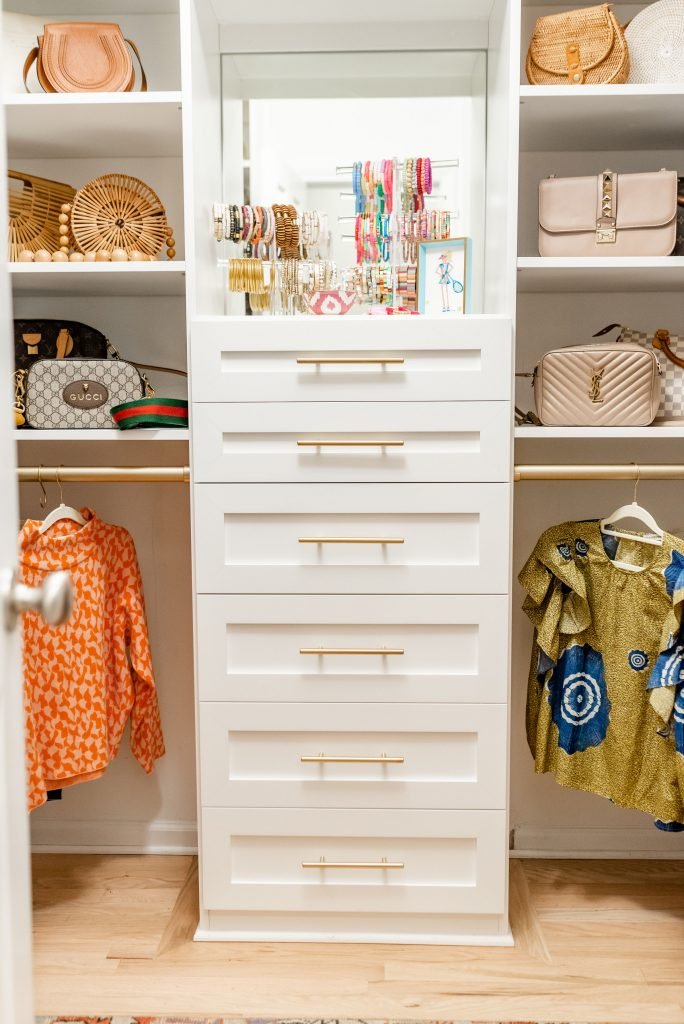
Wall-mounted jewelry organizers are popular because they display everything at eye level. Choose velvet-lined hooks or rods to prevent scratches.
Drawer Inserts
For valuable or delicate pieces, lined trays inside drawers are ideal. Separate compartments keep each item safe.
Jewelry Boxes
A classic choice, jewelry boxes with divided sections work well if you have limited space or need to keep dust away.
Non-obvious Insight
Many people forget about humidity. High humidity in closets can cause silver jewelry to tarnish faster. Consider adding silica gel packets or anti-tarnish strips if this is a problem in your area.
Storing Hats, Bags, And Purses
Hats and bags are often bulky, but storing them properly keeps their shape and extends their life.
Hat Storage
- Hat racks: Wall-mounted or free-standing.
- Shelf bins: Place hats in open bins on shelves to avoid crushing.
- Hooks: For lightweight hats like caps.
Bag And Purse Organization
- Shelf dividers: Store bags upright, separated by dividers.
- Hooks or pegs: Hang bags by their handles.
- Dust bags: For expensive handbags, keep them in their dust bags to avoid fading.
Here’s a helpful table comparing options for bag storage:
| Storage Method | Best For | Drawback |
|---|---|---|
| Shelf Dividers | Everyday bags, totes | Needs wide shelves |
| Hooks | Lightweight bags | Handles may stretch over time |
| Dust Bags | Designer/expensive purses | Not as visible |
Sunglasses, Watches, And Small Accessories
Small items can easily get lost. Keeping them organized saves time and prevents scratches.
Sunglasses
Use an eyewear tray or a sunglass organizer with separate slots. Alternatively, mount a small shelf near the closet entrance.
Watches
Watch boxes or padded trays in drawers are ideal. If you have a collection, consider a display case with a glass lid.
Hair Accessories
Small bins or divided trays work best. Attach a magnetic strip inside a drawer for metal clips or pins.
Non-obvious Insight
Try labeling bins and boxes, even if you think you’ll remember what’s inside. When you’re in a hurry, a clear label saves digging and keeps everything in order.
Creating A System That Lasts
The real challenge is not organizing once, but keeping your system working over time. Here’s how to make your closet accessory organization last:
- Return items to their spot every day.
- Review your accessories every six months and declutter as needed.
- Adjust storage as your collection grows or shrinks.
- Teach family members your system if you share a closet.
Organizing accessories is not a one-time job. Making maintenance part of your routine prevents clutter from returning.
Smart Storage Tools And Diy Ideas
You don’t always need to buy expensive organizers. Many people successfully organize accessories using DIY solutions:
- Ice cube trays for rings or earrings
- Shower curtain rings on a hanger for scarves or belts
- Muffin tins for small jewelry or hair ties
- Tension rods for hanging hooks or baskets
If you prefer ready-made solutions, look for adjustable organizers. These let you change the layout as your needs change.
Common Mistakes To Avoid
Even with the best intentions, it’s easy to make mistakes that lead to clutter:
- Overcrowding: Too many items in one bin makes it impossible to find anything.
- Ignoring visibility: If you can’t see an accessory, you won’t use it.
- Mixing unrelated items: Don’t toss everything into one “miscellaneous” box.
- Forgetting about cleaning: Dust and lint collect on accessories. Clean shelves, drawers, and organizers regularly.
Paying attention to these pitfalls will help you maintain your organized closet for the long term.
Credit: www.editbylauren.com
When To Seek Professional Help
Sometimes, closet organization feels overwhelming—especially if you have a large collection or limited space. Professional organizers can design custom solutions and do the heavy lifting. The National Association of Productivity & Organizing Professionals is a good place to find help if needed.
But for most people, following the steps above will make a big difference, no matter your starting point.
Sustainable And Safe Storage Practices
Organizing isn’t just about neatness. It also protects your accessories from damage and helps the environment.
- Choose quality over quantity: Fewer, better-made accessories are easier to organize.
- Use safe materials: Avoid organizers that could rust, stain, or snag delicate items.
- Recycle or donate: Give unwanted items a second life instead of tossing them in the trash.
If you want more ideas for sustainable organizing, see this resource from NAPO.
Credit: www.editbylauren.com
Frequently Asked Questions
How Do I Organize Accessories If My Closet Is Very Small?
Focus on vertical space—use hooks, over-the-door racks, and wall-mounted organizers. Store less-used items elsewhere. Only keep what you use often in your main closet.
What’s The Best Way To Store Expensive Jewelry?
Use lined trays in a drawer or a high-quality jewelry box with separate sections. Keep silver in anti-tarnish pouches. Consider a small safe for valuable items.
Can I Store Scarves And Belts Together?
You can, but it’s better to keep them separated to avoid tangling and make it easier to find what you need. Use different sections or hangers for each.
How Often Should I Declutter My Accessories?
Aim to review and declutter every six months. This keeps your system working and prevents buildup.
Are There Tech Tools For Closet Organization?
Yes, you can use apps to catalog your accessories or track what you wear most often. Some smart closets even have built-in lighting and sensors, but simple labeling and regular review work for most people.
Organizing accessories in your closet is a small project with big rewards. You’ll find what you need faster, protect your favorite pieces, and get more enjoyment from your wardrobe every day. Start with decluttering, choose the right tools, and make maintenance a habit—your closet (and your mornings) will thank you.