
If you have ever struggled to put a duvet cover on your comforter, you are not alone. Many people find this chore frustrating, especially when doing it alone. The duvet shifts, the cover twists, and you end up sweaty and annoyed. But there is good news: you do not need a second person or fancy tools. With the right method, you can put on a duvet cover quickly and smoothly—every time. In this article, you will learn a step-by-step approach that works for all kinds of duvet covers, plus extra tips to make the job even easier.
Why Is Putting On A Duvet Cover So Hard?
Before you learn the easiest way, it helps to understand why this task feels so difficult. A duvet cover is like a big pillowcase, and your comforter is often heavy and floppy. The problem comes from trying to fit the large, soft comforter evenly inside the cover without bunching or twisting. Some covers have small openings, making it hard to reach the corners. Others do not have ties to keep the comforter in place. The more you fight with it, the more tangled it gets.
Some people also struggle because their beds are pressed against a wall or in a small room, making it difficult to move around the comforter. If you have a large duvet, you might find it hard to keep it off the floor while you work.
Static electricity can also cause the fabric to stick to itself, making it even harder to spread the cover smoothly.
Another thing that makes this task hard is the difference in size between comforters and covers. If your duvet cover is a bit bigger or smaller than your comforter, it will shift around and create lumps. Some covers are slippery, especially those made of silk or satin, causing the comforter to slide out of place while you are trying to align the corners.
Many beginners also underestimate how important it is to keep everything flat and aligned from the start. If you begin with a bunched-up comforter or a twisted cover, it only gets worse as you go. If you are in a hurry or tired, you might skip steps—making the process even more difficult.
The ‘burrito Method’: The Easiest Way To Put On A Duvet Cover Alone
One method stands out for its simplicity and effectiveness: the Burrito Method (also called the Roll-Up Method). This technique lets you put on a duvet cover by yourself, with less stress and better results. Here is how to do it:
Step 1: Lay Everything Flat
Start by spreading your duvet cover inside-out on your bed. The opening should be at the foot of the bed. Lay the comforter directly on top of the inside-out cover. Make sure the corners and edges match up neatly.
A common mistake is not using a big enough surface. If your bed is small or cluttered, use the floor (just make sure it is clean). Take a moment to smooth out wrinkles in both the cover and the comforter.
This makes it much easier to roll later and prevents bunching.
Step 2: Attach The Corners
If your duvet cover has corner ties, tie each corner of the cover to the matching corner of the comforter. This keeps things aligned and prevents shifting later. If there are no ties, just match up the corners as closely as possible.
For duvet covers without ties, you can use large safety pins, clothespins, or binder clips to hold the corners together temporarily. Be careful not to damage the fabric. Some people sew in simple ribbon ties or snaps themselves. This small upgrade can make a big difference and is worth doing if you struggle with bunching.
Step 3: Roll It Up Like A Burrito
Stand at the head of your bed. Starting from the top, roll both the comforter and cover together toward the foot of the bed. Try to keep the roll tight and even, just like rolling a burrito.
Rolling evenly is important. Use both hands to tuck and roll as you move down the length of the bed. If you have a large duvet, work in sections, rolling the middle first and then the sides. Rolling slowly helps you keep the comforter and cover together so nothing shifts out of place.
Step 4: Invert The Cover Over The Roll
When you reach the end, grab the opening of the duvet cover. Reach inside and pull the far end of the roll through the opening. This turns the cover right-side-out and wraps it around the comforter.
This step can feel tricky the first time. Imagine turning a sock inside out, but on a bigger scale. Take your time to avoid pulling too hard and causing the roll to unravel. If the roll is tight and even, this part will go smoothly.
Step 5: Unroll And Adjust
Unroll the comforter back toward the head of the bed. Shake it out gently and smooth the edges. Button, zip, or tie the opening closed. Fluff the comforter so it fills the cover evenly.
If you see any lumps or empty corners, reach inside and adjust the comforter. Gently tug on the corners to pull everything into place. Once you are happy with the fit, close the cover and give the whole thing a good shake to help the comforter settle evenly.
Why The Burrito Method Works
The Burrito Method works because it keeps the comforter and cover together as you roll. This means less shifting, less bunching, and a perfect fit every time.
It also saves time and energy. You do not need to crawl inside the cover or fight to reach the far corners. This method works for all duvet sizes, even king size, and is easy to do alone. Many people find that once they try the Burrito Method, they never go back to the old way.

Credit: bedthreads.com
Other Helpful Methods If You Prefer
While the Burrito Method is the easiest for most people, you might like to know about other techniques. Here are two more common methods, with their pros and cons.
| Method | How It Works | Best For | Common Problem |
|---|---|---|---|
| Burrito Method | Roll comforter inside-out inside cover, then unroll | All duvets, doing it alone | Requires space to roll |
| Traditional Method | Insert comforter into cover, align corners by hand | Thin or lightweight duvets | Hard to keep corners in place |
| Climb-In Method | Climb inside cover, grab corners, shake comforter in | People with mobility | Can be awkward and hot |
The Traditional Method is simple: Turn the cover right-side-out, reach inside, grab the top corners, and pull the comforter in. This method works if your duvet is small or lightweight, but it is much harder with a large or heavy comforter. The main problem is getting the corners to stay lined up as you pull the comforter down into the cover. Many people find they need to shake or crawl inside to finish, which can be tiring.
The Climb-In Method is popular in some places. You literally crawl inside the duvet cover, grab the top corners with your hands, and then hold the comforter as you back out, pulling the cover over it. This method can work if you are flexible and have enough space, but it is not ideal if you have mobility issues or do not want to get hot and sweaty.
What You Need Before You Start
To make the process smooth, get everything ready:
- A clean, flat surface (bed or large table)
- Your duvet cover (inside-out to start)
- Your comforter or duvet insert
- Optional: Safety pins or clips if cover has no ties
Having everything in place means less stopping and starting.
If you have pets, you might want to keep them out of the room while you work. Pet hair can stick to the comforter or cover, making it harder to keep things clean. If your duvet or cover has just come out of the dryer, let it cool for a few minutes so it is not too hot to handle.
Another useful tool is a lint roller, especially for darker covers. Any dust, lint, or hair will show up more once the cover is on, so rolling it before you start saves time later.
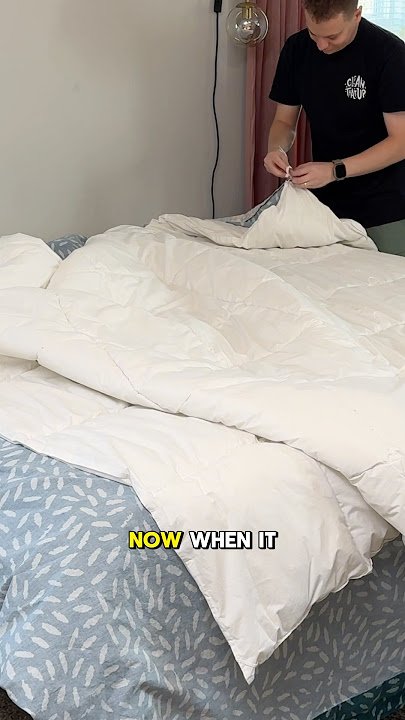
Credit: www.youtube.com
Common Mistakes And How To Avoid Them
Even with the right method, small mistakes can make the job harder. Here are some errors people often make, and how to avoid them:
1. Not Turning The Cover Inside-out
The Burrito Method only works if the cover starts inside-out. If you forget, you will have to start again.
2. Not Matching Corners
If the comforter and cover are not lined up at the start, they will be misaligned at the end. Always double-check the corners.
3. Rushing The Roll
Rolling too fast makes the comforter bunch or twist. Take your time for a smooth result.
4. Skipping Ties Or Clips
If your cover has ties, use them. If not, consider adding small safety pins to keep the comforter in place.
5. Not Shaking Out The Cover
After you unroll, gently shake and fluff the comforter. This helps it spread out evenly.
6. Trying To Fit A Too-large Comforter
If your comforter is bigger than your cover, it will not fit well. Always check the sizes before you start.
7. Forgetting To Close The Cover
If you do not close the buttons, zipper, or ties at the end, the comforter may slip out during the night. Take a minute to secure the opening.
8. Not Washing The Cover First
A new or dusty cover can be stiff and hard to work with. Washing it softens the fabric and removes any packaging smell.
Many people miss these small points, but avoiding them makes the process much simpler and leads to a better result.
Extra Tips For Success
Some small adjustments can make a big difference:
- Use a lightweight comforter. Heavy, thick comforters are harder to manage alone.
- Wash and dry the cover first. Freshly washed fabric is easier to handle and smells better.
- If you have a king or queen size, fold both comforter and cover in half before starting, then unfold as you roll. This helps you keep everything aligned, especially if you are working alone.
- Add corner ties or snaps if your cover doesn’t have them. These are easy to sew or buy online.
- If your hands are small or you have weak grip, use large binder clips to hold the corners together as you roll.
- Try using a bed-skirt gripper at the foot of the bed to hold the comforter in place while you work.
- If you have allergies, use a hypoallergenic comforter and wash your cover regularly. Dust and pollen can build up inside the cover over time.
- Store your duvet and cover in a dry place when not in use. This helps prevent mold and mildew, especially in humid climates.
For extra stubborn covers, a friend’s tip is to lightly mist the inside of the cover with water before you start. This reduces static electricity and helps the comforter slide in more smoothly.
If you want more detailed visual guides, many home stores and bedding brands offer helpful videos online. For example, [The Spruce](https://www.thespruce.com/how-to-put-on-a-duvet-cover-297471) offers step-by-step illustrations and troubleshooting tips.
Finally, remember that practice makes perfect. The first time you try the Burrito Method, it may take a few minutes. After a couple of tries, you will be able to do it quickly and easily—even with large or heavy duvets.
Once you master the technique, changing your duvet cover will be a simple, satisfying part of your laundry routine.
:max_bytes(150000):strip_icc()/How-To-Put-On-A-DuvetCover-Step-01_14346_preview-8b2f0e3babcd427d91357a68348eab02.jpg)
Credit: www.realsimple.com