
Defrosting frozen food is a common task in kitchens worldwide, but not everyone knows how to do it safely and efficiently. Thawing food the wrong way can lead to bacteria growth, loss of texture, and even food poisoning. On the other hand, learning the right techniques can save you time, keep your meals delicious, and protect your health. This guide will show you how to thaw frozen food both safely and quickly, with practical steps, expert insights, and real-world examples you can use right away.
Why Safe Thawing Matters
Many people assume frozen food is always safe until cooked. The truth is, bacteria can multiply quickly when food is left at room temperature for too long. According to the U.S. Department of Agriculture, the “danger zone” for bacteria growth is between 40°F (4°C) and 140°F (60°C). Food left in this range for more than two hours can become unsafe to eat.
For example, thawing chicken breasts on the counter might seem harmless, but within a few hours, bacteria like Salmonella can multiply to dangerous levels. Safe thawing methods keep food out of this danger zone, protecting you and your family from foodborne illnesses.
Main Thawing Methods: Pros And Cons
There are several ways to thaw frozen food, each with benefits and drawbacks. The method you choose depends on your time, the type of food, and your kitchen tools.
| Method | Speed | Safety | Food Quality | Best For |
|---|---|---|---|---|
| Refrigerator | Slow | Very Safe | Excellent | Meat, Fish, Dairy |
| Cold Water | Moderate | Safe | Good | Seafood, Poultry |
| Microwave | Fast | Safe (if cooked right away) | Varies | Vegetables, Small Cuts |
| Cooking Directly | Immediate | Safe | Good (for some foods) | Soups, Stews, Frozen Veggies |
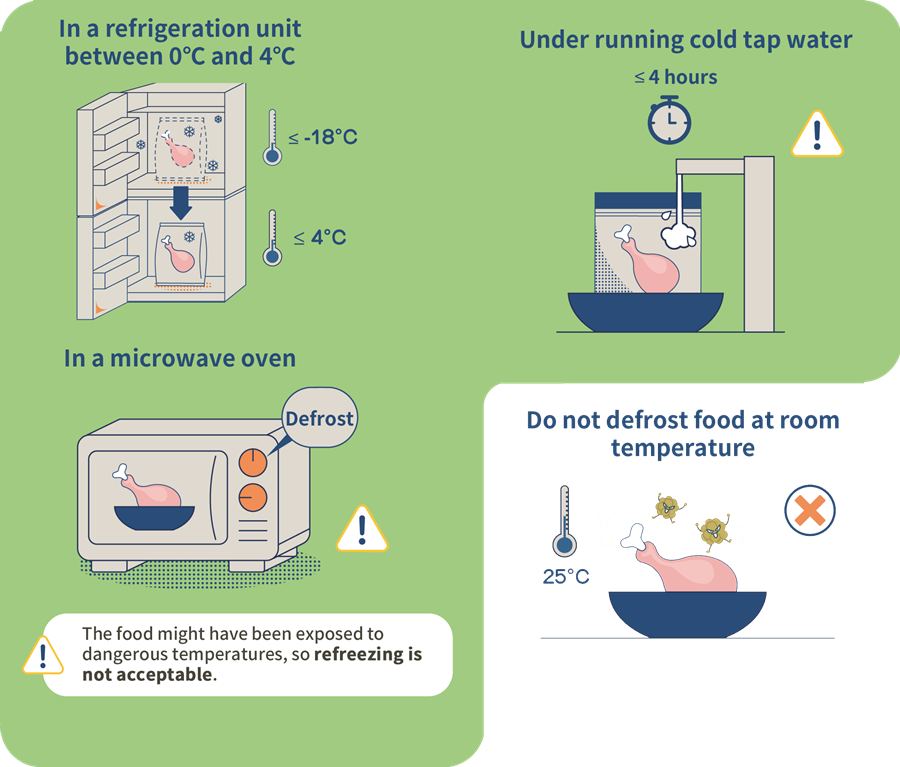
Credit: www.cfs.gov.hk
Thawing In The Refrigerator
The refrigerator method is the safest way to thaw most foods, though it takes the most time. The food stays at a safe, cool temperature (below 40°F or 4°C), which prevents bacteria from growing.
How To Thaw In The Refrigerator
- Place the frozen item on a plate or in a shallow pan to catch drips.
- Put it on the bottom shelf of your fridge to avoid cross-contamination.
- Allow enough time: Small cuts (like chicken breasts or ground beef) usually thaw overnight, while large items (like whole turkeys or roasts) may need 1-3 days.
Refrigerator Thawing Times (approximate)
| Food Type | Weight | Time Needed |
|---|---|---|
| Chicken Breast | 500g (1 lb) | 12-24 hours |
| Ground Beef | 500g (1 lb) | 12-24 hours |
| Whole Turkey | 2-3 kg (5-7 lbs) | 2-3 days |
| Fish Fillet | 250g (0.5 lb) | 8-12 hours |
| Vegetables | 500g (1 lb) | 8-12 hours |
Pro Tip: If you thaw more food than you need, it’s safe to refreeze it if it stayed below 40°F (4°C) the whole time.
Cold Water Thawing
When you need to thaw food more quickly, the cold water method is a safe and effective option. It’s much faster than the refrigerator but requires a little more attention.
How To Thaw In Cold Water
- Place the frozen food in a leak-proof plastic bag (to prevent water from touching the food).
- Submerge the bag in cold tap water.
- Change the water every 30 minutes to keep it cold.
- Most small packages (1 pound or less) thaw in about 1 hour. Larger pieces may take 2-3 hours.
Important: Cook food immediately after using this method. Do not refreeze unless you have cooked the item.
Non-obvious insight: Thin or flat packages thaw much faster than thick blocks. If possible, freeze food in thinner layers to speed up future thawing.
Credit: www.fsis.usda.gov
Microwave Thawing
Microwave ovens are the fastest way to thaw small portions. They are convenient, but there are risks. Microwaves can heat food unevenly, sometimes partially cooking the edges while the center is still frozen.
How To Thaw In The Microwave
- Remove any packaging not labeled “microwave safe.”
- Place the food on a microwave-safe plate.
- Use the “defrost” setting or 30% power.
- Check and turn the food every few minutes for even thawing.
- Cook immediately after thawing, as some areas may become warm enough for bacteria to grow.
Tip: Microwaving works best for small items like vegetables, fish fillets, or ground meat. Avoid using it for large cuts like roasts—these defrost unevenly.
Cooking From Frozen
Not all foods need to be thawed! Some items, like frozen vegetables, dumplings, or pre-cooked meals, can go straight from freezer to stove or oven.
When Cooking From Frozen Works
- Soups and stews: Add frozen meat or vegetables directly to the pot. Just increase cooking time by 50%.
- Oven-baked foods: Many frozen pizzas, casseroles, or fish sticks are designed for direct cooking.
- Steamed vegetables: Most frozen veggies can be steamed or microwaved without thawing.
Non-obvious insight: Cooking from frozen often keeps vegetables crisper and preserves more nutrients, compared to thawing and draining them first.
Foods That Should Never Be Thawed At Room Temperature
Leaving food out on the counter is one of the most common mistakes. The following foods are especially risky to thaw at room temperature:
- Raw meats and poultry: Bacteria multiply rapidly between 40°F and 140°F (4°C and 60°C).
- Fish and seafood: Thawing at room temperature can lead to spoilage and off-flavors.
- Dairy products: Milk-based foods can sour quickly.
Key point: Room temperature thawing is only safe for some baked goods (like bread or muffins), not for high-protein or high-moisture foods.
Common Thawing Mistakes To Avoid
Many people unknowingly make thawing mistakes that can lead to food waste or illness. Watch out for these errors:
- Leaving food on the counter: Even a few hours is risky for meat, poultry, or fish.
- Using hot water: This can partially cook the food’s surface and create ideal conditions for bacteria.
- Microwaving without rotating: Food will thaw unevenly, with hot spots that allow bacteria to grow.
- Not cooking immediately after thawing in the microwave or water: Bacteria can multiply quickly if food sits too long.
- Stacking foods in the fridge: Airflow is blocked and thawing takes longer, so always spread items out.
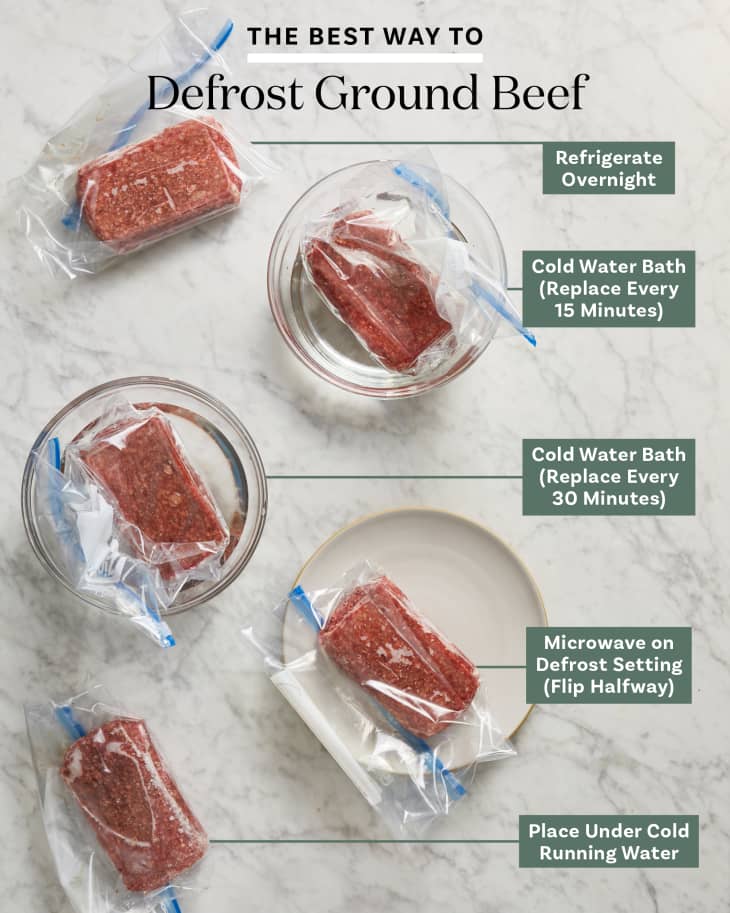
Credit: www.thekitchn.com
How To Thaw Different Types Of Food
Thawing methods and times vary with different foods. Here’s a quick reference for common ingredients:
Meat And Poultry
- Large cuts (roasts, whole chicken): Thaw in the refrigerator. Allow 24 hours per 2-2.5 kg (4-5 lbs).
- Small cuts (chops, breasts): Cold water or microwave if in a hurry.
Fish And Seafood
- Fillets and shrimp: Cold water method works best; thaw in 1 hour or less.
- Shellfish: Do not thaw at room temperature—use fridge or cold water.
Bread And Baked Goods
- Sliced bread: Thaws quickly at room temperature; safe because it’s low moisture.
- Cakes or pastries: Best thawed overnight in the fridge to avoid sogginess.
Fruits And Vegetables
- Berries: Use directly from frozen for smoothies or baking.
- Corn, peas, carrots: Can be added frozen to hot dishes. For salads, thaw in the fridge to keep texture.
Dairy And Cheese
- Hard cheeses: Thaw in the fridge for best texture.
- Milk or cream: Thaw in the fridge and shake well before using.
Quick Comparison: Best Thawing Methods For Popular Foods
Here’s a handy comparison of methods for some everyday foods:
| Food | Best Method | Time Needed | Quality Result |
|---|---|---|---|
| Chicken Breast | Refrigerator | 12-24 hours | Juicy, safe |
| Fish Fillet | Cold Water | 30-60 mins | Firm, flavorful |
| Ground Beef | Microwave | 5-10 mins | Ready to cook |
| Frozen Veggies | Cook from frozen | Immediate | Crisp, retains nutrients |
| Bread | Room temperature | 15-30 mins | Soft, fresh |
How To Thaw Food Faster Without Sacrificing Safety
Sometimes you need dinner on the table fast. Here’s how to speed up thawing—without cutting corners on safety:
- Break food into smaller pieces: More surface area means faster thawing.
- Use cold water and keep it moving: Gently massage sealed bags to separate frozen chunks.
- Microwave in short bursts: Pause and rotate food to prevent cooking the edges.
- Plan ahead: Freeze food in thin layers or flat bags for quicker thawing next time.
Expert tip: Invest in a digital food thermometer. If you’re unsure whether food has thawed evenly, check different spots. Food should be below 40°F (4°C) before cooking, or above 165°F (74°C) after cooking.
Storing And Refreezing Thawed Food
You can safely refreeze food only under certain conditions:
- Food thawed in the refrigerator can be refrozen before or after cooking.
- Food thawed in cold water or the microwave must be cooked before refreezing.
- Refreezing may change texture or moisture but is safe if handled correctly.
Example: If you thaw ground beef in the fridge but don’t use it, you can refreeze it. If you thaw it in cold water, cook it first before refreezing.
For more on food safety, visit the USDA Food Safety Site.
Frequently Asked Questions
What Is The Fastest Safe Way To Thaw Frozen Meat?
The cold water method is the fastest safe way. Place meat in a sealed bag, submerge in cold water, and change water every 30 minutes. Small cuts thaw in about 1 hour.
Can I Cook Food Without Thawing It First?
Yes, many foods can be cooked from frozen, such as vegetables, dumplings, or pre-cooked meals. Adjust cooking time and check that the food reaches a safe internal temperature.
Is It Safe To Thaw Food In Hot Water?
No, hot water can bring food into the danger zone (40°F–140°F or 4°C–60°C) where bacteria multiply quickly. Always use cold water or the fridge.
Can I Refreeze Thawed Food?
You can refreeze food thawed in the fridge before or after cooking. If you used cold water or microwave, cook the food first before refreezing.
Why Does My Food Taste Different After Thawing?
Thawing, especially in the microwave or after refreezing, can change texture and moisture. For best quality, thaw slowly in the fridge and avoid multiple freeze-thaw cycles.
Food safety is more than just following rules—it’s about building healthy habits in your kitchen. By understanding how to thaw frozen food safely and quickly, you’ll keep your meals tasty and your family safe, every time.