
Washing clothes by hand may seem old-fashioned, but it is still an important skill for many people around the world. Whether your washing machine breaks, you want to care for delicate fabrics, or you are traveling, knowing how to hand wash clothes properly can save your favorite garments and money.
If you have never tried it before, the process can look confusing. However, with the right steps, you can clean your clothes effectively and make them last longer.
Many people do not realize that hand washing is sometimes better than using a machine. It can remove tough stains, protect delicate fibers, and reduce water and energy use. In this guide, you will learn every detail about how to hand wash clothes—step by step, with tips and advice that even many beginners miss.
You do not need special skills, but you do need to know some important rules and techniques. Let’s look at what you need, how to prepare, and every step to get your clothes clean and fresh.
Why Hand Wash Clothes?
Hand washing is not just for those without a washing machine. There are several good reasons why people choose to wash clothes by hand:
- Delicate fabrics like silk, lace, or wool often get damaged in machines.
- Stain removal is easier, as you can focus on problem areas.
- Energy savings since you do not use electricity.
- Water savings because you control how much water is used.
- Longer garment life because gentle washing causes less wear.
Some people also hand wash because of allergies to washing machine detergents or to save on laundry costs. According to the Environmental Protection Agency, traditional washing machines use about 41 gallons of water per load, but hand washing can use much less.
What You Need For Hand Washing Clothes
You do not need expensive tools to wash clothes by hand. Here are the basic items:
- A clean sink, basin, or tub – large enough for your clothes to move freely.
- Mild detergent – liquid or powder, but avoid harsh chemicals.
- A soft brush or sponge (optional) – for tough stains.
- A clean towel – for pressing out extra water.
- Hangers or a drying rack – to air dry your clothes.
- Rubber gloves (optional) – protect your hands from detergent.
For best results, keep your hand washing area clean and avoid using containers that have been used for chemicals or strong cleaners.
Credit: www.hgtv.com
Choosing The Right Detergent
Not all detergents are the same. Some are too strong for delicate fabrics, while others do not clean tough stains well. Here’s a comparison of common detergent types:
| Detergent Type | Best For | Not Recommended For |
|---|---|---|
| Mild liquid detergent | Silk, wool, delicate clothes | Heavy stains |
| Regular laundry detergent | Cotton, synthetics | Very delicate fabrics |
| Baby shampoo | Light stains, lingerie | Greasy or oily stains |
| Soap flakes | Wool, vintage fabrics | Bright whites (may dull) |
Non-obvious tip: Always dissolve powder detergent in water before adding clothes. Undissolved powder can stick to fabric and leave marks.
Sorting Clothes Before Hand Washing
Sorting is important, even if you only have a few items. Mixing the wrong items can lead to color bleeding or fabric damage.
- Separate lights and darks. Dark colors may bleed onto light ones.
- Check care labels. Some items need cold water, others can handle warm.
- Remove items with metal parts (like zippers) if washing very delicate fabric.
If you are unsure, always wash delicate and colored clothes separately.
Steps To Hand Wash Clothes Properly
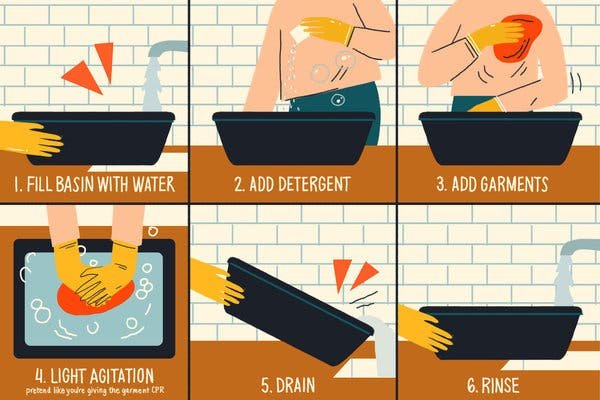
1. Read The Care Label
Before anything else, check the care label inside your garment. It gives key information about water temperature, washing method, and drying instructions. If the label says “dry clean only,” hand washing may cause damage.
2. Fill The Basin With Water
- For most clothes, use lukewarm water (not hot or cold).
- For wool or silk, use cold water to prevent shrinking or color fading.
- Fill the basin or sink with enough water so your clothes can move around freely.
3. Add Detergent
- Use about one teaspoon of mild detergent per gallon of water.
- Mix the water and detergent until you see suds.
- If using powder, make sure it is fully dissolved.
Non-obvious tip: Add detergent to the water, not directly on clothes, to prevent spotting.
4. Submerge And Soak
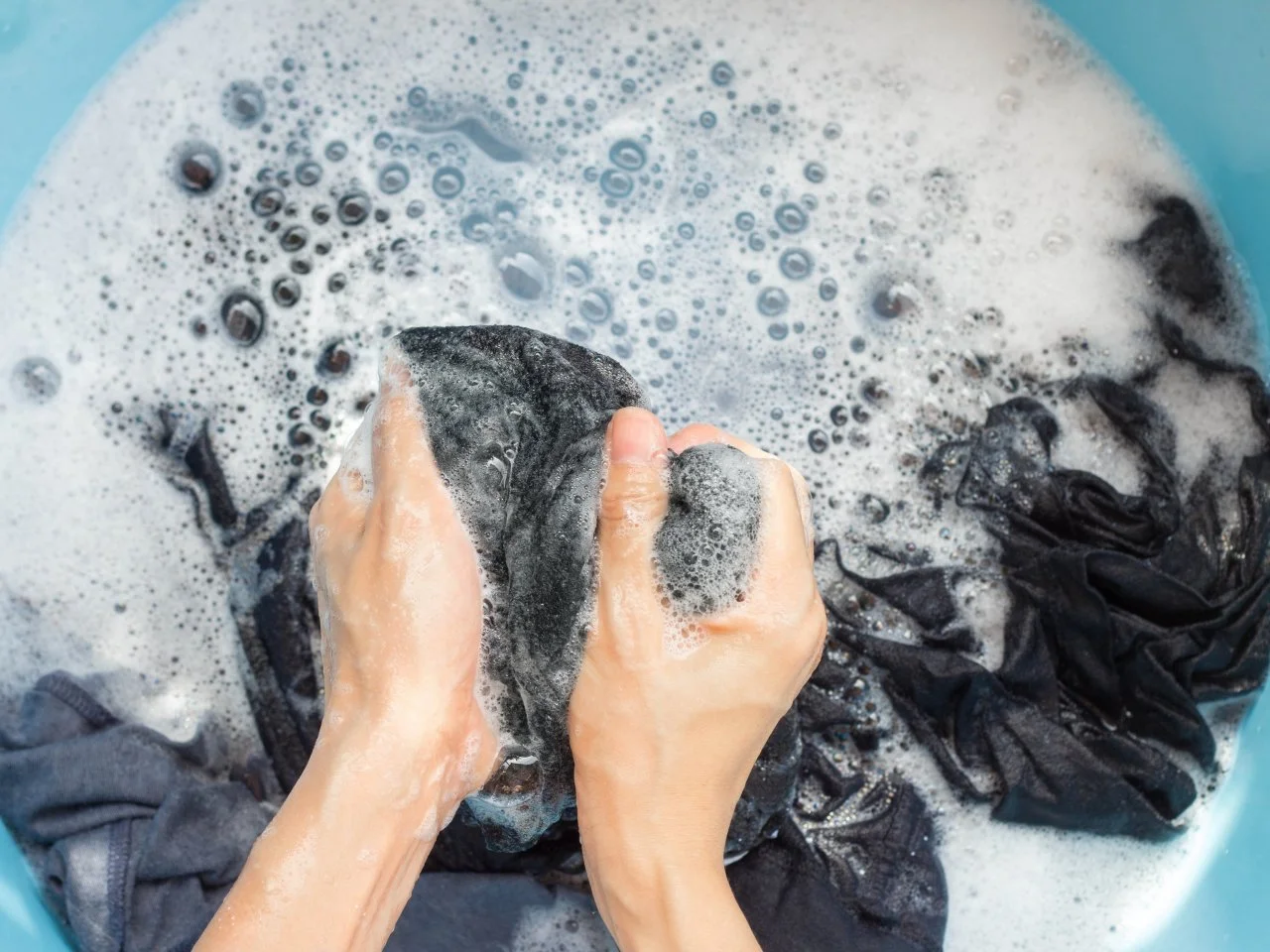
- Place your clothes in the water.
- Gently push them under to make sure they are fully wet.
- Let them soak for 10–15 minutes. This helps loosen dirt and oils.
If you have several items, move them around gently. Never overload the basin.
5. Gently Agitate
- Swirl clothes around by hand for about 1–2 minutes.
- Rub fabric against itself for extra cleaning, especially on collars or cuffs.
- For stains, gently rub with your fingers or use a soft brush.
Do not twist, wring, or scrub hard—this can damage fibers.
6. Rinse Thoroughly
- Drain the soapy water.
- Fill the basin with clean, cool water.
- Swirl clothes to remove all soap.
- Repeat rinsing until water is clear and no suds are left.
Insider advice: Leftover detergent can make clothes stiff or itchy. Two or more rinses are often needed for thick fabrics.
7. Remove Excess Water
- Lift clothes out, supporting the fabric so it does not stretch.
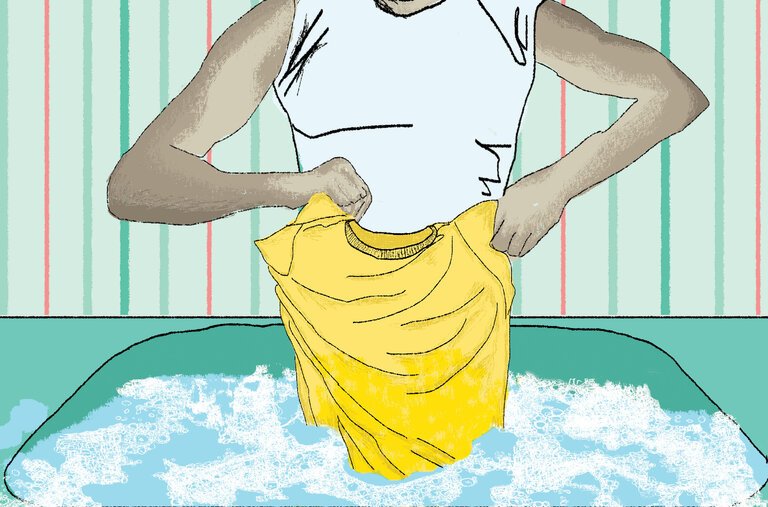
- Gently press water out by hand. Do not wring or twist.
- Lay the item flat on a clean, dry towel. Roll it up and press to absorb water.
For delicate knits, always press instead of wringing to avoid stretching.
8. Dry The Clothes
Drying is as important as washing. Here are common drying methods:
| Method | Best For | Tips |
|---|---|---|
| Air drying flat | Wool, sweaters | Lay on a towel, shape gently |
| Hanging | Shirts, pants | Use padded hangers for delicate items |
| Drip dry | Socks, underwear | Hang in a well-ventilated area |
Avoid direct sunlight for bright colors or delicate fabrics, as it can fade or weaken them.
Common Mistakes When Hand Washing Clothes
Many beginners make the same errors. Here’s what to avoid:
- Using hot water on wool or silk—this can cause shrinking.
- Too much detergent—more soap does not mean cleaner clothes.
- Not rinsing enough—leftover soap attracts dirt.
- Wringing or twisting—this stretches and weakens fabric.
- Mixing colors—dark colors can bleed on light fabrics.
One less-known mistake is using hard brushes or scrubbing tools. This often damages even tough fabrics over time.
How To Remove Stains By Hand
Stains need special attention. Here’s how to handle them:
- Act fast. The sooner you treat a stain, the better.
- Test first. Try the stain remover on a hidden spot.
- Use the right product. For grease, use a drop of dish soap. For wine or juice, try diluted vinegar.
- Gently dab, do not rub. Rubbing can make stains worse.
A practical example: For a coffee stain on a cotton shirt, dab with cold water, apply a little detergent, and gently rub. Soak for 10 minutes before washing as usual.
Caring For Delicate And Special Fabrics
Some fabrics need extra care. Here’s a quick guide:
| Fabric | Water Temperature | Detergent Type | Drying Method |
|---|---|---|---|
| Silk | Cold | Mild liquid | Air dry flat, away from sun |
| Wool | Cold | Wool soap | Dry flat on towel |
| Lace | Lukewarm | Mild or baby shampoo | Lay flat, avoid stretching |
| Synthetics | Lukewarm | Regular detergent | Hang or drip dry |
Never use bleach on silk or wool. For vintage or expensive items, consider advice from a professional or see resources like WikiHow.
Saving Time And Water
Hand washing is not always fast, but you can save time by:
- Washing several similar items together (same color and fabric).
- Using a large basin for more space.
- Reusing rinse water for pre-washing less dirty items.
To save water, fill the basin only as much as needed, and do not leave the tap running.
How Often Should You Hand Wash Clothes?
This depends on the garment and how dirty it is.
- Underwear and socks: After every wear.
- Shirts and tops: Every 1–2 wears.
- Jeans: Every 3–5 wears.
- Sweaters: Every 5–7 wears, or when smelly/soiled.
Delicate items like silk blouses should be washed only when needed, as frequent washing can wear them out.
Credit: www.nytimes.com
Storing Hand Washed Clothes
When your clothes are clean and dry:
- Fold them neatly to avoid wrinkles.
- Store in a dry, clean place.
- For knits and delicate fabrics, avoid hanging as this stretches them.
- Avoid plastic bags for long storage—use cotton bags to allow air flow.
Moisture can cause mildew or odor. Make sure clothes are completely dry before storing.
Frequently Asked Questions
How Long Does It Take To Hand Wash Clothes?
The process usually takes 20–30 minutes, not including drying time. Delicate fabrics may need less soaking and more careful handling.
Can I Use Dish Soap Instead Of Laundry Detergent?
It is possible, but only use a small amount and avoid for wool or silk. Dish soap can be harsh and cause fading or damage.
Is Hand Washing Clothes More Hygienic Than Machine Washing?
Hand washing can be very hygienic for small loads and delicate items, but machine washing with hot water kills more bacteria. For most everyday clothes, hand washing is safe if done properly.
What Should I Do If Colors Bleed During Hand Washing?
Immediately rinse the affected items in cold water. Wash color-bleeding items separately in the future. Use color catcher sheets if possible to avoid this problem.
How Do I Hand Wash Clothes While Traveling?
Use a sink or portable wash bag, mild detergent, and follow the same steps as at home. Wring out with a towel and hang to dry in your room or outside if allowed.
Hand washing clothes is a skill that brings many benefits, from saving money to caring for special fabrics. With practice, you will find it faster and easier. The methods above help you avoid damage, keep colors bright, and make your clothes last longer.
If you follow each step carefully and avoid common mistakes, you will get great results every time.
Credit: www.nytimes.com