
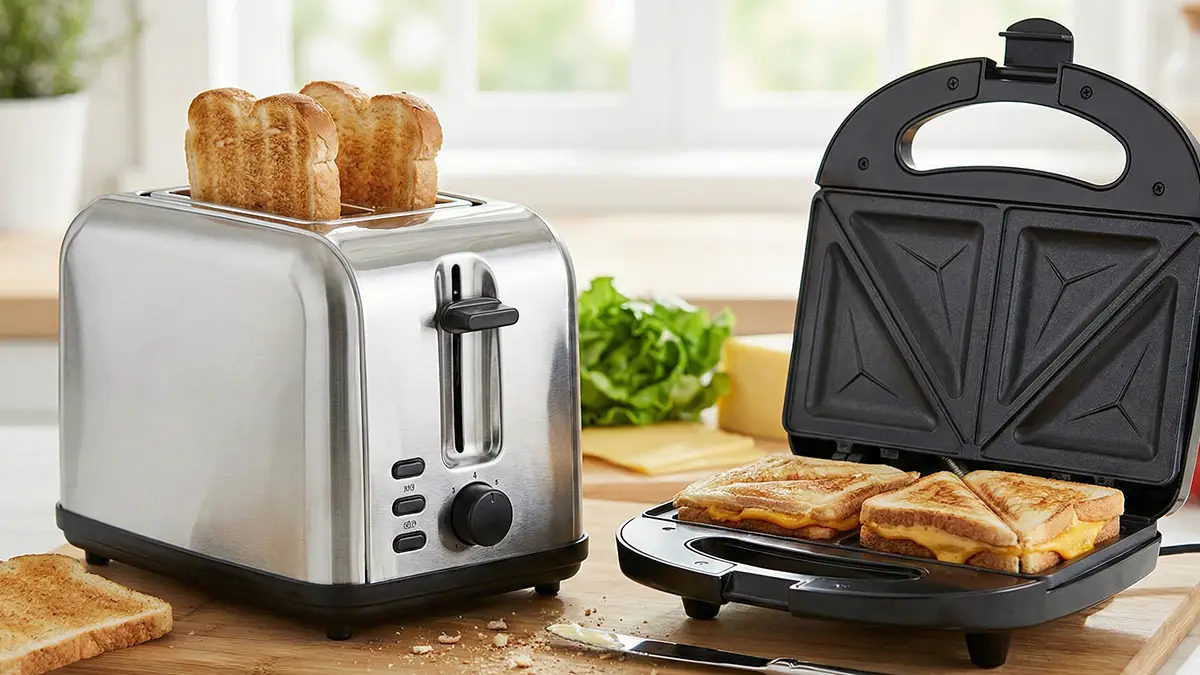
The choice between a toaster and a sandwich maker ultimately depends on your specific culinary preferences and daily kitchen routines. While a toaster is designed for quickly crisping slices of bread, bagels, and frozen waffles, a sandwich maker excels at creating hot, sealed sandwiches with various fillings. Each appliance offers distinct advantages, catering to different breakfast, lunch, and snack requirements.
- Toasters are ideal for quick, evenly browned toast and pastries.
- Sandwich makers are perfect for hot, sealed, and often grilled sandwiches.
- Many sandwich makers offer grilling capabilities for other foods.
- Consider your primary use: simple toast or elaborate hot sandwiches.
- For maximum versatility, some kitchens benefit from owning both appliances.
Understanding the Basics: What Each Appliance Does
Before diving into a direct comparison, it’s essential to understand the fundamental purpose and operation of each appliance. Both are countertop kitchen staples, but their design and heating mechanisms are optimized for different tasks.
The Toaster’s Core Function
A toaster is a small electric appliance designed to toast slices of bread by exposing them to radiant heat. It typically features vertical slots where bread is inserted, and heating elements on either side brown the bread evenly. Modern toasters often include settings for different browning levels, bagel functions (toasting one side), defrost options, and wider slots for thicker items.
The Sandwich Maker’s Core Function
A sandwich maker, also known as a sandwich press or toastie maker, is designed to cook and often seal sandwiches. It consists of two heated plates that clamp down on a sandwich, simultaneously toasting the bread and warming the fillings. Many models feature non-stick plates with specific indentations to create sealed pockets, preventing fillings from escaping. Some versatile sandwich makers come with interchangeable plates for waffles, grilling, or even making omelets.
Toaster: Features, Pros, and Cons
Toasters are ubiquitous in kitchens worldwide, prized for their simplicity and efficiency in preparing a breakfast staple. Understanding their specific attributes helps in deciding if one is the right fit for your home.
Key Features of Toasters
- Vertical Slots: Most toasters have two or four slots for bread.
- Browning Control: A dial or buttons to select desired toast darkness.
- Bagel Setting: Heats only one side of the bagel for a crispy cut side and soft crust.
- Defrost Function: Gently thaws and then toasts frozen bread.
- Reheat Function: Warms toast without further browning.
- Crumb Tray: Removable tray for easy cleaning of fallen crumbs.
- High-Lift Lever: Lifts smaller items higher for safe retrieval.
Pros of Owning a Toaster
- Speed: Toasts bread quickly, ideal for busy mornings.
- Simplicity: Very straightforward to operate with minimal effort.
- Even Browning: Designed to provide consistent browning across the bread surface.
- Compact Size: Generally takes up less counter space than many sandwich makers.
- Versatility for Breakfast: Excellent for bread, bagels, English muffins, and frozen waffles.
Cons of Owning a Toaster
- Limited Functionality: Primarily designed for toasting flat bread products.
- No Fillings: Cannot accommodate sandwiches with fillings or create sealed pockets.
- Potential for Mess: Crumbs can accumulate if not cleaned regularly.
- Safety Concerns: Inserting metal objects or trying to cook non-bread items can be hazardous.
Sandwich Maker: Features, Pros, and Cons
Sandwich makers offer a different kind of convenience, specializing in hot, often gourmet, sandwiches. Their design allows for a broader range of culinary creativity beyond simple toast.
Key Features of Sandwich Makers
- Heated Plates: Two hinged plates that cook from both sides simultaneously.
- Non-Stick Coating: Essential for easy food release and cleaning.
- Indicator Lights: Signals when the appliance is preheated and when food is ready.
- Sealing/Cutting Plates: Often designed to seal the edges of sandwiches and sometimes cut them into triangles.
- Interchangeable Plates: Many models offer plates for waffles, grilling, or even paninis.
- Temperature Control: Some advanced models allow for adjustable heat settings.
- Latching Handle: Secures the top plate during cooking.
Pros of Owning a Sandwich Maker
- Hot, Sealed Sandwiches: Perfect for grilled cheese, ham and cheese, and other hot sandwich creations.
- Versatility: Many models can grill meats, vegetables, make waffles, or paninis.
- Less Mess: Fillings are contained within the sealed sandwich, reducing drips.
- Quick Cooking: Heats from both sides, cooking sandwiches efficiently.
- Creative Options: Encourages experimentation with various fillings and bread types.
Cons of Owning a Sandwich Maker
- Takes Up More Space: Generally larger and bulkier than a standard toaster.
- Cleaning: While non-stick, plates can still be challenging to clean if fillings leak or burn.
- Not Ideal for Simple Toast: While some can toast bread, it’s often less efficient or even than a dedicated toaster.
- Single-Purpose Models: Basic sandwich makers may lack versatility beyond sealed sandwiches.
Toaster vs Sandwich Maker Which is Better: A Direct Comparison
When directly comparing a toaster vs sandwich maker which is better, it boils down to primary function and desired output. Each excels in its specialized role, making the ‘better’ choice highly subjective to individual needs.
Purpose and Output
- Toaster: Produces dry, crispy, evenly browned slices of bread, bagels, or similar items. It’s about texture and a simple, quick snack or breakfast component.
- Sandwich Maker: Creates hot, often gooey, sealed sandwiches where the bread is toasted and the fillings are heated through. It’s about combining ingredients into a complete, warm meal or snack.
Speed and Efficiency
- Toaster: Generally faster for a single slice of toast, as it requires no preheating time for the bread itself, only the elements.
- Sandwich Maker: Requires preheating time for the plates, but then cooks a complete sandwich relatively quickly from both sides.
Cleaning and Maintenance
- Toaster: Primarily involves emptying a crumb tray. Occasional wiping of the exterior.
- Sandwich Maker: Requires wiping down non-stick plates after each use, especially if fillings leak. Some models have removable, dishwasher-safe plates, which simplifies cleaning significantly.
Space and Storage
- Toaster: Typically more compact and can often be stored easily in a cupboard or left on a counter without taking up much space.
- Sandwich Maker: Often bulkier, especially models with interchangeable plates, requiring more dedicated counter or storage space.
Versatility Beyond Bread: Exploring Other Uses
While both appliances are primarily associated with bread, their utility can extend further, particularly for sandwich makers.
Toaster’s Extended Uses
Beyond standard bread, toasters are excellent for:
- Frozen waffles and pancakes
- Toaster pastries
- English muffins
- Bagels (especially with a dedicated bagel setting)
- Some models can accommodate thicker artisanal breads.
It’s crucial to remember that a toaster’s design limits it to items that fit within its slots and do not contain fillings that could melt and cause a fire hazard.
Sandwich Maker’s Extended Uses
The versatility of a sandwich maker often surpasses that of a toaster, especially models with interchangeable plates:
- Grilled Cheese & Paninis: Its primary and most popular use.
- Waffles: With waffle plates, it transforms into a waffle iron.
- Grilling: Flat grill plates allow for cooking small cuts of meat (chicken breast, burgers), vegetables, or even quesadillas.
- Omelets/Scrambled Eggs: Some deep-dish sandwich makers or specific plates can cook eggs.
- Desserts: Can be used to make fruit turnovers or even cook certain cookies.
Specific Use Cases: When to Choose Which
Understanding your daily habits and culinary aspirations will guide your decision.
Choose a Toaster If:
- Your primary need is quick, crispy toast for breakfast.
- You frequently eat bagels, English muffins, or frozen waffles.
- You have limited counter or storage space.
- You prefer simplicity and minimal cleanup.
- You rarely make hot, filled sandwiches.
Choose a Sandwich Maker If:
- You love hot, gooey, sealed sandwiches like grilled cheese or ham and cheese.
- You want to make paninis or gourmet pressed sandwiches.
- You desire an appliance that can also make waffles or grill small items.
- You enjoy experimenting with different fillings and bread types.
- You have sufficient counter space and don’t mind a bit more cleaning.
Factors to Consider Before Buying
Making an informed decision involves evaluating several practical aspects beyond just the core function.
Kitchen Space
Measure your available counter space and storage. Toasters are generally more compact, while sandwich makers, especially multi-functional ones, can be quite bulky.
Ease of Cleaning
Consider how easy each appliance is to clean. Toasters have crumb trays, but sandwich makers with non-removable plates can be a chore if fillings leak. Look for models with removable, dishwasher-safe plates for ultimate convenience.
Budget
While we avoid specific figures, it’s worth noting that basic models of both appliances are widely available, with features and versatility increasing with higher-end options. Determine what features are essential for your needs.
Durability and Build Quality
Look for appliances made from sturdy materials. Stainless steel exteriors often indicate better durability than all-plastic constructions. Read reviews regarding longevity and performance.
Safety Features
For toasters, look for automatic shut-off and cool-touch exteriors. For sandwich makers, ensure stable footing, a secure latching mechanism, and heat-resistant handles.
Can a Toaster Act as a Sandwich Maker?
No, a standard toaster cannot safely or effectively act as a sandwich maker. Toasters are designed for flat, dry bread products. Attempting to insert a sandwich with fillings into a toaster can lead to several problems:
- Fire Hazard: Melted cheese or other fillings can drip onto the heating elements, causing smoke, fire, or damage to the appliance.
- Uneven Cooking: The toaster’s design will only heat the exterior of the bread, leaving the fillings cold or unevenly cooked.
- Damage to Appliance: Fillings can clog the slots or damage the internal mechanisms.
- Safety Risk: Retrieving a stuck, gooey sandwich can be dangerous.
For safety and proper cooking, always use a dedicated sandwich maker for filled sandwiches.
Can a Sandwich Maker Act as a Toaster?
Yes, a sandwich maker can technically toast slices of bread, but it’s generally not as efficient or effective as a dedicated toaster. Here’s why:
- Preheating Time: Sandwich makers require preheating, which adds time compared to a toaster’s instant radiant heat.
- Evenness: While it will toast both sides, the browning might not be as even or consistent as a toaster, especially if the plates have deep indentations for sealing sandwiches.
- Texture: The bread might come out flatter or less airy than toast from a toaster due to the pressing action.
- Convenience: It’s often more cumbersome to place and remove single slices of bread from a sandwich maker compared to a toaster’s pop-up mechanism.
While it can be a makeshift solution, if your primary need is simple toast, a toaster remains the superior choice.
Making the Right Choice for Your Kitchen
The decision between a toaster and a sandwich maker boils down to a clear understanding of your culinary habits and kitchen priorities. If your mornings revolve around quick, perfectly browned slices of bread, bagels, or frozen pastries, a toaster is an indispensable, efficient tool. Its compact size and straightforward operation make it a kitchen workhorse for simple breakfast items.
Conversely, if you frequently crave hot, sealed sandwiches, paninis, or enjoy the versatility of an appliance that can also make waffles or grill small items, a sandwich maker is the better investment. Its ability to combine and heat fillings within bread offers a broader range of meal possibilities.
For many households, especially those with diverse tastes or a love for both simple toast and gourmet hot sandwiches, owning both appliances provides the ultimate flexibility. Each serves a distinct purpose, and together, they can significantly enhance your kitchen’s capabilities.
Frequently Asked Questions About Toasters and Sandwich Makers
When considering a toaster vs sandwich maker which is better for quick breakfasts?
For quick breakfasts focused on simple toast, bagels, or frozen waffles, a toaster is generally better. It heats up almost instantly and is designed for rapid, even browning of flat bread products, making it ideal for busy mornings.
What are the main differences between a toaster and a sandwich maker?
The main differences lie in their design and function. A toaster uses vertical slots and radiant heat to crisp flat bread, while a sandwich maker uses two hinged, heated plates to press, toast, and often seal sandwiches with fillings.
Can I make grilled cheese in a toaster or do I need a sandwich maker?
You absolutely need a sandwich maker for grilled cheese. Attempting to make grilled cheese in a toaster is unsafe and can cause a fire due to melting cheese dripping onto heating elements. A sandwich maker is specifically designed to safely cook filled sandwiches.
Is a sandwich maker more versatile than a toaster?
Yes, a sandwich maker is often more versatile, especially models with interchangeable plates. Beyond making sealed sandwiches, many can function as waffle makers, panini presses, or even small indoor grills for meats and vegetables, offering a wider range of cooking options than a standard toaster.
For a small kitchen, which appliance is more space-efficient: a toaster vs sandwich maker?
For a small kitchen, a toaster is typically more space-efficient. Standard toasters are generally more compact and have a smaller footprint compared to most sandwich makers, which tend to be bulkier, especially those with multiple functions or larger plates.
What should I consider when deciding between a toaster vs sandwich maker which is better for my family?
Consider your family’s eating habits: do they prefer simple toast and bagels, or are hot, filled sandwiches a frequent request? Also, assess your kitchen space, how easy each appliance is to clean, and any desire for multi-functional capabilities like grilling or waffle making.
Conclusion
The ultimate decision in the toaster vs sandwich maker debate hinges on your household’s specific culinary needs and preferences. A toaster excels at delivering quick, perfectly browned toast and similar items, making it a staple for straightforward breakfasts. A sandwich maker, on the other hand, is the undisputed champion for crafting hot, sealed, and often gourmet sandwiches, with many models offering expanded grilling and waffle-making capabilities.
By evaluating your daily routines, available kitchen space, and desired meal types, you can confidently choose the appliance that best serves your home. For those who enjoy the best of both worlds, incorporating both a toaster and a versatile sandwich maker into your kitchen arsenal can provide unparalleled flexibility for a wide array of delicious meals and snacks.
[{“@context”:”https://schema.org”,”@type”:”Article”,”headline”:”Toaster vs Sandwich Maker Which is Better: The Ultimate Kitchen Appliance Showdown”,”mainEntityOfPage”:”https://homegeartoday.com/?p=99″,”datePublished”:”2025-12-11T15:13:51+00:00″,”dateModified”:”2025-12-11T15:13:51+00:00″},{“@context”:”https://schema.org”,”@type”:”ItemList”,”itemListElement”:[{“@type”:”ListItem”,”position”:1,”name”:”Understanding the Basics: What Each Appliance Does”},{“@type”:”ListItem”,”position”:2,”name”:”The Toaster’s Core Function”},{“@type”:”ListItem”,”position”:3,”name”:”The Sandwich Maker’s Core Function”},{“@type”:”ListItem”,”position”:4,”name”:”Toaster: Features, Pros, and Cons”},{“@type”:”ListItem”,”position”:5,”name”:”Key Features of Toasters”},{“@type”:”ListItem”,”position”:6,”name”:”Pros of Owning a Toaster”},{“@type”:”ListItem”,”position”:7,”name”:”Cons of Owning a Toaster”},{“@type”:”ListItem”,”position”:8,”name”:”Sandwich Maker: Features, Pros, and Cons”},{“@type”:”ListItem”,”position”:9,”name”:”Key Features of Sandwich Makers”},{“@type”:”ListItem”,”position”:10,”name”:”Pros of Owning a Sandwich Maker”},{“@type”:”ListItem”,”position”:11,”name”:”Cons of Owning a Sandwich Maker”},{“@type”:”ListItem”,”position”:12,”name”:”Toaster vs Sandwich Maker Which is Better: A Direct Comparison”},{“@type”:”ListItem”,”position”:13,”name”:”Purpose and Output”},{“@type”:”ListItem”,”position”:14,”name”:”Speed and Efficiency”},{“@type”:”ListItem”,”position”:15,”name”:”Cleaning and Maintenance”}]}]
A toaster is more versatile for daily use — it toasts bread, bagels, and waffles for any meal. A sandwich maker is more specialized for creating hot sandwiches with melted fillings. For most households, a toaster serves daily needs more broadly.
A toaster uses radiant heat to toast bread slices dry on both sides. A sandwich maker clamps bread between heated plates, applying heat and pressure to create a sealed, melted, or toasted hot sandwich — a fundamentally different result from standard toasting.
A toaster oven can toast bread and make open-faced hot sandwiches effectively. For sealed toasties or pressed paninis, it cannot replicate the sandwich maker’s clamped pressure and direct contact heat. A toaster oven provides the best single-appliance versatility for small kitchens.
Most sandwich makers heat up in 3–5 minutes. The ready indicator light signals when the plates have reached cooking temperature. Always preheat fully before adding food for even cooking and proper crust formation on the sandwich exterior.
Sandwich makers are surprisingly versatile: quesadillas, waffles (with the right plates), French toast, hash browns, sliced vegetables, thin chicken breasts, and even mini omelets can all be cooked in a standard sandwich press with non-stick plates.
