
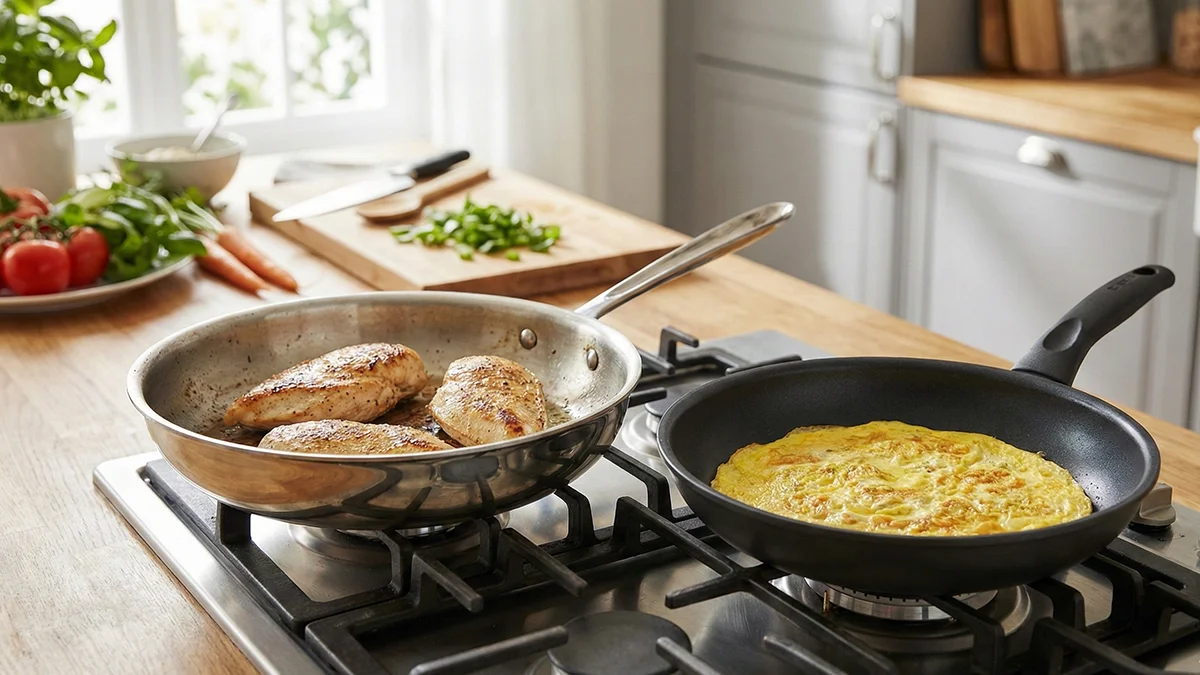
Choosing between stainless steel and nonstick pans is a fundamental decision for any home cook, impacting everything from cooking technique to meal quality. Stainless steel pans offer exceptional durability, superior browning capabilities, and high-heat tolerance, making them ideal for searing and deglazing. In contrast, nonstick pans provide effortless food release and require minimal oil, excelling with delicate foods like eggs and fish, though they demand more careful handling and have a shorter lifespan.
- Stainless steel excels in durability, high-heat cooking, and achieving a perfect sear.
- Nonstick pans offer unparalleled food release and are best for delicate items.
- Maintenance differs significantly, with stainless steel often requiring more effort but being more forgiving.
- Health considerations involve proper use and material awareness for both types.
- Many kitchens benefit from a versatile collection including both pan types.
The Essential Cookware Choice: Stainless Steel or Nonstick?
The kitchen is the heart of many homes, and the cookware within it plays a pivotal role in culinary success. When equipping a kitchen, one of the most common dilemmas faced by home cooks is deciding between stainless steel and nonstick pans. Each type brings distinct advantages and disadvantages to the countertop, influencing cooking methods, cleaning routines, and even the types of dishes best prepared. Understanding these differences is key to making an informed choice that aligns with your cooking style and needs.
This comprehensive guide will delve into the characteristics, performance, and practical considerations of both stainless steel and nonstick cookware. We will explore their unique attributes, compare them across various critical aspects, and help you determine which pan is the right fit for specific culinary tasks, ultimately guiding you toward building a functional and efficient kitchen collection.
What Defines Stainless Steel Cookware?
Stainless steel cookware is a staple in professional kitchens and many home settings, renowned for its robust construction and versatility. Typically, these pans are crafted from an alloy of steel, chromium, and often nickel, which provides resistance to rust, corrosion, and staining. The best stainless steel pans feature a multi-ply construction, often referred to as clad cookware, where layers of aluminum or copper are sandwiched between stainless steel layers. This design significantly improves heat distribution, preventing hot spots and ensuring more even cooking.
The surface of a stainless steel pan is non-reactive, meaning it will not leach metals into food or alter the taste of acidic ingredients. This makes it an excellent choice for a wide range of cooking applications, from simmering tomato sauces to deglazing a pan after searing meat. Its ability to withstand high temperatures and its sturdy nature contribute to its long-term appeal and performance.
Exploring the World of Nonstick Pans
Nonstick pans revolutionized home cooking by offering an easy solution for foods prone to sticking. These pans are characterized by a special coating applied to their cooking surface, which prevents food from adhering. The most common nonstick coatings are made from polytetrafluoroethylene (PTFE), often known by the brand name Teflon, though ceramic-based nonstick coatings have also gained popularity.
The primary benefit of nonstick cookware is its exceptional food release, allowing for cooking with minimal oil or butter and making cleanup remarkably simple. They are particularly favored for delicate foods like eggs, pancakes, and fish, which can easily stick to traditional surfaces. However, the nonstick coating is generally less durable than stainless steel and requires careful handling to prevent scratching and degradation.
Stainless Steel vs Nonstick Pans Comparison: Key Differences
When evaluating stainless steel vs nonstick pans, several fundamental distinctions emerge that influence their suitability for various cooking tasks. These differences span across material composition, surface properties, and the inherent cooking experience each provides. Understanding these core contrasts is essential for making an informed decision about your cookware.
Stainless steel offers a durable, high-heat tolerant surface that is excellent for browning and developing complex flavors through fond. Its non-reactive nature ensures food integrity. Nonstick, on the other hand, prioritizes convenience with its slick surface, ideal for low-fat cooking and effortless cleanup. The choice often comes down to balancing cooking performance with ease of use and longevity.
Durability and Longevity: Which Pan Lasts Longer?
In terms of sheer durability and longevity, stainless steel cookware generally outperforms nonstick pans. Stainless steel is a robust material that can withstand significant wear and tear, including high heat, metal utensils, and vigorous scrubbing. A well-maintained stainless steel pan can last for decades, often becoming a generational kitchen item. Its solid construction means it is less prone to warping or denting under normal use.
Nonstick pans, by contrast, have a finite lifespan primarily dictated by the integrity of their nonstick coating. This coating is susceptible to scratching from metal utensils, abrasive cleaning pads, and even high heat, which can cause it to degrade over time. Once the nonstick coating is compromised, its effectiveness diminishes, and the pan may need to be replaced. Typically, nonstick pans last anywhere from one to five years, depending on usage and care.
Cooking Performance: Searing, Sautéing, and Delicate Foods
The cooking performance of stainless steel and nonstick pans varies significantly across different culinary techniques. Stainless steel is the undisputed champion for tasks requiring high heat and the development of a flavorful crust, such as searing meats, poultry, or vegetables. Its ability to create a ‘fond’—the browned bits that stick to the bottom of the pan—is crucial for deglazing and building rich sauces.
Nonstick pans, with their slick surface, excel at cooking delicate foods that tend to stick. Eggs, pancakes, crepes, and flaky fish are perfectly suited for nonstick cookware, as they slide off effortlessly, requiring minimal fat. While nonstick can sauté, it typically doesn’t achieve the same level of browning or flavor development as stainless steel, as the nonstick surface prevents the formation of fond.
Heat Tolerance and Distribution: High Heat vs. Gentle Cooking
Heat tolerance is a critical factor distinguishing these two types of cookware. Stainless steel pans are designed to withstand very high temperatures, making them suitable for searing on the stovetop and finishing dishes in a hot oven. Their multi-clad construction, often with aluminum or copper cores, provides excellent and even heat distribution, preventing localized scorching and ensuring consistent cooking results across the entire pan surface.
Nonstick pans have a lower heat tolerance. Exposing nonstick coatings to excessively high temperatures can cause them to break down, potentially releasing fumes and degrading the nonstick properties. For this reason, nonstick pans are best used over low to medium heat. While some modern nonstick coatings are more resilient, it is generally advised to avoid extreme heat to preserve the pan’s lifespan and safety.
Maintenance and Cleaning: Ease of Use in the Kitchen
When it comes to maintenance and cleaning, both pan types present different considerations. Nonstick pans are famously easy to clean; most food residue slides off with a quick wipe or a gentle wash with soap and water. This convenience is a major draw for many home cooks. However, care must be taken to use soft sponges or cloths to avoid scratching the delicate nonstick surface.
Stainless steel pans, while durable, can sometimes be more challenging to clean, especially after searing or if food has burned onto the surface. They often require more scrubbing, and stubborn stains may necessitate soaking or the use of specialized stainless steel cleaners. However, unlike nonstick, stainless steel can handle abrasive cleaning tools without damage, and many are dishwasher safe, offering a different kind of convenience.
Health and Safety Considerations: What You Need to Know
Health and safety are important considerations when choosing cookware. Stainless steel is widely regarded as a safe and non-reactive material for cooking. It does not leach chemicals into food, even with acidic ingredients, and is generally considered inert. The primary safety concern with stainless steel is ensuring proper cleaning to prevent bacterial growth, though this is true for all cookware.
For nonstick pans, concerns have historically revolved around per- and polyfluoroalkyl substances (PFAS), particularly PFOA (perfluorooctanoic acid), which was used in the manufacturing of older PTFE coatings. Modern nonstick coatings are typically PFOA-free. However, overheating nonstick pans can still cause the coating to degrade and release fumes, which can be irritating. It is crucial to use nonstick pans at appropriate temperatures and replace them if the coating is significantly scratched or peeling.
Cost-Effectiveness and Investment: Initial Price vs. Long-Term Value
When considering the financial aspect, the initial outlay for stainless steel and nonstick pans can vary. High-quality, clad stainless steel cookware often represents a more significant initial investment. However, due to its exceptional durability and longevity, a stainless steel pan can offer superior long-term value, potentially lasting for decades without needing replacement. This makes it a cost-effective choice over the long haul.
Nonstick pans typically have a lower initial purchase point, making them an accessible option for many. However, their shorter lifespan means they will need to be replaced more frequently, potentially leading to recurring expenses over time. While the individual purchase may be less, the cumulative investment in nonstick cookware over many years can add up. The decision often balances immediate accessibility with enduring value.
When to Choose Stainless Steel Cookware
Stainless steel cookware is the ideal choice for several specific cooking scenarios and preferences. Opt for stainless steel when your primary goal is to achieve excellent browning and searing, as its surface allows for the development of a rich fond that is essential for flavorful sauces and gravies. It is also the preferred material for deglazing, a technique that extracts those browned bits from the pan to create depth of flavor.
Choose stainless steel if you value durability and longevity above all else. Its robust construction means it can withstand high heat, metal utensils, and rigorous cleaning, making it a workhorse in the kitchen that will last for many years. Furthermore, if you frequently cook with acidic ingredients, stainless steel’s non-reactive surface ensures that your food’s taste and integrity remain uncompromised.
When to Opt for Nonstick Cookware
Nonstick cookware shines in situations where easy food release and minimal fat are priorities. It is the perfect pan for delicate items that are prone to sticking, such as eggs, pancakes, crepes, and certain types of fish. If you are looking to reduce the amount of oil or butter in your cooking, nonstick pans allow you to achieve excellent results with less added fat.
Consider nonstick if convenience and easy cleanup are high on your list. The effortless release of food means less scrubbing and quicker washing after meals. Nonstick pans are also a good choice for beginner cooks or those who prefer a more forgiving cooking surface for everyday tasks. Just remember to use them over low to medium heat and with non-abrasive utensils to preserve their coating.
Can You Have Both? Building a Versatile Cookware Collection
For many home cooks, the most effective solution is not to choose one over the other, but to embrace both stainless steel and nonstick cookware. A versatile kitchen often benefits from having a selection of both types, allowing you to leverage the strengths of each for different culinary tasks. This approach ensures you always have the right tool for the job, optimizing both cooking performance and convenience.
A common strategy is to have a few key stainless steel pieces, such as a large sauté pan or a stockpot, for high-heat cooking, searing, and making sauces. Complement these with one or two nonstick frying pans for eggs, delicate fish, and other sticky foods. This balanced collection provides the flexibility needed to tackle a wide array of recipes with confidence and efficiency.
Maximizing the Lifespan of Your Cookware
Regardless of whether you choose stainless steel or nonstick, proper care and maintenance are crucial for maximizing the lifespan of your cookware. For stainless steel, always preheat the pan properly before adding oil and food to prevent sticking. Use appropriate cleaners for stubborn stains, and consider hand washing to preserve its finish, though many are dishwasher safe. Avoid extreme temperature changes that could warp the pan.
For nonstick pans, always use wooden, silicone, or plastic utensils to protect the coating from scratches. Avoid high heat, as this can degrade the nonstick surface over time. Hand wash with mild soap and a soft sponge, and never use abrasive cleaners or scouring pads. Store nonstick pans carefully, perhaps with pan protectors, to prevent damage from other cookware. Replacing nonstick pans when the coating shows significant wear is also important for performance and safety.
Frequently Asked Questions
Is stainless steel or nonstick better for everyday cooking?
For everyday cooking, a combination of both stainless steel and nonstick pans is often ideal. Nonstick pans excel for quick, delicate tasks like eggs or pancakes due to their easy release. Stainless steel is better for general-purpose cooking, searing, and dishes that benefit from browning and building flavor, offering greater durability for daily use.
What are the main health concerns when comparing stainless steel vs nonstick pans?
Stainless steel is generally considered very safe and non-reactive. For nonstick, modern coatings are typically PFOA-free, addressing past concerns. The main health consideration for nonstick is avoiding overheating, which can cause the coating to degrade and potentially release fumes. Always use nonstick pans at recommended temperatures.
Can I use metal utensils on both stainless steel and nonstick pans?
You can safely use metal utensils on stainless steel pans without causing damage to the cooking surface. However, metal utensils should never be used on nonstick pans, as they can scratch and compromise the delicate nonstick coating, leading to its degradation and reduced effectiveness.
Which type of pan is easier to clean: stainless steel or nonstick?
Nonstick pans are generally easier to clean due to their slick surface, which allows food to slide off effortlessly with minimal scrubbing. Stainless steel pans can sometimes require more effort to clean, especially after searing or if food has stuck, though they can withstand more vigorous cleaning methods.
Is a stainless steel vs nonstick pan comparison about price?
While the initial purchase point can differ, with nonstick often being less expensive, the comparison is more about long-term value and specific cooking needs. Stainless steel, despite a potentially higher initial investment, offers greater durability and longevity. Nonstick pans typically require more frequent replacement, influencing their overall long-term investment.
For searing meat, is stainless steel or nonstick better?
For searing meat, stainless steel pans are significantly better. Their ability to withstand high heat and create a flavorful ‘fond’ (the browned bits that stick to the pan) is crucial for developing a rich crust and deep flavors. Nonstick pans do not achieve the same level of browning and fond development.
Conclusion
The choice between stainless steel and nonstick pans ultimately depends on your cooking priorities and the types of dishes you prepare most often. Stainless steel offers unmatched durability, high-heat performance, and superior browning capabilities, making it a workhorse for serious cooking. Nonstick pans provide unparalleled convenience for delicate foods and easy cleanup, ideal for everyday, low-fat cooking.
Many home cooks find the most versatile approach is to incorporate both types into their kitchen, leveraging the unique strengths of each. By understanding their differences and caring for them properly, you can build a cookware collection that supports all your culinary adventures. Consider your cooking style and needs to make the best choice for your kitchen.
[{“@context”:”https://schema.org”,”@type”:”Article”,”headline”:”Stainless Steel vs Nonstick Pans Comparison: Which Cookware is Right for You?”,”mainEntityOfPage”:”https://homegeartoday.com/stainless-steel-vs-nonstick-pans-comparison/”,”datePublished”:”2025-12-09T09:06:52+00:00″,”dateModified”:”2025-12-09T09:06:52+00:00″},{“@context”:”https://schema.org”,”@type”:”ItemList”,”itemListElement”:[{“@type”:”ListItem”,”position”:1,”name”:”The Essential Cookware Choice: Stainless Steel or Nonstick?”},{“@type”:”ListItem”,”position”:2,”name”:”What Defines Stainless Steel Cookware?”},{“@type”:”ListItem”,”position”:3,”name”:”Exploring the World of Nonstick Pans”},{“@type”:”ListItem”,”position”:4,”name”:”Stainless Steel vs Nonstick Pans Comparison: Key Differences”},{“@type”:”ListItem”,”position”:5,”name”:”Durability and Longevity: Which Pan Lasts Longer?”},{“@type”:”ListItem”,”position”:6,”name”:”Cooking Performance: Searing, Sautu00e9ing, and Delicate Foods”},{“@type”:”ListItem”,”position”:7,”name”:”Heat Tolerance and Distribution: High Heat vs. Gentle Cooking”},{“@type”:”ListItem”,”position”:8,”name”:”Maintenance and Cleaning: Ease of Use in the Kitchen”},{“@type”:”ListItem”,”position”:9,”name”:”Health and Safety Considerations: What You Need to Know”},{“@type”:”ListItem”,”position”:10,”name”:”Cost-Effectiveness and Investment: Initial Price vs. Long-Term Value”},{“@type”:”ListItem”,”position”:11,”name”:”When to Choose Stainless Steel Cookware”},{“@type”:”ListItem”,”position”:12,”name”:”When to Opt for Nonstick Cookware”},{“@type”:”ListItem”,”position”:13,”name”:”Can You Have Both? Building a Versatile Cookware Collection”},{“@type”:”ListItem”,”position”:14,”name”:”Maximizing the Lifespan of Your Cookware”},{“@type”:”ListItem”,”position”:15,”name”:”Is stainless steel or nonstick better for everyday cooking?”}]}]
Stainless steel pans have no coating, are extremely durable, can handle high heat and metal utensils, and develop fond for sauces. Non-stick pans have a coating that prevents food from sticking — requiring less oil and easier cleaning — but cannot handle high heat or metal utensils.
Use stainless steel for searing meat, browning vegetables, deglazing, high-heat cooking, and oven use. Use non-stick for eggs, fish, delicate proteins, pancakes, and low-to-medium heat cooking where you want easy food release and simplified cleanup.
Most cooks benefit from having both: a 10–12 inch stainless steel skillet for high-heat work and oven use, and an 8–10 inch non-stick pan for eggs and delicate foods. These two pans cover the majority of everyday cooking tasks with the best possible results.
The key is preheating: heat the stainless steel pan over medium heat until a drop of water beads and dances (Leidenfrost effect). Then add oil and heat briefly before adding food. The pores in the stainless steel close under heat, creating a naturally non-stick cooking surface when properly preheated.
Quality stainless steel pans last 20–30+ years and are nearly indestructible with proper care. Non-stick pans last 3–10 years depending on coating quality and care. The significantly longer lifespan of stainless steel pans makes them the better long-term investment despite requiring more cooking technique.