
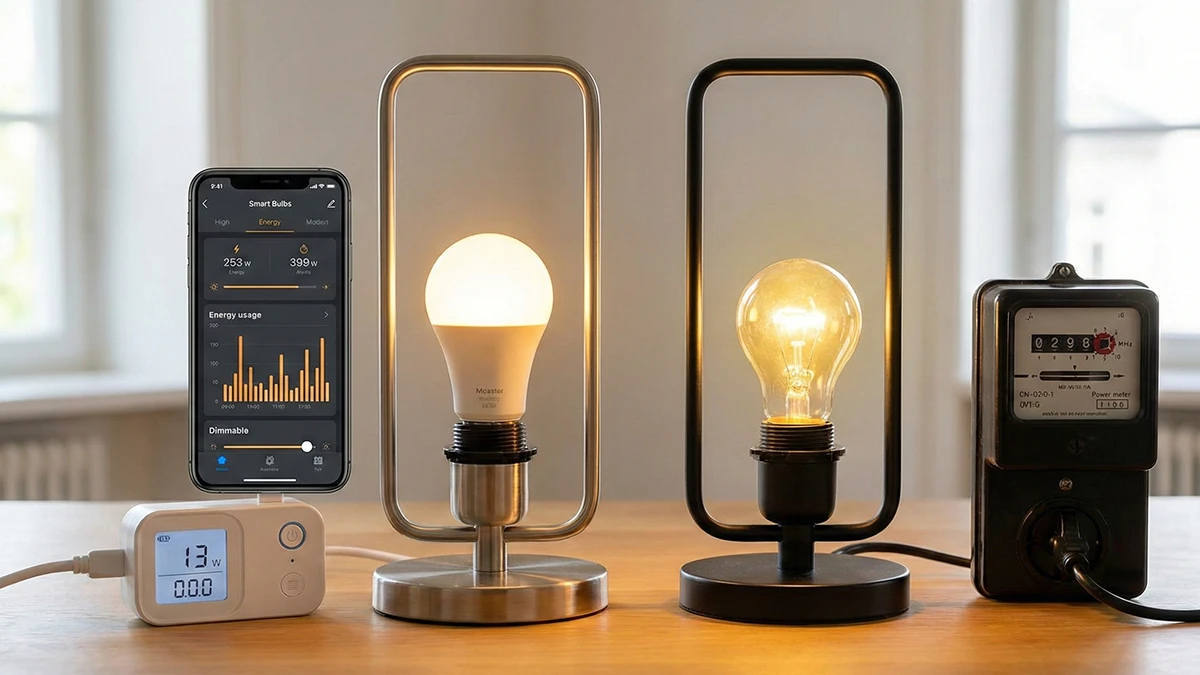
Smart bulbs, especially those utilizing LED technology, offer substantial energy savings over traditional incandescent and even many compact fluorescent (CFL) normal bulbs. Their inherent efficiency, combined with advanced features like dimming, scheduling, and motion sensing, significantly reduces power consumption. While the initial investment is typically higher, their extended lifespan and operational savings often make them a more economical and environmentally conscious choice in the long run.
- Smart LEDs are inherently more efficient than incandescent and CFL bulbs.
- Advanced features like dimming and scheduling maximize energy conservation.
- Higher initial investment is offset by long-term operational savings.
- Smart bulbs offer extended lifespans, reducing replacement frequency.
- They contribute to a reduced environmental footprint through lower energy use.
Understanding the Basics: What are Smart Bulbs?
Smart bulbs represent a significant advancement in home lighting technology. These are not just ordinary light sources; they are intelligent devices capable of connecting to a home network, typically via Wi-Fi, Bluetooth, or a dedicated hub. This connectivity allows users to control them remotely through smartphone apps, voice commands, or smart home automation systems.
Beyond simple on/off functionality, smart bulbs offer a range of sophisticated features. These include adjustable brightness (dimming), tunable white light (from warm to cool tones), and the ability to display millions of colors. Many also integrate with other smart home devices, enabling complex automation routines based on presence detection, time of day, or even external weather conditions.
Traditional Lighting: What are Normal Bulbs? (Incandescent, CFL, LED)
Before the advent of smart lighting, homes relied on a variety of ‘normal’ bulbs, each with distinct characteristics and energy profiles. Understanding these traditional options provides context for appreciating the advancements offered by smart technology.
Incandescent Bulbs
Incandescent bulbs are the oldest and most recognizable form of electric lighting. They produce light by heating a filament to incandescence, a process that is highly inefficient. A significant portion of the energy consumed by an incandescent bulb is converted into heat rather than light. While they offer a warm, familiar glow, their short lifespan and high energy consumption have led to their gradual phasing out in many regions.
Compact Fluorescent Lamps (CFLs)
CFLs emerged as a more energy-efficient alternative to incandescents. They operate by passing an electric current through a tube containing argon and a small amount of mercury vapor, which produces ultraviolet light. This UV light then excites a fluorescent coating on the inside of the tube, causing it to emit visible light. CFLs consume significantly less energy than incandescents and have a longer lifespan, though they contain mercury and often require a warm-up period to reach full brightness.
Light Emitting Diodes (LEDs)
LEDs represent the current pinnacle of conventional lighting efficiency. Unlike incandescents, LEDs do not rely on heat to produce light. Instead, they generate light through electroluminescence, where electrons recombine with holes within a semiconductor material, releasing energy in the form of photons. LEDs are remarkably energy-efficient, have an exceptionally long lifespan, and produce very little heat. Many modern ‘normal’ bulbs are now LED-based, offering excellent energy performance without the ‘smart’ features.
Smart Bulb vs Normal Bulb Energy Saving: A Direct Comparison
When evaluating smart bulb vs normal bulb energy saving, the primary factor is the underlying lighting technology. Most smart bulbs today are built upon LED technology, inheriting its inherent efficiency. This immediately places them at a significant advantage over incandescent and CFL normal bulbs.
An incandescent bulb might consume 60 watts to produce a certain amount of light, while an equivalent LED (smart or normal) might only require 8-10 watts. This difference alone represents an energy reduction of over 80%. Compared to CFLs, modern LEDs (including smart bulbs) still offer superior efficiency and a longer lifespan, without the mercury content.
However, the comparison becomes more nuanced when considering a smart LED bulb versus a normal LED bulb. Both utilize the same highly efficient light-emitting technology. The additional energy saving from a smart bulb comes not from its light-emitting mechanism itself, but from its intelligent features that optimize usage and minimize wasted energy.
The Technology Behind the Savings: How Smart Bulbs Optimize Energy Use
The true energy-saving prowess of smart bulbs extends beyond their LED foundation. Their integrated technology allows for dynamic control and automation, leading to optimized energy consumption.
- Dimming Capabilities: Smart bulbs can be dimmed to any desired brightness level. Reducing brightness directly correlates to lower power consumption. Unlike some traditional dimmers that waste energy as heat, smart dimming is often more efficient.
- Scheduling and Timers: Users can program smart bulbs to turn on and off at specific times, ensuring lights are only active when needed. This eliminates the common oversight of leaving lights on unnecessarily.
- Motion and Occupancy Sensors: Integrated or connected sensors can detect presence, automatically turning lights on when someone enters a room and off when it’s empty. This prevents lights from burning in unoccupied spaces.
- Daylight Harvesting: Some advanced smart lighting systems can adjust brightness based on the amount of natural light available, reducing artificial illumination when sunlight is sufficient.
- Remote Control: The ability to turn off lights from anywhere via a smartphone app means never having to worry about leaving lights on when away from home.
These features collectively contribute to a significant reduction in overall energy usage, making smart bulbs a powerful tool for energy conservation in the home.
Beyond Energy: Additional Features and Benefits of Smart Lighting
While energy saving is a major draw, smart bulbs offer a host of other benefits that enhance convenience, comfort, and security within the home.
- Customizable Ambiance: Users can change light color and temperature to suit different moods or activities, from bright, cool light for working to warm, soft light for relaxation.
- Voice Control Integration: Compatibility with virtual assistants like Amazon Alexa, Google Assistant, and Apple HomeKit allows for hands-free control of lighting.
- Enhanced Security: Scheduling lights to turn on and off while away can simulate occupancy, deterring potential intruders. Some systems can even integrate with security cameras.
- Accessibility: Smart lighting can greatly benefit individuals with mobility challenges, allowing them to control lights without physically reaching switches.
- Integration with Smart Home Ecosystems: Smart bulbs can be part of a larger automated home, interacting with thermostats, door locks, and entertainment systems for a truly connected experience.
Cost Analysis: Initial Investment vs. Long-Term Savings
The initial expenditure for smart bulbs is undeniably higher than for most normal bulbs, especially traditional incandescents or basic CFLs. Even compared to a standard LED bulb, a smart LED bulb will typically require a greater upfront payment due to the integrated technology for connectivity and advanced features.
However, this higher initial investment is often recouped over time through significant operational savings. The reduced energy consumption translates directly into lower utility statements each month. Furthermore, smart LED bulbs boast an exceptionally long lifespan, often lasting 15,000 to 25,000 hours or more. This dramatically reduces the frequency and associated inconvenience of bulb replacements compared to incandescents, which might last only 1,000 hours, or CFLs, which typically last around 8,000-10,000 hours.
When considering the total value of ownership over several years, the long-term operational savings and reduced replacement needs often make smart bulbs a more economically sound choice despite their higher initial purchase. The added convenience and features also contribute to their overall value proposition.
Environmental Impact: Sustainability of Smart vs. Normal Bulbs
The choice between smart and normal bulbs also has implications for environmental sustainability. Energy consumption is directly linked to carbon emissions, especially in regions reliant on fossil fuels for electricity generation. By significantly reducing energy use, smart LED bulbs contribute to a smaller carbon footprint.
Furthermore, the extended lifespan of smart LED bulbs means fewer bulbs are manufactured, transported, and ultimately disposed of. This reduces resource consumption and waste. Unlike CFLs, LEDs do not contain mercury, eliminating concerns about hazardous waste disposal. While the manufacturing process for smart bulbs might be slightly more complex due to integrated electronics, their overall lifecycle impact is generally more favorable due to their efficiency and longevity.
Installation and Compatibility: Integrating Smart Lighting into Your Home
Integrating smart lighting into a home is often a straightforward process, designed for DIY enthusiasts. Most smart bulbs are designed to fit standard light sockets (E26/E27 in North America). The primary steps involve screwing in the bulb and then pairing it with a smartphone app or smart home hub.
Compatibility is a key consideration. Some smart bulbs connect directly to a home’s Wi-Fi network, while others require a dedicated hub to facilitate communication. It’s important to check the specific requirements of the chosen smart lighting system and ensure it integrates seamlessly with existing smart home platforms or voice assistants if desired. Most systems offer clear instructions for setup, making the transition to smart lighting accessible for many homeowners.
Potential Drawbacks: When Normal Bulbs Might Still Be a Fit
While smart bulbs offer numerous advantages, there are scenarios where normal bulbs, particularly standard LEDs, might still be a more suitable choice.
- Initial Investment: For those with very tight budgets or who only need to replace a single bulb, the higher upfront expenditure of a smart bulb might be a deterrent.
- Simplicity Preference: Some users prefer the straightforward ‘on/off’ functionality of a traditional light switch and do not desire the complexity or features of smart lighting.
- Limited Connectivity: In areas with unreliable Wi-Fi or where a smart home hub is not present, the core functionality of a smart bulb may be compromised.
- Specific Fixtures: Certain specialized light fixtures or enclosed luminaires might not be compatible with all smart bulb designs or their heat dissipation requirements.
For basic, no-frills illumination where advanced control is not a priority, a high-quality normal LED bulb still offers excellent energy efficiency without the added cost and complexity of smart features.
Making the Smart Choice: Factors to Consider for Your Home
Deciding between smart and normal bulbs involves weighing various factors specific to your needs and lifestyle. Consider the following:
- Your Energy Saving Goals: If maximizing energy conservation and reducing utility statements is a top priority, smart bulbs offer the most comprehensive solution through their features.
- Desired Level of Control: Do you want remote control, scheduling, dimming, or color changes? Smart bulbs provide unparalleled flexibility.
- Budget Considerations: Evaluate the initial investment against the long-term operational savings and extended lifespan.
- Existing Smart Home Ecosystem: If you already have a smart home setup, choosing compatible smart bulbs will enhance integration and functionality.
- Usage Patterns: For lights that are frequently left on or in high-traffic areas, smart bulbs with occupancy sensors can yield significant savings.
- Simplicity vs. Features: If you prefer a simple lighting experience, a normal LED bulb might suffice.
Ultimately, the best choice depends on balancing efficiency, convenience, and personal preferences to create an optimal lighting environment for your home.
Frequently Asked Questions
How much energy can I really save with a smart bulb compared to a normal bulb?
The actual energy saving depends on the type of normal bulb being compared. Against an incandescent bulb, smart LED bulbs can save over 80% of energy. Compared to a normal LED bulb, the savings come from smart features like dimming, scheduling, and occupancy sensing, which prevent unnecessary usage and reduce power consumption when full brightness isn’t needed.
Is the initial cost of smart bulbs justified by their energy saving over normal bulbs?
While smart bulbs have a higher initial purchase price, their energy efficiency and advanced features lead to significant long-term operational savings on utility statements. Coupled with their extended lifespan, which reduces replacement frequency, the overall value and economic benefit often justify the upfront investment over the product’s lifetime.
Do all smart bulbs offer better energy saving than normal bulbs?
Most smart bulbs are LED-based, making them inherently more energy-efficient than incandescent or CFL normal bulbs. However, a smart LED bulb offers comparable base efficiency to a normal LED bulb. The additional energy saving from a smart bulb comes from its intelligent control features, not from a fundamentally different light-emitting technology.
Can smart bulb features like dimming and scheduling enhance energy saving compared to normal bulbs?
Absolutely. Features such as precise dimming allow you to use only the light you need, directly reducing power consumption. Scheduling ensures lights are only on during specific times, preventing them from being left on unnecessarily. These intelligent controls are key to maximizing energy conservation beyond the bulb’s inherent efficiency.
What is the lifespan difference between a smart bulb and a normal bulb, and how does it affect energy saving?
Smart bulbs, being predominantly LED-based, boast significantly longer lifespans than incandescent or CFL normal bulbs, often lasting 15 to 25 times longer. This extended lifespan contributes to energy saving by reducing the need for manufacturing and transporting replacement bulbs, thereby lowering the overall environmental footprint and resource consumption.
Are there any specific types of normal bulbs that compete with smart bulbs in terms of energy saving?
Yes, normal LED bulbs offer excellent energy efficiency that rivals the base efficiency of smart LED bulbs. If the advanced control features of smart lighting are not a priority, a high-quality normal LED bulb can provide substantial energy saving compared to older incandescent or CFL technologies, without the higher initial investment of a smart bulb.
Conclusion
The comparison between smart bulbs and normal bulbs in terms of energy saving clearly highlights the superior efficiency of modern LED technology, which forms the foundation of most smart lighting. While normal LED bulbs offer significant energy reductions over older technologies, smart bulbs elevate this efficiency through intelligent features like dimming, scheduling, and automation. This leads to optimized usage, substantial long-term operational savings, and a reduced environmental impact. Evaluating your specific needs for control, convenience, and budget will guide you in making the most appropriate lighting choice for your home.
[{“@context”:”https://schema.org”,”@type”:”Article”,”headline”:”Smart Bulb vs Normal Bulb Energy Saving: A Comprehensive Guide to Efficiency and Value”,”mainEntityOfPage”:”https://homegeartoday.com/?p=912″,”datePublished”:”2025-12-13T01:35:41+00:00″,”dateModified”:”2025-12-13T01:35:41+00:00″},{“@context”:”https://schema.org”,”@type”:”ItemList”,”itemListElement”:[{“@type”:”ListItem”,”position”:1,”name”:”Understanding the Basics: What are Smart Bulbs?”},{“@type”:”ListItem”,”position”:2,”name”:”Traditional Lighting: What are Normal Bulbs? (Incandescent, CFL, LED)”},{“@type”:”ListItem”,”position”:3,”name”:”Incandescent Bulbs”},{“@type”:”ListItem”,”position”:4,”name”:”Compact Fluorescent Lamps (CFLs)”},{“@type”:”ListItem”,”position”:5,”name”:”Light Emitting Diodes (LEDs)”},{“@type”:”ListItem”,”position”:6,”name”:”Smart Bulb vs Normal Bulb Energy Saving: A Direct Comparison”},{“@type”:”ListItem”,”position”:7,”name”:”The Technology Behind the Savings: How Smart Bulbs Optimize Energy Use”},{“@type”:”ListItem”,”position”:8,”name”:”Beyond Energy: Additional Features and Benefits of Smart Lighting”},{“@type”:”ListItem”,”position”:9,”name”:”Cost Analysis: Initial Investment vs. Long-Term Savings”},{“@type”:”ListItem”,”position”:10,”name”:”Environmental Impact: Sustainability of Smart vs. Normal Bulbs”},{“@type”:”ListItem”,”position”:11,”name”:”Installation and Compatibility: Integrating Smart Lighting into Your Home”},{“@type”:”ListItem”,”position”:12,”name”:”Potential Drawbacks: When Normal Bulbs Might Still Be a Fit”},{“@type”:”ListItem”,”position”:13,”name”:”Making the Smart Choice: Factors to Consider for Your Home”},{“@type”:”ListItem”,”position”:14,”name”:”How much energy can I really save with a smart bulb compared to a normal bulb?”},{“@type”:”ListItem”,”position”:15,”name”:”Is the initial cost of smart bulbs justified by their energy saving over normal bulbs?”}]}]
Smart bulbs use slightly more energy than equivalent regular LED bulbs due to the continuous WiFi or Zigbee standby connection (0.5–1W always on). However, the scheduling and automation features of smart bulbs enable lights to be turned off when not needed, saving significantly more energy than the standby cost.
A typical 9W smart LED bulb used 3 hours daily costs approximately $3–4 per year in electricity. The standby draw of 0.5W adds less than $0.50 per year. Smart bulbs cost less to run than equivalent incandescent bulbs, and schedule features further reduce actual usage time.
Yes, smart bulb scheduling (automatically turning off when rooms are unoccupied), motion-triggered lighting (lights only when needed), and dimming features (using 50% less energy at half brightness) all reduce total lighting energy consumption compared to manually operated traditional bulbs.
Smart LED bulbs are typically rated for 15,000–25,000 hours — 15–25 years with 3 hours of daily use. The LED element is very durable, but the smart connectivity components (WiFi chip, driver) in lower-quality bulbs may fail before the LED itself reaches end of life.
The higher upfront cost of smart bulbs (3–5x standard LED bulbs) is offset by the energy savings from automation, convenience of voice and app control, scene setting for ambiance, and the scheduling features that prevent energy waste from lights left on unnecessarily.