
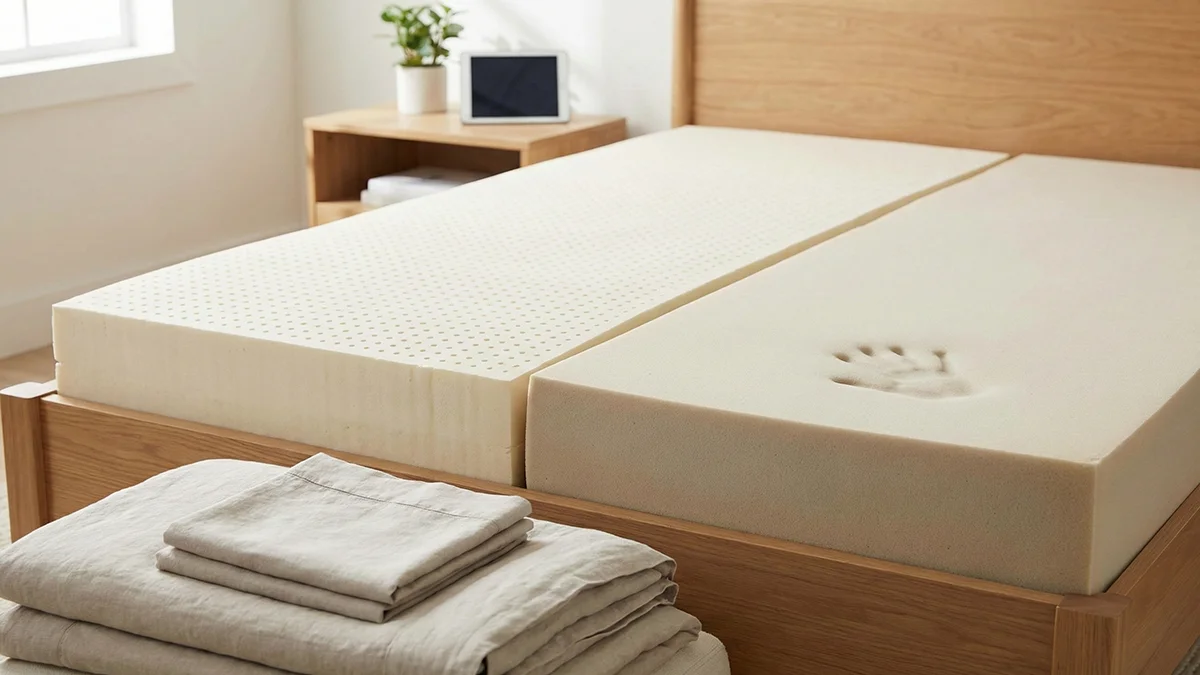
Choosing between a latex and memory foam mattress involves understanding their distinct properties and how they cater to different sleep preferences. Latex mattresses are known for their responsive bounce, natural breathability, and durable support, often appealing to those who prefer a firmer, more ‘on top’ feel. In contrast, memory foam mattresses excel at conforming closely to the body, offering deep pressure relief and superior motion isolation, ideal for sleepers seeking a cradling sensation and undisturbed rest.
- Latex offers responsive bounce and good airflow.
- Memory foam provides deep contouring and excellent pressure relief.
- Latex is often made from natural materials and is highly durable.
- Memory foam is known for motion isolation and a ‘hug’ feeling.
- Consider personal preferences for feel, support, and temperature.
Understanding Latex Mattresses: What Are They?
Latex mattresses are crafted primarily from latex foam, a material derived from the sap of rubber trees (natural latex) or synthesized chemically (synthetic latex). Blended latex combines both. This foam is processed into a resilient, durable material that forms the core of the mattress. Two main processing methods exist: Talalay and Dunlop. Dunlop latex is generally denser and firmer, with a more consistent feel throughout. Talalay latex undergoes additional steps, resulting in a lighter, airier, and often softer foam with a more open-cell structure.
Key characteristics of latex include its immediate responsiveness. When pressure is applied, latex quickly springs back into shape, preventing the feeling of being ‘stuck’ in the mattress. This material also boasts inherent breathability, which helps dissipate heat, contributing to a cooler sleep surface. Its natural elasticity provides buoyant support, aligning the spine without excessive sinking.
The Science Behind Memory Foam Mattresses
Memory foam, originally developed by NASA, is a viscoelastic polyurethane foam. Its unique properties allow it to soften and conform to the body in response to heat and pressure. This material’s open-cell structure enables it to distribute body weight evenly, reducing pressure points and providing a customized sleep surface.
The defining characteristic of memory foam is its slow response to pressure. When you lie on a memory foam mattress, it gradually molds to your body’s curves, creating a ‘hug’ or cradling sensation. This contouring ability is highly effective for pressure relief, particularly for joints and sensitive areas. Another significant benefit is its excellent motion isolation. The foam absorbs movement, preventing disturbances from a partner’s tossing and turning, making it a popular choice for couples.
Latex vs Memory Foam Mattress Comparison: Key Differences
When evaluating a latex vs memory foam mattress comparison, several core distinctions emerge that significantly impact the sleep experience. These differences span the materials’ fundamental properties, how they interact with the sleeper’s body, and their long-term performance. Understanding these variations is crucial for making an informed decision tailored to individual needs.
The primary divergence lies in their responsiveness and feel. Latex offers an immediate, springy push-back, while memory foam provides a slow, conforming embrace. This fundamental difference influences everything from ease of movement to overall comfort. Furthermore, their heat retention properties, durability, and material sourcing often differ, presenting distinct advantages and considerations for prospective buyers.
Comfort and Feel: Responsive Bounce vs. Deep Contour
The comfort and feel of a mattress are highly subjective, yet latex and memory foam present two distinctly different experiences. Latex mattresses are characterized by their buoyant and responsive feel. Sleepers often describe it as feeling ‘on top’ of the mattress rather than sinking into it. This immediate push-back makes it easier to change sleeping positions throughout the night, which can be beneficial for active sleepers or those with mobility concerns.
Memory foam, conversely, is renowned for its deep contouring and pressure-relieving ‘hug.’ As the foam warms from body heat, it softens and molds precisely to the sleeper’s shape. This creates a sensation of being cradled, which many find incredibly comfortable and supportive, especially for side sleepers or individuals with joint pain. However, some may find this sinking feeling restricts movement or makes them feel ‘stuck.’
Support and Pressure Relief: Which Is Better for Your Body?
Both latex and memory foam mattresses offer excellent support and pressure relief, but they achieve this through different mechanisms. Latex provides a more generalized, buoyant support that evenly distributes body weight across the surface. Its inherent elasticity helps maintain spinal alignment by pushing back against heavier body parts while supporting lighter ones. This can be particularly beneficial for back and stomach sleepers who require a firmer, more level sleeping surface.
Memory foam excels at targeted pressure relief. By conforming precisely to the body’s curves, it eliminates pressure points that can lead to discomfort or pain. This makes memory foam an outstanding choice for side sleepers, who often experience pressure on their hips and shoulders, and for individuals with chronic pain conditions. The deep contouring ensures that every part of the body receives customized support, promoting muscle relaxation and reducing strain.
Durability and Lifespan: Investing in Your Sleep
When considering a mattress, its longevity is a significant factor. Latex mattresses are generally recognized for their exceptional durability and long lifespan. High-quality natural latex is a very resilient material that resists sagging and indentations remarkably well over time. Many latex mattresses come with extended warranties, reflecting their expected lifespan, which can often exceed 15-20 years with proper care.
Memory foam mattresses also offer good durability, though their lifespan can vary more widely depending on the density and quality of the foam. Higher-density memory foam tends to be more durable and resistant to body impressions than lower-density varieties. On average, a quality memory foam mattress can last between 8-12 years. Over time, some memory foam mattresses may begin to soften or develop slight indentations, which can impact their supportive qualities.
Temperature Regulation: Staying Cool or Cozy
Temperature regulation is a common concern for many sleepers. Traditional memory foam has historically been associated with retaining heat due to its dense, closed-cell structure, which can trap body heat. However, advancements in memory foam technology have introduced various cooling features, such as open-cell designs, gel infusions, copper particles, or phase-change materials, to mitigate this issue and promote a cooler sleep.
Latex, particularly natural latex, is inherently more breathable than traditional memory foam. Its open-cell structure and often pin-cored construction allow for better airflow, which helps dissipate heat and moisture away from the body. This natural breathability makes latex mattresses a favorable option for individuals who tend to sleep hot or live in warmer climates, offering a naturally cooler sleep surface without relying on added cooling technologies.
Motion Isolation: Undisturbed Sleep for Couples
For couples, motion isolation is a critical factor in achieving undisturbed sleep. This refers to a mattress’s ability to absorb movement on one side without transferring it to the other. Memory foam mattresses are widely regarded as superior in motion isolation. Their viscoelastic properties mean that the foam absorbs energy locally, preventing ripples of movement from spreading across the bed. This allows one partner to move, get in or out of bed, or shift positions without disturbing the other.
Latex mattresses offer good motion isolation, but generally not to the same extent as memory foam. While latex is responsive and minimizes motion transfer better than traditional innerspring mattresses, its inherent bounciness means that some movement can still be felt across the bed. Couples who are particularly sensitive to their partner’s movements might find memory foam to be the more effective choice for minimizing disturbances.
Eco-Friendliness and Material Sourcing
Environmental considerations are increasingly important for consumers. Natural latex, derived from rubber tree sap, is a renewable resource. The production of natural latex foam is often considered more environmentally friendly, especially when certified organic or sustainably sourced. These mattresses are typically free from many synthetic chemicals and volatile organic compounds (VOCs), appealing to those with chemical sensitivities or environmental concerns.
Memory foam, being a synthetic product, is petroleum-based. While modern memory foam production has made strides in reducing VOC emissions and using plant-based oils in some formulations, it generally has a larger environmental footprint than natural latex. Certifications like CertiPUR-US ensure that memory foam is made without certain harmful chemicals and has low VOC emissions, providing a safer option for consumers concerned about indoor air quality.
Price Point: What to Expect for Each Type
When considering a new mattress, the investment involved is a significant factor. Generally, latex mattresses, especially those made from 100% natural latex, tend to be positioned at a higher value point. This reflects the natural sourcing of materials, the complex manufacturing process, and their exceptional durability and longevity. While the initial outlay might be more substantial, the extended lifespan of a quality latex mattress can offer significant long-term value.
Memory foam mattresses typically present a broader range of options, from more accessible choices to premium, high-density models. The variation in materials, density, and added features (like cooling technologies) directly influences their value. While some memory foam options are more budget-friendly, higher-quality, denser memory foam mattresses with advanced features will naturally reflect a greater investment. It’s important to consider the balance between initial investment and expected lifespan for both types.
Who Should Choose a Latex Mattress?
A latex mattress is an excellent choice for several types of sleepers. Individuals who prefer a responsive and bouncy feel will appreciate the immediate push-back of latex, which makes moving around in bed effortless. Those who tend to sleep hot will benefit from latex’s natural breathability and superior airflow, which helps maintain a cooler sleep surface. Back and stomach sleepers often find the firm, buoyant support of latex ideal for maintaining proper spinal alignment without excessive sinking.
Furthermore, sleepers with allergies or environmental sensitivities may prefer natural latex due to its hypoallergenic properties and the absence of many synthetic chemicals. Its exceptional durability also makes it a wise long-term investment for those seeking a mattress that will last for many years without significant sagging or body impressions.
Who Should Choose a Memory Foam Mattress?
Memory foam mattresses are particularly well-suited for sleepers who desire deep contouring and personalized pressure relief. Side sleepers, in particular, often find memory foam’s ability to cushion hips and shoulders invaluable, reducing pressure points and promoting comfort. Individuals experiencing joint pain, arthritis, or fibromyalgia may also benefit from the cradling support that alleviates discomfort.
Couples seeking undisturbed sleep will appreciate memory foam’s superior motion isolation, which prevents movement from one side of the bed from disturbing the other. Those who enjoy a ‘hug’ or sinking sensation, feeling enveloped by their mattress, will find memory foam’s unique feel highly appealing. Sleepers who prioritize a quiet sleep environment, free from squeaks or creaks, will also find memory foam to be an excellent choice.
Making Your Final Decision: Factors to Consider
When making your final decision between a latex and memory foam mattress, consider a few key factors. First, prioritize your personal comfort preferences: do you prefer a buoyant, responsive feel or a deep, contouring hug? Next, evaluate your typical sleeping position and any specific support needs, such as relief for back pain or pressure points. Temperature regulation is another crucial aspect; consider if you tend to sleep hot and which material’s properties align best with your needs.
Also, think about the long-term investment and durability you expect from your mattress. Finally, if environmental impact or natural materials are important to you, factor in the sourcing and composition of each mattress type. Testing both types in person, if possible, can provide the most accurate assessment of which mattress truly suits your sleep style.
Frequently Asked Questions
What is the main difference in feel between latex vs memory foam mattress comparison?
The primary difference in feel is responsiveness. Latex mattresses offer a buoyant, springy feel, making you feel like you’re sleeping ‘on top’ of the mattress with immediate push-back. Memory foam, conversely, provides a slow-response, contouring ‘hug’ that makes you feel like you’re sinking ‘into’ the mattress.
Is a latex or memory foam mattress better for back pain?
Both can be beneficial for back pain, but for different reasons. Latex offers buoyant, even support that helps maintain spinal alignment without deep sinking. Memory foam provides targeted pressure relief by conforming precisely to the body’s curves, alleviating pressure points that can exacerbate back pain. The best choice depends on individual preference for support type.
Which mattress type, latex vs memory foam, is more durable?
Latex mattresses, especially those made from natural latex, are generally considered more durable and have a longer lifespan, often lasting 15-20 years or more. Memory foam mattresses also offer good durability, typically lasting 8-12 years, with higher-density foams tending to be more resilient.
How do latex vs memory foam mattresses compare on temperature regulation?
Natural latex is inherently more breathable due to its open-cell structure, allowing for better airflow and a naturally cooler sleep surface. Traditional memory foam can retain heat, but modern versions often incorporate cooling technologies like gel infusions or open-cell designs to improve temperature regulation.
What are the typical price differences in a latex vs memory foam mattress comparison?
Generally, natural latex mattresses tend to represent a higher initial investment due to their material sourcing and manufacturing. Memory foam mattresses offer a wider range of options, from more accessible choices to premium models, with the investment varying based on foam density and added features.
Can I get a hybrid mattress that combines latex and memory foam?
Yes, hybrid mattresses often combine the best features of different materials. You can find hybrid mattresses that incorporate both latex and memory foam layers, typically over an innerspring coil base. This design aims to provide the responsive support of latex, the pressure relief of memory foam, and the traditional bounce of coils.
Conclusion
The choice between a latex and memory foam mattress ultimately comes down to individual sleep preferences and priorities. Latex offers a responsive, buoyant feel with excellent breathability and long-term durability, appealing to those who prefer a firmer, more natural sleep surface. Memory foam provides deep contouring, superior pressure relief, and exceptional motion isolation, ideal for sleepers seeking a cradling sensation and undisturbed rest. Carefully consider your comfort needs, sleeping position, and any specific concerns like temperature or motion transfer to select the mattress that will best support your journey to restorative sleep.
[{“@context”:”https://schema.org”,”@type”:”Article”,”headline”:”Latex vs Memory Foam Mattress Comparison: Which Is Best for Your Sleep?”,”mainEntityOfPage”:”https://homegeartoday.com/?p=888″,”datePublished”:”2025-12-11T01:27:52+00:00″,”dateModified”:”2025-12-11T01:27:52+00:00″},{“@context”:”https://schema.org”,”@type”:”ItemList”,”itemListElement”:[{“@type”:”ListItem”,”position”:1,”name”:”Understanding Latex Mattresses: What Are They?”},{“@type”:”ListItem”,”position”:2,”name”:”The Science Behind Memory Foam Mattresses”},{“@type”:”ListItem”,”position”:3,”name”:”Latex vs Memory Foam Mattress Comparison: Key Differences”},{“@type”:”ListItem”,”position”:4,”name”:”Comfort and Feel: Responsive Bounce vs. Deep Contour”},{“@type”:”ListItem”,”position”:5,”name”:”Support and Pressure Relief: Which Is Better for Your Body?”},{“@type”:”ListItem”,”position”:6,”name”:”Durability and Lifespan: Investing in Your Sleep”},{“@type”:”ListItem”,”position”:7,”name”:”Temperature Regulation: Staying Cool or Cozy”},{“@type”:”ListItem”,”position”:8,”name”:”Motion Isolation: Undisturbed Sleep for Couples”},{“@type”:”ListItem”,”position”:9,”name”:”Eco-Friendliness and Material Sourcing”},{“@type”:”ListItem”,”position”:10,”name”:”Price Point: What to Expect for Each Type”},{“@type”:”ListItem”,”position”:11,”name”:”Who Should Choose a Latex Mattress?”},{“@type”:”ListItem”,”position”:12,”name”:”Who Should Choose a Memory Foam Mattress?”},{“@type”:”ListItem”,”position”:13,”name”:”Making Your Final Decision: Factors to Consider”},{“@type”:”ListItem”,”position”:14,”name”:”What is the main difference in feel between latex vs memory foam mattress comparison?”},{“@type”:”ListItem”,”position”:15,”name”:”Is a latex or memory foam mattress better for back pain?”}]}]
Latex is more responsive (bounces back immediately), sleeps cooler (naturally breathable), and is more durable. Memory foam conforms more closely to body shape for pressure relief, offers better motion isolation, and is typically more affordable. The best choice depends on personal preference and budget.
Both can work well for back pain. Natural latex provides consistent pressure relief with faster response when you shift positions. Memory foam excels at pressure point relief for side sleepers. The mattress firmness level typically matters more than the foam type for back pain management.
Yes, natural latex is significantly more breathable than traditional memory foam, allowing more airflow and sleeping cooler. Gel-infused and open-cell memory foam mattresses have improved temperature regulation but still generally sleep warmer than natural latex mattresses.
Natural latex mattresses last 15–20+ years — significantly longer than memory foam’s 7–10 years. Latex maintains its support properties much longer without sagging. The superior durability of natural latex often justifies its higher upfront cost over a 15-year ownership period.
Natural latex (from rubber tree sap) is more durable, more breathable, and biodegradable. Synthetic latex (petroleum-based) is cheaper but less durable and not biodegradable. Blended latex (combination of both) offers a middle ground. Natural latex is preferred for longevity and environmental reasons.