
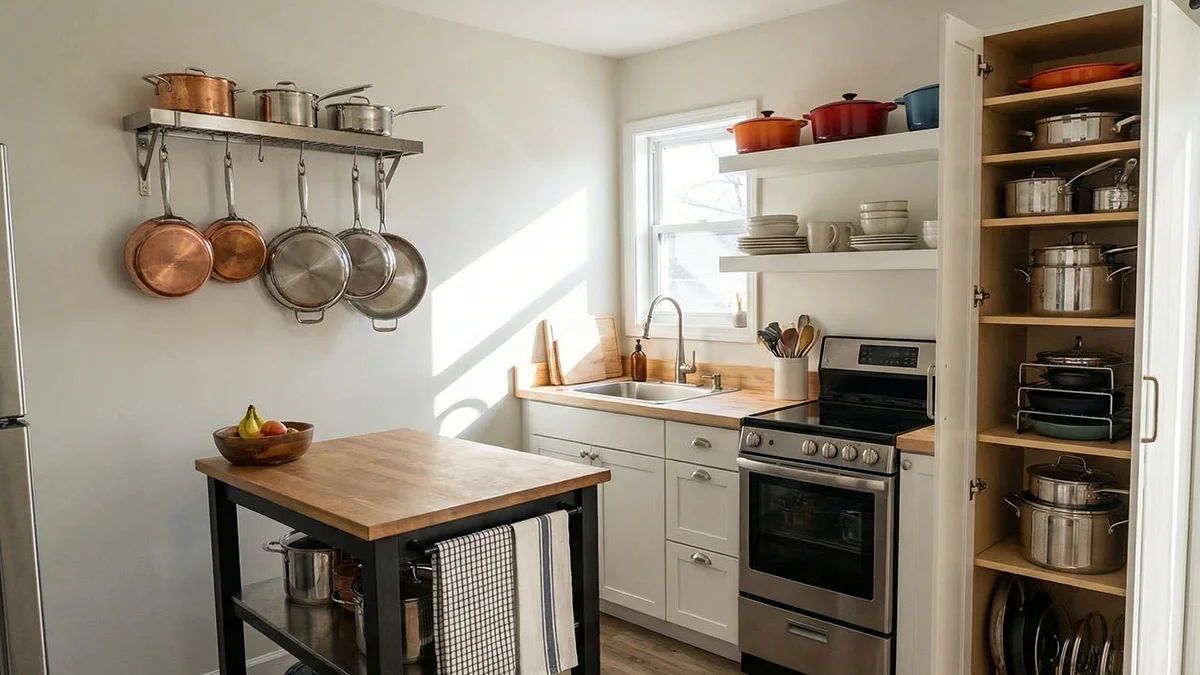
Storing pots and pans efficiently in a small kitchen requires strategic planning and clever organization. By maximizing vertical space, utilizing specialized cabinet and drawer inserts, and decluttering unused items, homeowners can transform a cramped cooking area into a highly functional and tidy space. The key lies in optimizing every available inch to ensure cookware is accessible yet neatly stowed away.
Understanding the Small Kitchen Storage Challenge
Small kitchens often present unique storage dilemmas, particularly when it comes to bulky and oddly shaped items like pots and pans. Limited counter space, fewer cabinets, and compact drawers mean that traditional storage methods quickly lead to clutter and inefficiency. The challenge isn’t just about finding a spot for everything, but about creating a system that keeps cookware easily accessible without overwhelming the visual space or hindering workflow. This section explores the common pain points faced by individuals in small culinary environments.
- Limited Cabinetry and Drawer Space: Many small kitchens lack the extensive built-in storage found in larger homes, forcing creative solutions.
- Awkward Cookware Shapes: Pots with long handles, bulky lids, and varying sizes make stacking difficult and often result in wasted space.
- Accessibility Issues: When items are crammed together, retrieving a specific pot can become a frustrating task, leading to disorganization.
- Visual Clutter: An unorganized collection of cookware can make a small kitchen feel even more confined and chaotic.
The Golden Rules of Small Kitchen Cookware Organization
Effective organization in a small kitchen begins with a few fundamental principles that guide every storage decision. Adhering to these rules ensures that your efforts result in a lasting, functional system rather than a temporary fix.
- Declutter Ruthlessly: Before organizing, assess your entire collection. Keep only the pots and pans you regularly use and that are in good condition. Donate or discard duplicates, damaged items, or cookware that hasn’t seen use in over a year. A smaller, curated collection is inherently easier to manage.
- Embrace Vertical Space: When horizontal space is scarce, look up. Walls, cabinet interiors, and even the space above your stove or sink can be leveraged for storage. This principle is crucial for maximizing capacity without expanding your kitchen’s footprint.
- Nest and Stack Smartly: Whenever possible, choose cookware designed for nesting or intelligent stacking. This minimizes the footprint of multiple items. For non-nesting items, consider pan separators or felt protectors to prevent scratches and allow for stable stacking.
- Categorize and Group: Store similar items together. Keep frying pans with frying pans, saucepans with saucepans, and lids near their respective pots. This streamlines the cooking process and makes finding what you need effortless.
- Prioritize Accessibility: Frequently used items should be stored in the easiest-to-reach locations. Less common items can be placed higher up or in less convenient spots.
Innovative Cabinet and Drawer Solutions for Pots and Pans
Cabinets and drawers are the primary storage areas in most kitchens, and with the right tools, they can be transformed into highly efficient spaces for pots and pans, even in compact settings.
- Pull-Out Organizers: Install pull-out shelves or drawers within existing cabinets. These allow you to easily access items at the back without having to unload the front, making deep cabinets much more functional.
- Pot and Pan Organizers (Racks): These metal or plastic racks can be placed vertically or horizontally inside cabinets. Vertical racks allow you to store pans on their sides, preventing stacking and making each pan individually accessible. Horizontal racks often feature adjustable dividers to accommodate various sizes.
- Under-Sink Storage: While often reserved for cleaning supplies, the area under the sink can be optimized for smaller pots or less frequently used items, especially if a custom organizer is installed to work around plumbing.
- Drawer Dividers and Pegboards: For deep drawers, adjustable dividers or pegboard systems can create custom compartments for each pot and pan, preventing them from shifting and clanging together. This is particularly effective for keeping lids organized alongside their bases.
- Corner Cabinet Solutions: Corner cabinets, often notorious for being difficult to utilize, can benefit from lazy Susans or kidney-shaped pull-out shelves that rotate, bringing items from the back to the front with ease.
How to Store Pots and Pans in Small Kitchen: Vertical and Wall-Mounted Strategies
When cabinet space is at a premium, looking beyond traditional enclosed storage is essential. Vertical and wall-mounted solutions are excellent ways to free up valuable real estate and add a touch of culinary charm.
- Pot Racks (Ceiling-Mounted): A classic solution for small kitchens, ceiling-mounted pot racks keep cookware within easy reach while freeing up cabinet space. They come in various styles and sizes, from simple bars to elaborate grids, and can become a focal point of the kitchen design. Ensure secure installation into ceiling joists.
- Wall-Mounted Pot Racks and Rails: Similar to ceiling racks but affixed to a wall, these systems are perfect for displaying frequently used items. They can be installed above the stove, a prep area, or even on an unused wall. Magnetic knife strips can also be repurposed for lightweight lids or small utensils.
- Pegboards: A versatile and customizable option, a pegboard allows you to hang pots, pans, and even lids using various hooks and shelves. It’s an adaptable system that can be reconfigured as your storage needs change and makes excellent use of vertical wall space.
- Over-the-Door Organizers: While often used for pantry items or cleaning supplies, some over-the-door organizers with deep pockets or hooks can accommodate smaller, lighter pots or pan lids on the inside of a pantry or cabinet door.
- Open Shelving: If your kitchen design allows, open shelves can display attractive cookware, making it easily accessible. This approach requires maintaining a tidy and aesthetically pleasing arrangement to avoid a cluttered look.
Smart Storage for Lids, Baking Sheets, and Other Cookware Accessories
Lids, baking sheets, cutting boards, and other flat cookware accessories often pose their own unique storage challenges. Addressing these items specifically can significantly improve overall kitchen organization.
- Lid Organizers: These are essential for preventing a cascade of lids every time you open a cabinet. Options include:
- In-cabinet lid racks: Stand lids upright in a rack, often with adjustable dividers.
- Door-mounted lid holders: Attach to the inside of cabinet doors, keeping lids out of the way but easily accessible.
- Pot and lid combos: Some organizers are designed to hold both the pot and its corresponding lid together.
- Vertical Dividers for Baking Sheets and Cutting Boards: Install vertical dividers in a cabinet or a deep drawer to store baking sheets, cutting boards, muffin tins, and serving platters on their sides. This makes each item easy to retrieve without disturbing others.
- Magazine Files: Repurpose sturdy magazine files to store smaller baking sheets, cutting boards, or even pan lids vertically in a cabinet or on a shelf.
- Over-Cabinet Door Organizers: These hooks or baskets hang over cabinet doors and can hold items like cutting boards or dish towels, freeing up drawer space.
- Drawer Inserts for Utensils: While not directly for pots and pans, organizing cooking utensils effectively frees up drawer space that might otherwise be used for smaller cookware items.
DIY and Budget-Friendly Hacks for Cookware Storage
You don’t need to invest in expensive custom solutions to achieve an organized small kitchen. Many effective storage hacks can be implemented with minimal effort and cost.
- Tension Rod Dividers: Use tension rods inside cabinets or drawers to create custom vertical dividers for baking sheets, cutting boards, or pan lids. They are adjustable and require no installation.
- Command Hooks for Lids: Affix strong Command hooks to the inside of cabinet doors to hang pan lids by their handles or knobs. Ensure the hooks are rated for the weight of your lids.
- Repurposed Dish Drying Racks: A compact dish drying rack can be placed inside a cabinet to hold pan lids or even small frying pans upright.
- Stacking Shelves: Simple wire or plastic stacking shelves can double the usable space within a cabinet, allowing you to store smaller pots or bowls underneath larger items.
- S-Hooks on Existing Racks: If you have an existing wire shelf or a small rail, S-hooks can be used to hang lightweight pots, pans, or utensils.
- DIY Pegboard: Create your own pegboard system using a piece of plywood and drilling holes for pegs or hooks. Paint it to match your kitchen decor.
Choosing the Right Cookware for Limited Kitchen Space
The type of cookware you own significantly impacts how easily it can be stored in a small kitchen. Making conscious choices when purchasing new items can prevent future storage headaches.
- Nesting Cookware Sets: Invest in sets specifically designed to nest perfectly within each other, often with detachable handles. These sets drastically reduce the storage footprint.
- Multi-Functional Pieces: Opt for cookware that serves multiple purposes. A Dutch oven can be a stockpot, a baking dish, and a serving vessel. A single large skillet might replace several smaller ones.
- Stackable Lids: Look for lids that are flat or have low-profile handles, making them easier to stack or store vertically. Universal lids that fit multiple pot sizes can also reduce clutter.
- Lightweight Materials: While not directly a storage solution, lighter pots and pans are easier to hang on wall racks or retrieve from higher shelves.
- Consider Material and Durability: Choose durable cookware that will last, reducing the need for frequent replacements and ensuring your curated collection remains functional. Stainless steel and cast iron are popular for their longevity, though cast iron is heavy.
Maintaining an Organized and Functional Small Kitchen
Achieving an organized small kitchen is an ongoing process, not a one-time event. Regular maintenance ensures that your storage solutions remain effective and your kitchen stays functional.
- “One In, One Out” Rule: When you purchase a new pot or pan, commit to donating or discarding an old one. This prevents your collection from growing beyond your storage capacity.
- Regular Decluttering: Periodically review your cookware. Are there items you haven’t used in months? Are any damaged? A quick audit can prevent clutter from accumulating.
- Return Items Immediately: After use and cleaning, return pots and pans to their designated spots. This simple habit prevents items from piling up on counters or in the sink.
- Adjust as Needed: Your cooking habits or cookware collection might change over time. Be prepared to adjust your storage system to accommodate new needs or preferences.
- Cleanliness is Key: A clean kitchen naturally feels more organized. Wiping down surfaces and putting away items promptly contributes to a sense of order.
Frequently Asked Questions
- Q: What is the best way to store pots and pans in a small kitchen?
A: The most effective approach involves a combination of strategies: decluttering, utilizing vertical space with wall or ceiling racks, employing cabinet organizers like pull-outs or vertical dividers, and nesting cookware whenever possible. Prioritize accessibility for frequently used items. - Q: How do you organize pots and pans without a pantry in a tiny kitchen?
A: Without a pantry, focus on maximizing existing cabinet and drawer space with inserts and dividers. Leverage walls for hanging racks or pegboards, and consider open shelving for attractive pieces. Under-sink areas can also be optimized for less-used items. - Q: Can I hang pots and pans in a small kitchen to save space?
A: Absolutely. Hanging pots and pans on wall-mounted racks, ceiling-mounted pot racks, or pegboards is an excellent way to save cabinet space and keep cookware easily accessible. Ensure the racks are securely installed into wall studs or ceiling joists. - Q: What are some clever hacks for storing cookware in tiny spaces?
A: Clever hacks include using tension rods as vertical dividers in cabinets, attaching Command hooks to cabinet doors for lid storage, repurposing magazine files for baking sheets, and utilizing stacking shelves to double cabinet capacity. - Q: How do I keep my small kitchen organized with many pots and pans?
A: Start by decluttering to reduce the number of items. Then, implement a system using organizers, vertical storage, and nesting cookware. Crucially, maintain organization by returning items to their designated spots immediately after use and conducting periodic reviews of your collection. - Q: Are there specific types of pots and pans that are better for small kitchens?
A: Yes, cookware designed for nesting, multi-functional pieces (like a Dutch oven), and sets with detachable handles are ideal for small kitchens as they minimize storage footprint. Flat or low-profile lids also contribute to easier storage.
Conclusion
Effectively storing pots and pans in a small kitchen is entirely achievable through a combination of thoughtful decluttering, smart organization, and creative use of space. By embracing vertical solutions, investing in clever cabinet and drawer inserts, and choosing multi-functional cookware, you can transform a cramped kitchen into an efficient and enjoyable culinary environment. Implement these strategies to maintain a tidy and functional space where every pot and pan has its designated, accessible home.
{“@context”:”https://schema.org”,”@type”:”Article”,”headline”:”How to Store Pots and Pans in Small Kitchens: Smart Solutions for Maximizing Space”,”mainEntityOfPage”:”https://homegeartoday.com/?p=90″,”datePublished”:”2025-12-10T21:11:14+00:00″,”dateModified”:”2025-12-10T21:11:14+00:00″}
Nest pots inside each other with lids stored separately (in a vertical lid organizer). Use a pot rack mounted on the wall or ceiling for frequently used pans. Install a pegboard with S-hooks for hanging smaller pans. Deep drawer dividers keep lids and pans organized without nesting.
A vertical pot organizer (divider-style rack) that stores pans upright within a lower cabinet is the most space-efficient solution. It allows each pan to be retrieved individually without unstacking, and takes up far less vertical space than stacked pans.
Nesting is fine for pots (same diameter pans stacked with cloth protectors between them). Pans with non-stick coatings should ideally be stored with protectors or hung to prevent coating scratches. Cast iron and stainless steel can be stacked without separators.
A wall-mounted or ceiling pot rack is one of the best space-saving investments for a small kitchen. Hanging frequently used pots and pans frees up significant cabinet space, keeps pots accessible, and adds a professional kitchen aesthetic without requiring any additional floor or counter space.
Store pots and pans in the cabinet nearest the stove for maximum cooking workflow efficiency. If space allows, hang the most-used pans on a wall rack adjacent to the cooking area. Store rarely used items in higher cabinets or a lower pantry section with accessible pull-out storage.