
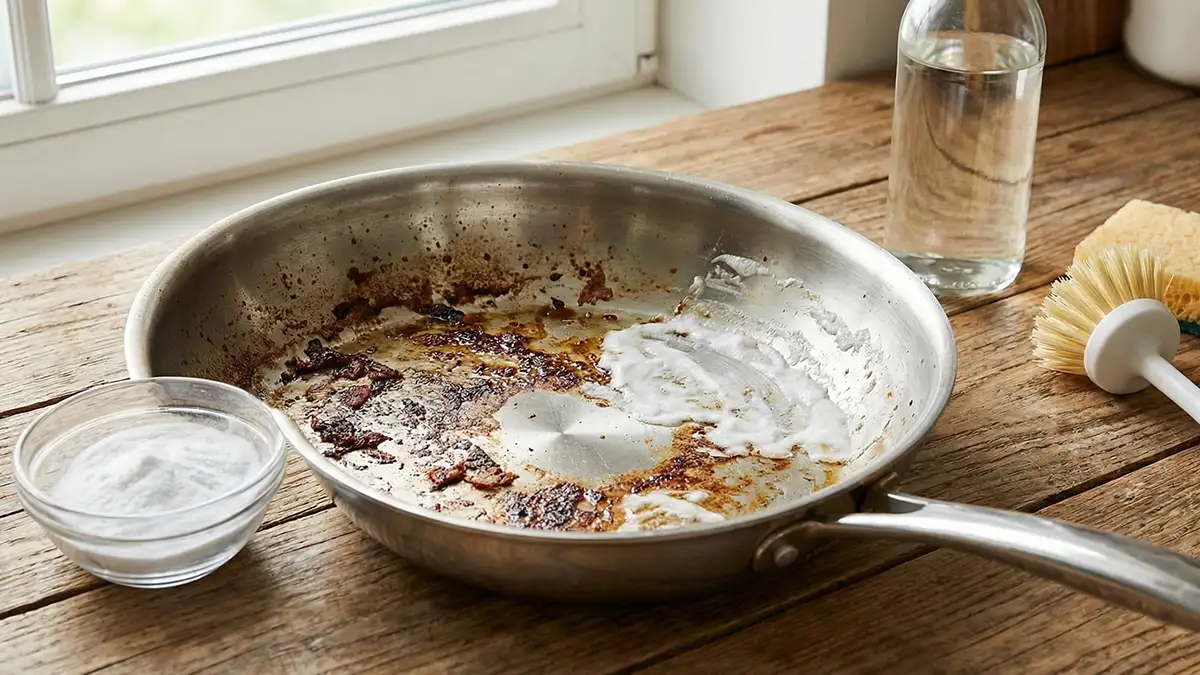
To clean a burnt pan at home, begin by soaking it in warm water with dish soap. For stubborn burns, a paste of baking soda and vinegar applied for several hours or overnight, followed by gentle scrubbing, often yields excellent results. The best approach can vary based on the pan’s material.
- Soaking is the first step for most burns.
- Baking soda and vinegar are powerful, natural cleaners.
- Pan material dictates the safest cleaning method.
- Prevention is crucial to avoid future burns.
Introduction: Why Pans Burn and Why Cleaning Matters
Pans can burn for various reasons, often due to high heat, forgetting food on the stove, or using insufficient oil or liquid during cooking. When food or oil overheats and sticks, it creates a stubborn, carbonized layer that can be challenging to remove.
Properly cleaning burnt pans is essential for several reasons. It maintains kitchen hygiene, prevents burnt flavors from transferring to future meals, and significantly extends the lifespan of your cookware. Neglecting burnt residue can lead to permanent damage and affect cooking performance.
Understanding Your Pan: Material-Specific Cleaning Considerations
The material of your pan plays a crucial role in determining the safest and most effective cleaning method. Using the wrong technique can cause irreversible damage to your cookware.
Stainless Steel Pans
Stainless steel is highly durable and generally resistant to scratching. These pans can often withstand more vigorous scrubbing and a wider range of cleaning agents, including mild abrasives, without damage.
Non-Stick Pans
Non-stick coatings are delicate and require gentle care. Abrasive scrubbers or harsh chemicals can easily scratch or degrade the non-stick surface, rendering the pan ineffective and potentially unsafe for cooking.
Cast Iron Pans
Cast iron pans have a unique seasoning that needs to be preserved. While durable, they should not be cleaned with harsh soaps that strip this seasoning. Specific methods are required to clean burnt cast iron without compromising its protective layer.
Enamel and Ceramic Pans
Enamel and ceramic coatings are similar to non-stick in their fragility. They are prone to scratching and chipping if abrasive tools or harsh chemicals are used. Gentle cleaning is always recommended for these surfaces.
Copper Pans
Copper pans are prized for their heat conductivity and aesthetic appeal. However, they can tarnish and scratch easily. Cleaning methods for copper should focus on restoring shine without damaging the metal.
Your Arsenal: Common Household Ingredients for Burnt Pan Cleaning
You don’t need specialized cleaners to tackle most burnt pans. Many effective solutions can be found right in your pantry.
- Baking Soda: A mild abrasive and natural deodorizer, baking soda is excellent for lifting burnt residue.
- White Vinegar: The acetic acid in white vinegar helps dissolve burnt-on food and grease.
- Dish Soap: Essential for cutting through grease and providing initial cleaning.
- Lemon Juice: A mild acid that can help with light stains and add a fresh scent.
- Salt: Coarse salt can act as a gentle abrasive for scrubbing, especially with cast iron.
- Cream of Tartar: Often used with vinegar or lemon juice, it’s effective for polishing stainless steel.
How to Clean Burnt Pan at Home: Step-by-Step Methods for Every Burn
Here are detailed methods to clean various levels of burnt residue from your pans, starting with the least aggressive approach.
Method 1: For Light Burns (Soak and Scrub)
This method is ideal for minor burns where food has just started to stick.
- Remove any loose food particles from the pan.
- Fill the pan with warm water and add a few drops of dish soap.
- Let the pan soak for at least 30 minutes. For slightly tougher spots, extend the soaking time to a few hours.
- After soaking, use a non-abrasive sponge or brush to gently scrub away the loosened residue.
- Rinse thoroughly with clean water and dry the pan.
Method 2: For Medium Burns (Baking Soda and Vinegar Paste)
This powerful combination is effective for more stubborn, carbonized food residue.
- Pour out any standing water and remove loose debris.
- Sprinkle a generous layer of baking soda over the entire burnt area.
- Slowly pour white vinegar over the baking soda. It will fizz and bubble, indicating a chemical reaction that helps lift the burnt material.
- Allow the mixture to sit for at least 15 minutes. For very tough burns, let it sit for several hours or even overnight.
- After soaking, use a non-abrasive sponge or plastic scraper to gently scrub the burnt areas. The residue should come off more easily.
- Rinse the pan thoroughly with warm water and dry it completely.
Method 3: For Stubborn Burns (Boiling Method)
Heat can help loosen deeply embedded burnt food, making it easier to remove.
- Add about an inch of water to the burnt pan.
- Add a few drops of dish soap and a tablespoon or two of baking soda to the water.
- Place the pan on the stove and bring the mixture to a boil.
- Let it simmer for 10-15 minutes, allowing the boiling solution to work on the burnt residue.
- Carefully remove the pan from the heat and let it cool down completely.
- Once cool, pour out the water and use a non-abrasive scrubber to remove the loosened burnt bits.
- Rinse and dry the pan.
Targeted Solutions for Different Pan Materials
While the general methods apply, some materials benefit from specific adjustments.
Cleaning Burnt Stainless Steel Pans
Stainless steel can handle a bit more. For tough stains, a paste of baking soda and a small amount of water can be applied and left to sit before scrubbing. For discoloration, boiling water with vinegar can help restore shine. Products like Bar Keepers Friend are also highly effective for stainless steel, but always follow product instructions.
Cleaning Burnt Non-Stick Pans
Always be extra gentle with non-stick surfaces. Stick to warm soapy water and the baking soda and vinegar paste method, but use a very soft sponge or cloth. Never use metal utensils, steel wool, or abrasive cleaners, as these will scratch and ruin the coating.
Cleaning Burnt Cast Iron Pans
For cast iron, avoid harsh dish soaps that can strip the seasoning. Instead, use hot water and a stiff brush or plastic scraper. For burnt-on food, a paste of coarse salt and a small amount of oil can be used as an abrasive scrub. After cleaning, always dry cast iron thoroughly and apply a thin layer of cooking oil to re-season it.
Cleaning Burnt Enamel and Ceramic Pans
Treat enamel and ceramic pans similarly to non-stick. Use the baking soda and vinegar paste method with a soft sponge. Avoid sudden temperature changes, which can cause cracking, and never use abrasive scrubbers or metal tools.
Cleaning Burnt Copper Pans
Copper can be cleaned with a paste made from lemon juice and salt, or vinegar and salt. Apply the paste, let it sit for a few minutes, then gently rub with a soft cloth. Rinse thoroughly and dry immediately to prevent water spots and tarnish. Specialized copper cleaners are also available for restoring luster.
Dealing with the Toughest Burns: Advanced Techniques
For extremely stubborn, carbonized burns that resist standard methods, a few advanced techniques can be considered, but always with caution.
Using Oven Cleaner (with extreme caution)
Some oven cleaners contain strong chemicals that can dissolve burnt residue. This method should only be used as a last resort and with extreme caution. Ensure excellent ventilation, wear gloves and eye protection, and carefully read the oven cleaner’s instructions and warnings. Test on an inconspicuous area first, and never use on non-stick or aluminum pans, as it can cause severe damage.
Dishwasher Detergent Tablets
A dishwasher detergent tablet can be dissolved in hot water inside the burnt pan. Let it soak for several hours or overnight. The powerful enzymes in the tablet can help break down tough burnt-on food. This is generally safer than oven cleaner but still requires rinsing thoroughly.
Specialized Scraping Tools
For certain pan materials like stainless steel or cast iron, a plastic or wooden scraper can be used to carefully chip away at thick burnt layers. Avoid metal scrapers, as they can scratch the pan’s surface. Always use gentle pressure to prevent damage.
Prevention is Key: Tips to Avoid Future Burnt Pans
The best way to deal with burnt pans is to prevent them from happening in the first place. Adopting good cooking habits can save you a lot of cleaning effort.
- Use Appropriate Heat: Avoid using excessively high heat, especially when preheating. Most cooking can be done effectively on medium or medium-low heat.
- Don’t Leave Pans Unattended: Always keep an eye on your cooking, especially when frying or sautéing.
- Use Enough Oil/Liquid: Ensure there’s sufficient oil, butter, or liquid to prevent food from sticking to the bottom of the pan.
- Match Pan Size to Burner: Use a burner that matches the size of your pan to ensure even heat distribution and prevent hot spots.
- Clean Promptly: After cooking, clean your pans as soon as they cool down. Fresh food residue is much easier to remove than dried or burnt-on grime.
- Stir Regularly: For dishes prone to sticking, stir frequently to prevent food from settling and burning at the bottom.
When to Say Goodbye: Knowing When to Replace a Damaged Pan
While many burnt pans can be salvaged, there are times when replacement is the safer and more practical option.
- Deep Scratches on Non-Stick: If the non-stick coating is deeply scratched, flaking, or peeling, it’s time to replace the pan. Damaged non-stick surfaces can release harmful chemicals and lose their effectiveness.
- Warped Bottoms: A pan with a warped or uneven bottom will not heat evenly, leading to inconsistent cooking and potential burning.
- Irremovable Rust: While surface rust on cast iron can often be cleaned and re-seasoned, extensive or deep rust on other metal pans can indicate structural damage and may be difficult to fully sanitize.
- Loose or Broken Handles: A wobbly or broken handle poses a safety risk and makes the pan difficult to maneuver.
- Heavy Pitting or Corrosion: Significant pitting or corrosion, especially on aluminum or stainless steel, can weaken the pan and make it unhygienic.
Frequently Asked Questions
What is the most effective way to clean a burnt pan at home without harsh chemicals?
The baking soda and vinegar method is highly effective. Sprinkle baking soda, add white vinegar, let it fizz and soak, then gently scrub. This combination creates a powerful, natural cleaning action that lifts burnt residue without relying on harsh chemical agents.
Can I use steel wool or abrasive scrubbers to clean a burnt pan?
It depends on the pan material. Steel wool is generally safe for stainless steel and cast iron, but it can severely damage non-stick, enamel, and ceramic coatings. Always opt for softer sponges or brushes first, especially for delicate surfaces, to avoid scratching.
How do you clean a burnt pan without scrubbing vigorously?
Soaking is crucial to minimize scrubbing. Fill the pan with warm water and dish soap, or a solution of water and baking soda, and let it sit for several hours or overnight. Boiling water with a little soap and baking soda can also loosen tough residue, making it easier to wipe away with minimal effort.
What is the best way to clean a burnt stainless steel pan at home?
For burnt stainless steel, a paste of baking soda and a small amount of water works well. Apply it, let it sit, then scrub with a non-abrasive pad. For very tough stains or discoloration, boiling water with vinegar and baking soda can help, or use a specialized stainless steel cleaner.
How can I prevent my pans from burning in the future?
To prevent future burns, always use appropriate heat levels for your cooking, never leave pans unattended on the stove, and ensure there’s enough oil or liquid to prevent food from sticking. Matching the pan size to the burner also helps distribute heat evenly and reduces hot spots.
Is it safe to cook in a pan that was previously burnt and cleaned?
Yes, it is generally safe to cook in a pan that has been thoroughly cleaned after a burn, provided the pan’s surface is not permanently damaged. For non-stick pans, ensure the coating is intact without scratches or peeling. For cast iron, re-seasoning might be beneficial to restore its protective layer.
Conclusion
Cleaning burnt pans at home is achievable with common household items and patience. The key is understanding your pan’s material and choosing the right method, from simple soaking to powerful baking soda and vinegar treatments. With these techniques, you can restore your cookware and extend its lifespan, ensuring your kitchen remains a functional and enjoyable space for all your culinary adventures.
{“@context”:”https://schema.org”,”@type”:”Article”,”headline”:”The Ultimate Guide: How to Clean Burnt Pan at Home Effectively”,”mainEntityOfPage”:”https://homegeartoday.com/?p=93″,”datePublished”:”2025-12-11T03:12:11+00:00″,”dateModified”:”2025-12-11T03:12:11+00:00″}
Related: how to clean and maintain your air fryer
Add water to cover the burnt area, bring to a boil on the stovetop, and simmer for 5–10 minutes. The boiling water loosens burned food significantly. After cooling, scrub with a non-scratch pad. For stubborn burns, add dish soap and baking soda to the water before boiling.
Fill the pan with water and add 1–2 tablespoons of white vinegar. Bring to a boil for 10 minutes. Cool, then add baking soda and scrub with a non-scratch pad. For burnt-on stains, make a paste of baking soda and water and leave for 30 minutes before scrubbing.
Add warm water and a few drops of dish soap to the burnt pan and let soak for 20–30 minutes. Gently scrub with a soft sponge — never metal scourers. For stubborn marks, simmer water in the pan for 5 minutes, then wipe with a soft cloth after cooling.
Yes, baking soda is highly effective for cleaning burnt pans. Make a paste with water, apply to the burnt area, let sit for 15–30 minutes, then scrub. For severe burns, combine baking soda with white vinegar (it will fizz) and leave for 30 minutes before scrubbing.
Never use steel wool or metal scourers on non-stick pans — they permanently destroy the coating. Avoid bleach on cast iron (removes seasoning). Never use harsh abrasive cleaners on enameled cast iron or ceramic-coated pans, as they scratch and permanently damage the cooking surface.