
Choosing the right weighted blanket can make a big difference in how well you sleep and how comfortable you feel. For many people, a weighted blanket can help reduce anxiety, improve sleep quality, and give a sense of calm. But if the size or weight is wrong, you might not get these benefits.
You could even feel uncomfortable or too hot. That’s why it’s important to know exactly how to choose the best weighted blanket size and weight for you.
Many first-time buyers think any weighted blanket will work, but there’s more to it. The perfect match depends on your body, your sleeping habits, and your own preferences. In this guide, you’ll learn how to select the best size and weight, what really matters, and mistakes to avoid.
Whether you are buying for yourself, your child, or a partner, you’ll find clear advice and practical tips to help you make the right choice.
What Is A Weighted Blanket?
A weighted blanket is a special type of blanket filled with materials like glass beads or plastic pellets. The extra weight gives gentle, even pressure across your body. This feeling is called “deep touch pressure.” It can make you feel calm, similar to a gentle hug. Many people use weighted blankets to help with stress, anxiety, insomnia, or sensory issues.
Weighted blankets are available in different sizes and weights. That’s why choosing the right one is important for comfort and safety.
Why Size And Weight Matter
The size and weight of your blanket affect how well it works. If the blanket is too heavy, you may feel trapped or overheated. If it’s too light, you might not get the calming effect you want. A blanket that’s too small won’t cover your body, while one that’s too large may hang off the bed and lose its effect.
A good match can help you:
- Fall asleep faster
- Stay asleep longer
- Feel less anxious
- Wake up feeling rested
People often overlook these points, but they are key to enjoying the benefits.
How To Choose The Best Weighted Blanket Weight
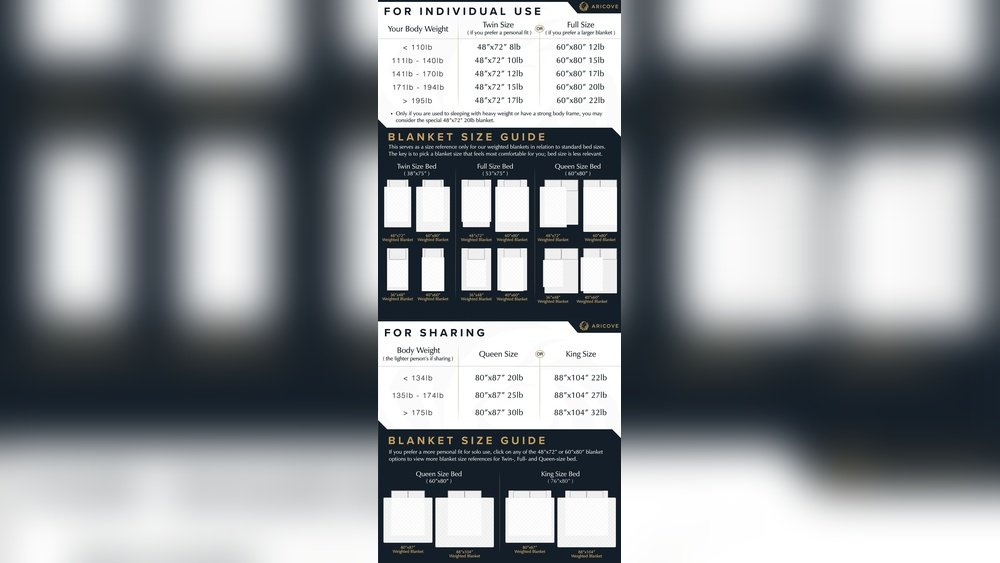
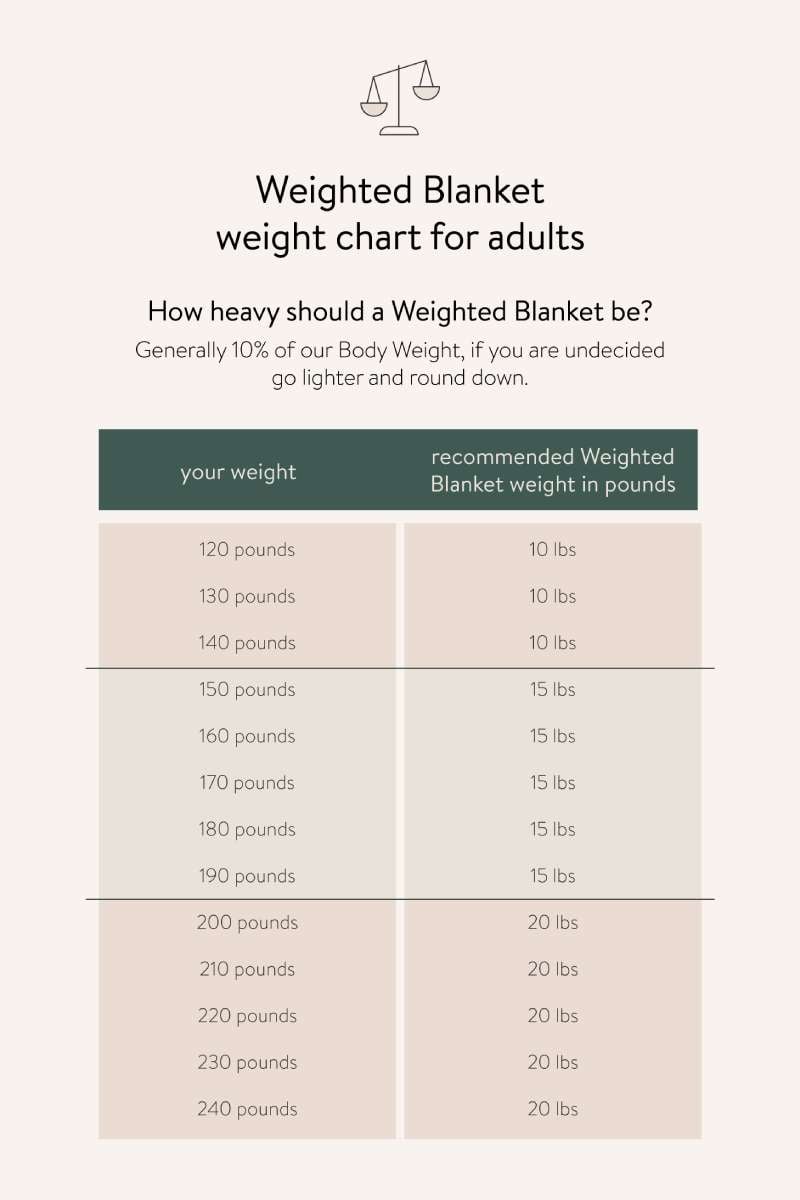
Most experts recommend choosing a weighted blanket that is about 10% of your body weight. This is a good starting point, but there are a few extra things to keep in mind.
Standard Weight Guidelines
Here’s a general guide for adults:
| Body Weight (kg) | Recommended Blanket Weight (kg) | Body Weight (lbs) | Recommended Blanket Weight (lbs) |
|---|---|---|---|
| 30–50 | 3–5 | 65–110 | 7–11 |
| 50–70 | 5–7 | 110–155 | 11–15 |
| 70–90 | 7–9 | 155–200 | 15–20 |
| 90–120 | 9–12 | 200–265 | 20–26 |
Special Considerations
- Personal comfort: Some people like heavier blankets, while others feel better with lighter ones. Start with 10% of your body weight, then adjust if needed.
- Health conditions: If you have breathing problems, joint pain, or circulation issues, ask a doctor before using a weighted blanket.
- Children: Weighted blankets are not safe for babies or toddlers. For kids (over 3 years old), the blanket should be about 10% of their body weight, never more than 15%.
Real-world Example
If you weigh 70 kg (about 155 lbs), a 7 kg (15 lbs) blanket is the usual choice. But if you find it too heavy after trying it for a week, it’s okay to switch to a 6 kg (13 lbs) blanket.
Comfort always comes first.
How To Choose The Right Weighted Blanket Size
The size of your blanket depends on your bed size and how you plan to use it. Weighted blankets are not meant to cover the whole bed like a regular comforter.
Common Weighted Blanket Sizes
| Blanket Size (cm) | Blanket Size (inches) | Best For |
|---|---|---|
| 90 x 120 | 36 x 48 | Children |
| 120 x 180 | 48 x 72 | Twin beds, single adults |
| 150 x 200 | 60 x 80 | Full/Queen beds, couples |
| 200 x 220 | 80 x 87 | King beds, tall adults |
Choosing The Right Fit
- For single use: Pick a blanket that covers your body from shoulders to feet, but not the entire mattress.
- For couples: Each person may need their own blanket for best comfort. Sharing can make the blanket feel heavier or less effective.
- For children: Choose a smaller size, just enough to cover the child’s body—not the whole bed.
Overlooked Details
Many new buyers think bigger is better. But with weighted blankets, a blanket that hangs over the bed edges can slide off and lose its weight effect. It’s best if the blanket stays on top of your body, not the mattress.
Material And Filling: What Difference Do They Make?
The fabric and filling can affect the feel, breathability, and even the weight distribution.
Common Materials
- Cotton: Soft, breathable, good for hot sleepers.
- Minky/fleece: Warm, cozy, ideal for cold weather.
- Bamboo: Cool, moisture-wicking, good for people who sweat at night.
Filling Types
- Glass beads: Heavier, smaller, make the blanket thinner and more evenly weighted.
- Plastic pellets: Slightly bulkier, sometimes less smooth.
- Micro beads or sand: Very fine, but can shift more easily.
If you live in a warm place or tend to get hot at night, pick a cotton or bamboo blanket with glass beads. If you want warmth, go for fleece or minky.
Matching Blanket To Your Sleeping Position
Your sleeping position can affect the best blanket choice.
- Back sleepers: Most types work well.
- Side sleepers: A lighter blanket may be more comfortable, as extra pressure can feel stronger on one side.
- Stomach sleepers: Go for the lightest option, as heavy blankets may feel restrictive.
Also, if you toss and turn a lot, a smaller or lighter blanket may move less and feel better.
Credit: www.rperim.com.br
Tips For Couples Sharing A Weighted Blanket
Sharing a weighted blanket with a partner sounds cozy but can be tricky. Here are some things to consider:
- Body weight difference: If you and your partner have very different weights, the same blanket may feel too heavy for one and too light for the other.
- Movement: Weighted blankets are less stretchy than regular comforters. If one person moves a lot, it may pull the blanket off the other.
- Solution: Many couples use two smaller blankets instead of one large one. This way, each person gets their ideal weight and size.
Mistakes To Avoid When Choosing Weighted Blanket Size And Weight
New buyers often make the same mistakes, which can lead to discomfort or wasted money.
- Choosing a blanket that’s too heavy: It’s tempting to go heavier for more “pressure,” but it can make you feel trapped or too hot.
- Buying a blanket for the whole bed: Weighted blankets are for your body, not for the mattress. If it hangs over the edge, the weight pulls down and becomes less effective.
- Ignoring personal sleep habits: If you move a lot or sleep hot, a lighter, breathable blanket is better.
- Not checking for safety: Children, elderly people, or those with health issues should always use lighter, smaller blankets.
How To Test And Adjust Your Weighted Blanket
If you’re not sure about the right weight, here’s a simple way to test:
- Lie down and place the blanket evenly over your body.
- Wait for about 10–15 minutes.
- Ask yourself: Do you feel calm and cozy, or do you feel trapped and hot?
If you feel uncomfortable or have trouble moving, try a lighter blanket. It’s always better to start light, then move up if needed.
Some companies offer trial periods. This is a good option if you’re unsure. You can test the blanket at home and exchange it if it’s not right.
Caring For Your Weighted Blanket
Weighted blankets need special care because of their weight and filling. Before buying, check the washing instructions. Many blankets have removable covers that you can wash, while the inner blanket needs spot cleaning or gentle cycles.
Quick care tips:
- Use a duvet cover to keep the blanket clean.
- Avoid hot water or high heat in the dryer.
- Check your washing machine’s weight limit before washing the blanket.

Credit: allurelakestorey.com
Comparing Weighted Blanket Sizes And Weights
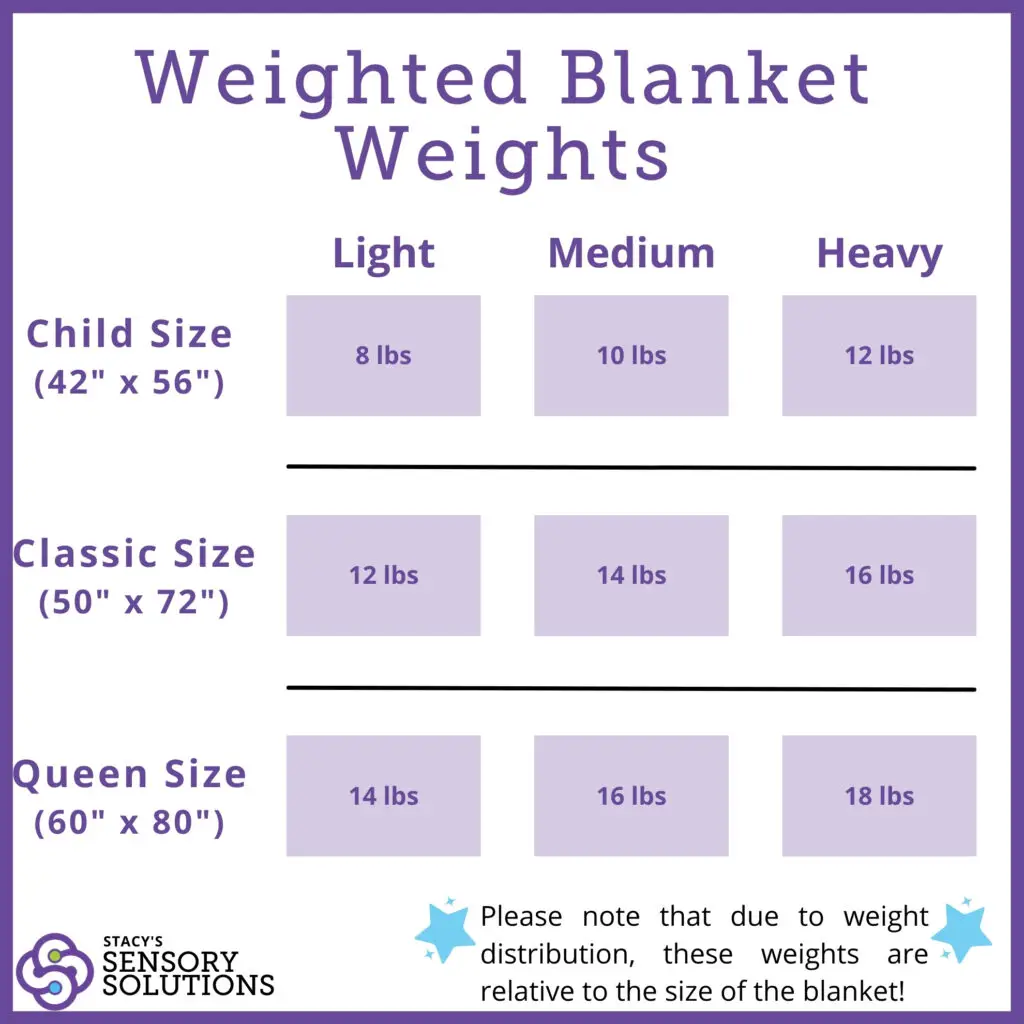
Here’s a quick comparison to help you choose the right combination for your needs:
| Blanket Size | Best For | Common Weights |
|---|---|---|
| 36 x 48 in (90 x 120 cm) | Children | 5–7 lbs (2–3 kg) |
| 48 x 72 in (120 x 180 cm) | Single adults, twin beds | 10–15 lbs (4–7 kg) |
| 60 x 80 in (150 x 200 cm) | Full/Queen beds | 15–20 lbs (7–9 kg) |
| 80 x 87 in (200 x 220 cm) | King beds, couples | 20–25 lbs (9–11 kg) |
How To Choose A Weighted Blanket For Children
Safety comes first for kids. Only use weighted blankets for children over 3 years old, and always check the weight is right. The blanket should never be more than 10% of the child’s body weight, and it should fit the child, not the bed.
Extra safety tips:
- Never cover the face or head with the blanket.
- Make sure the child can move the blanket off easily.
- Always supervise the first few uses.
For more on child safety with weighted blankets, check the advice from Sleep Foundation.
Credit: allurelakestorey.com
Frequently Asked Questions
What Happens If My Weighted Blanket Is Too Heavy?
A blanket that’s too heavy can make it hard to move, feel uncomfortable, or cause you to overheat. Some people may feel anxious or trapped. If this happens, switch to a lighter blanket.
Can I Share A Weighted Blanket With My Partner?
Yes, but it’s not always comfortable for both people. If your weights are different, consider two separate blankets so each person gets the right weight and size.
Are Weighted Blankets Safe For Children?
Weighted blankets are only safe for children over age 3, and only if they can move the blanket off themselves. Never use for babies or toddlers.
How Do I Wash A Weighted Blanket?
Most have removable covers you can wash. For the inner blanket, use a gentle cycle and cool water. Always check the care instructions, as some need spot cleaning.
Do Weighted Blankets Help With Anxiety?
Many people find weighted blankets help with anxiety by providing deep pressure, which can calm the nervous system. Results vary, but research supports their use for some people.
The right weighted blanket can change your sleep and comfort. Now that you know how to choose the size and weight, you can pick the best one for your needs and enjoy better rest every night.