
Finding the perfect water bottle size can seem simple, but it matters more than most people think. The right size keeps you hydrated, fits your lifestyle, and prevents waste or discomfort. Whether you’re a student, an athlete, a traveler, or just someone who cares about daily hydration, choosing wisely saves money and hassle.
With so many choices out there, it’s easy to feel lost. Let’s break down the key factors, clear up the confusion, and help you pick the best size for your needs.
Why Water Bottle Size Matters
A water bottle is more than just a container. The size you choose affects your health, convenience, and even how much plastic you use. If it’s too small, you refill constantly or risk dehydration. Too large, and you might avoid carrying it because it’s heavy or awkward. For kids, the wrong size might mean they leave it at home or don’t drink enough water at school. For athletes, the right capacity keeps performance high. It’s about balance—enough water, but not too much bulk.
Common Water Bottle Sizes Explained
Understanding sizes is the first step. Here are the most popular water bottle capacities and what they’re usually best for.
| Size (ml/oz) | Typical Use | Who It Fits |
|---|---|---|
| 250ml / 8oz | Short outings, small bags, kids | Toddlers, preschoolers |
| 500ml / 17oz | School, work, quick workouts | Students, commuters |
| 750ml / 25oz | Day trips, longer workouts | Hikers, gym-goers |
| 1L / 32oz | Outdoor activities, travel | Campers, travelers |
| 1.5L / 50oz | All-day use, hot climates | Serious athletes, long journeys |
Factors To Consider When Choosing Bottle Size
1. Daily Water Needs
How much water you need each day depends on age, activity, and climate. The U.S. National Academies suggests about 3.7 liters (125oz) per day for men and 2.7 liters (91oz) for women, including all beverages and food. If you’re carrying a 500ml bottle, you’d need to refill it 5-8 times a day. For someone always on the go, a larger bottle might make more sense.
2. Purpose And Activity
Your main use changes what’s ideal:
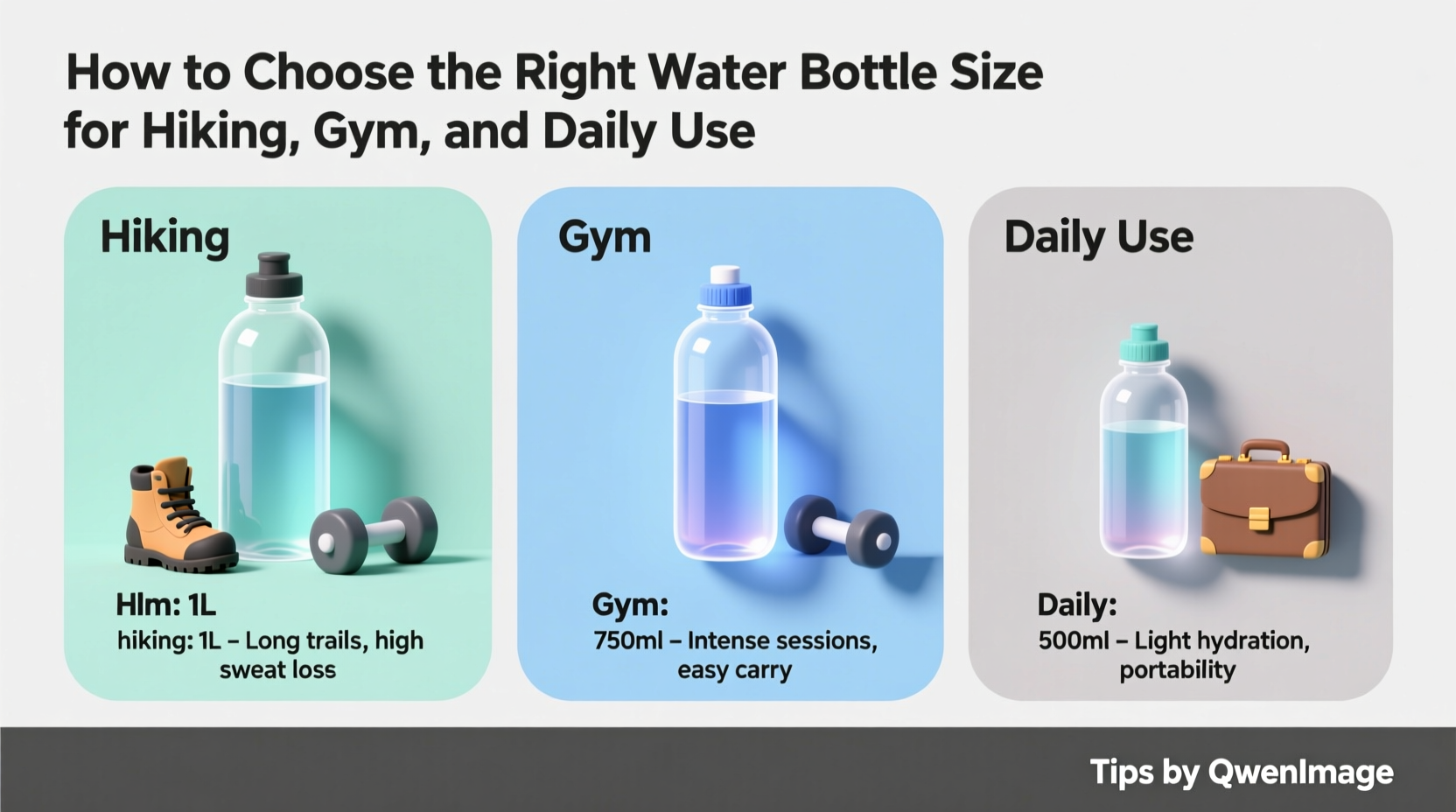
- School or Office: 500ml–750ml is usually enough.
- Gym or Sports: 750ml–1L helps you stay hydrated during intense sessions.
- Hiking or Travel: 1L or more means fewer refills in places without clean water.
- Kids: 250ml–500ml is best. It’s lighter and fits in small hands or bags.
3. Portability And Comfort
A bigger bottle often means more weight. Ask yourself:
- Will you carry it in a backpack, purse, or hand?
- How much does it weigh when full?
- Does it fit in a car cup holder or bike cage?
If it’s too heavy or large, you might leave it at home. For most people, a 500ml or 750ml bottle is the sweet spot for daily use.
4. Refill Opportunities
Think about where you’ll be:
- Easy access to water: Smaller bottles are fine if you can refill often.
- Remote areas or travel: Larger bottles are safer, so you won’t run out.
Many forget to consider this. For example, travelers on long train journeys often regret bringing a small bottle.
5. Climate And Season
In hot weather, you lose more water through sweat. In cold weather, you might not feel as thirsty, but you still need to drink. In hot climates or summer months, a bigger bottle (1L or more) is smart, especially outdoors.
6. Age And Strength
For children, elderly, or people with limited hand strength, a huge bottle can be hard to use. A heavy 1L bottle is too much for a small child. Choose a size that matches who will carry it.
7. Bottle Material And Insulation
Some materials add weight. For example, stainless steel bottles are heavier than plastic. Insulated bottles keep drinks cold or hot longer, but their walls are thicker, so a 500ml insulated bottle might be the same size as a 750ml plastic one. Consider both capacity and how much space the bottle takes up.
8. Personal Habits
Do you sip water all day, or prefer to drink a lot at once? Some people naturally drink more if they see their bottle is nearly full. If you need reminders to hydrate, a larger bottle might encourage more drinking.
Real-life Examples For Different Lifestyles
Choosing the right water bottle size often depends on your daily routine. Here are a few scenarios:
Students
Most students do well with a 500ml or 750ml bottle. It fits easily in a backpack and is enough for a few hours of class. If there are water fountains at school, a smaller size is fine.
Office Workers
A 750ml or 1L bottle can sit on your desk and remind you to drink. If you have a short commute and don’t want to carry much, 500ml may be enough, especially if you can refill during the day.
Athletes And Gym-goers
A 1L bottle covers most workouts. For long outdoor runs or cycling, consider a hydration pack or two smaller bottles for balance.
Travelers And Hikers
For long trips or hikes, 1L–1. 5L bottles are better. If you can’t refill often, err on the side of more water. Some hikers carry two bottles—a large one for camp and a smaller one for the trail.
Parents And Kids
For children under 8, a 250ml–500ml bottle is best. It’s light, easy to open, and won’t spill much if dropped. Older kids or teens might prefer 500ml–750ml.
Credit: www.alibaba.com
Comparing Popular Sizes Side-by-side
Sometimes, seeing the differences helps. Here’s a simple comparison of how common bottle sizes stack up for daily use:
| Size | Weight When Full | Refills Needed (2L/day) | Fits Cup Holder? |
|---|---|---|---|
| 500ml | ~0.5kg | 4 | Yes |
| 750ml | ~0.75kg | 2.7 | Yes (most) |
| 1L | ~1kg | 2 | Sometimes |
| 1.5L | ~1.5kg | 1.3 | No |
Notice that as size increases, weight and bulk go up, but you refill less often. The ideal size is a balance—enough capacity, but still comfortable.
Key Mistakes To Avoid
Many people make simple errors when picking a bottle:
- Choosing the biggest by default: Bigger isn’t always better. Heavy bottles are rarely used.
- Ignoring bag size: If your bottle doesn’t fit, you’ll leave it behind.
- Not checking refill options: Small bottles are fine in cities, but risky in remote places.
- Overlooking insulation: Hot drinks expand, and ice takes space. Make sure insulated bottles hold what you need.
- Buying for looks only: Design is nice, but usability matters more.
Non-obvious Insights Most People Miss
Bottle Diameter Matters
It’s not just about volume. A tall, skinny 750ml bottle might fit where a short, wide 500ml won’t. Always check the bottle’s shape if you need it to fit cup holders, backpack pockets, or bike cages. Retailers rarely mention this, but it’s a common frustration.
Your Hydration Style Changes Over Time
Needs vary. You might need a big bottle for summer hikes, but a smaller one for winter commutes. Owning two bottles—a large and a small—often works better than searching for one “perfect” size. Many people overlook this simple solution.
How To Test Before You Buy
If you’re unsure, try this:
- Fill a pitcher with your usual daily water intake.
- Pour it into a few different bottles you have at home.
- Carry each around for a day. See what feels right—too heavy, too light, or just enough?
This experiment often surprises people. A bottle that looks perfect online might feel too bulky or too small in real life.

Credit: www.thehydrojug.com
Sustainability And Waste
Using a reusable water bottle is great for the environment, but only if you actually use it. If a bottle is uncomfortable, you might buy single-use drinks instead. The right size means you’ll stick with it, saving money and reducing plastic waste.
For more on the environmental impact of bottle size and material, visit the EPA’s guide on sustainable materials.
Practical Tips For Choosing The Right Size
- Check your daily routine. Do you have access to water at work or school?
- Test bottle weight at the store—fill it with water if allowed.
- Make sure it fits your favorite bag or cup holder.
- Consider buying two sizes for different situations.
- Don’t forget cleaning! Large bottles with small openings can be hard to wash.
Credit: www.alibaba.com
Frequently Asked Questions
How Do I Know If My Bottle Is Too Big Or Too Small?
If your bottle feels heavy or you leave it behind, it’s too big. If you run out of water often or need to refill many times a day, it’s probably too small.
Can I Use The Same Bottle Size For Hot And Cold Drinks?
Yes, but be careful with insulated bottles. Their inner volume is sometimes less than it appears. Also, hot drinks can expand, so don’t fill to the very top.
What Size Is Best For Kids?
For children under 8, 250ml–500ml is best. Older kids can use 500ml–750ml. Make sure the bottle is easy for them to open and carry.
Is It Okay To Have More Than One Bottle Size?
Absolutely. Many people use a small bottle for everyday tasks and a large one for sports or travel. This is often the most practical solution.
Do Stainless Steel Bottles Weigh More Than Plastic?
Yes, usually. A stainless steel bottle is heavier, especially when insulated, but it keeps drinks cold or hot longer and is more durable.
Choosing the right water bottle size is simple when you know what to look for. Think about your lifestyle, how much you drink, and how you’ll carry your bottle. Don’t be afraid to own more than one size for different activities.
The perfect water bottle isn’t just about capacity—it’s about making hydration easy, comfortable, and part of your daily life.
For more helpful guides, check out stainless steel food containers pros and cons, plastic vs glass food container comparison, and saving money on small home appliances.
Look for energy efficiency ratings, ease of cleaning, warranty length, and reliability records. Appliances with simple controls and fewer complex parts tend to be more durable and easier to maintain.
Compare warranty terms, customer service reputation, energy consumption, and real-world user reviews. A product with a longer warranty and accessible customer support is often the safer long-term investment.
Yes, Energy Star-rated and energy-efficient appliances reduce utility bills significantly over time. The payback period for most efficient appliances is 2–5 years, after which the savings represent pure long-term value.
Major appliances like refrigerators and washing machines should last 10–15 years. Smaller appliances like blenders and toasters typically last 5–10 years. Regular cleaning and maintenance extends appliance lifespan considerably.
If the repair cost exceeds 50% of the replacement cost and the appliance is more than halfway through its expected lifespan, replacement is usually the more economical choice. Consider energy savings from newer models too.
