
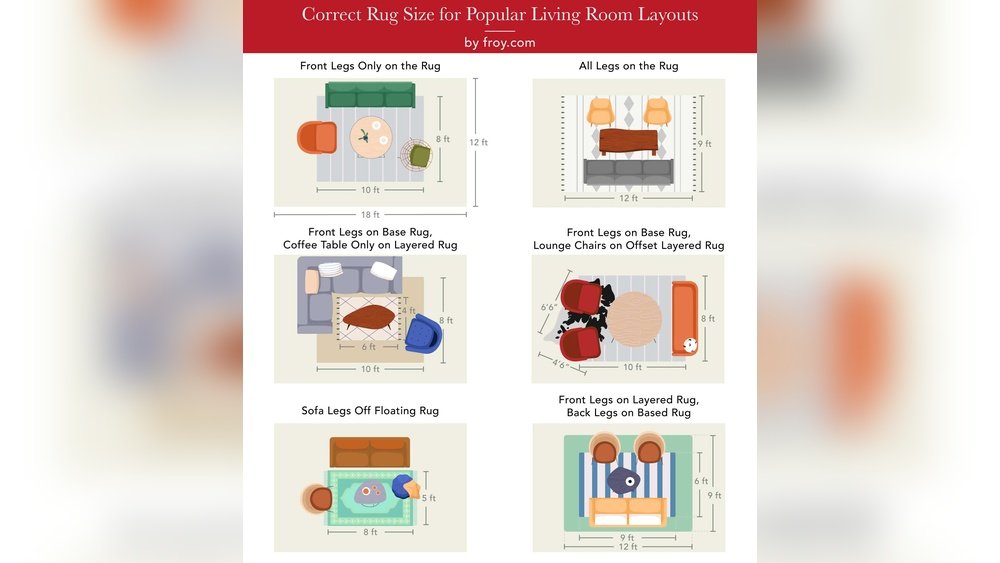
Selecting the right rug size for your living room is more important than many people realize. A rug is not just a decorative accessory—it’s a foundation piece that affects the whole look and feel of your space. The right size can make your room feel larger, cozier, and more balanced.
The wrong size, however, can make even the most stylish room look awkward or unfinished. For people who want their living room to feel comfortable and welcoming, knowing how to choose the right rug size is essential. This guide will help you understand everything you need to know, from measuring your space to avoiding common mistakes.
By the end, you’ll be confident in picking a rug that fits your room—and your style—perfectly.
Why Rug Size Matters In A Living Room
The size of your rug does more than cover the floor. It can set boundaries in an open plan, anchor your furniture, and impact how big your space feels. A rug that is too small will make your room look disconnected, while a rug that’s too large may overwhelm the space and hide beautiful flooring.
The right rug size brings harmony to your furniture arrangement and guides the eye around the room.
For example, imagine a spacious living room with a small rug under the coffee table. The seating area feels scattered and the room seems empty. On the other hand, a rug that holds all the main furniture together makes the space feel connected and inviting.
This is why designers often say, “Buy as big a rug as your room (and budget) allows. ”
How To Measure Your Living Room
Before shopping for a rug, you must know the exact size of your living room and the furniture layout. Here’s how to measure:
- Clear the floor. Move small items away so you can see the space.
- Measure the length and width. Use a tape measure to find the dimensions of your main seating area, not just the whole room.
- Decide on the furniture layout. Will all legs of your furniture sit on the rug, or just the front legs?
- Mark potential rug sizes. Use painter’s tape to outline possible rug sizes on the floor. This helps you visualize the effect before buying.
Remember to leave a border of at least 8–24 inches of floor showing around the rug. This creates a frame that makes the room feel open.
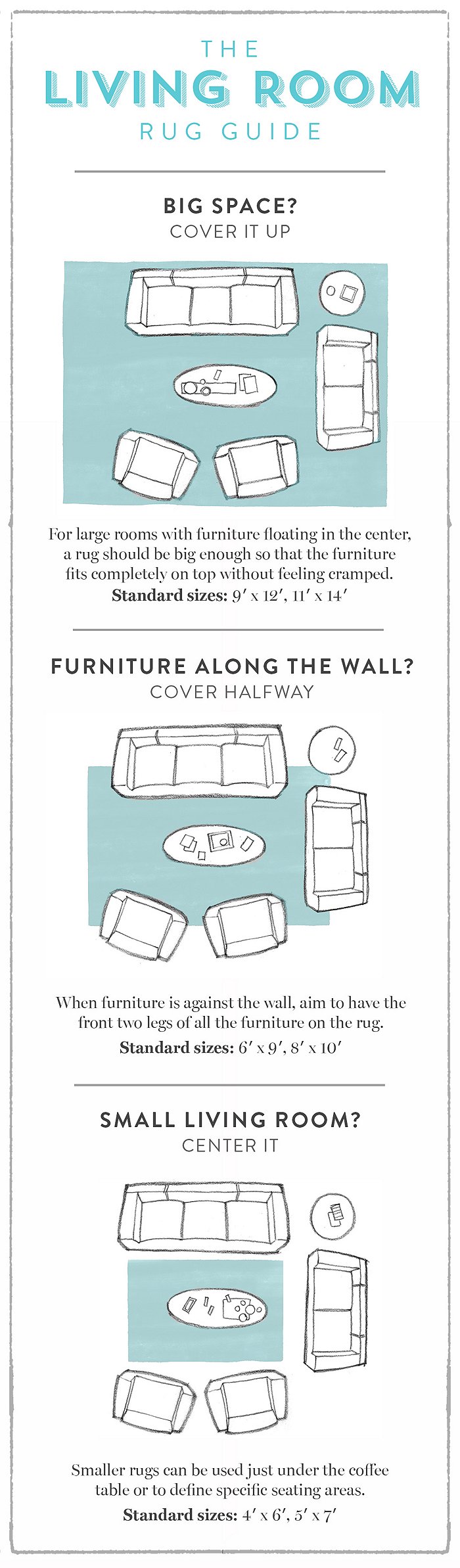
Credit: blog.onekingslane.com
Standard Rug Sizes For Living Rooms
Most living room rugs come in standard sizes. Knowing these will help you narrow down your options:
- 5′ x 8′ (150 x 240 cm): Good for small rooms or under a coffee table.
- 6′ x 9′ (180 x 270 cm): Fits small to medium rooms with a loveseat or apartment sofas.
- 8′ x 10′ (240 x 300 cm): The most popular size, suits most living rooms.
- 9′ x 12′ (270 x 360 cm): Ideal for large spaces and open layouts.
- 10′ x 14′ (300 x 420 cm): For extra-large living rooms.
Here’s a quick comparison:
| Rug Size | Room Size | Furniture Fit |
|---|---|---|
| 5′ x 8′ | Small (up to 10′ x 12′) | Coffee table only |
| 6′ x 9′ | Small to Medium | Front legs on rug |
| 8′ x 10′ | Medium (12′ x 18′) | All main seating |
| 9′ x 12′ | Large (16′ x 20′) | Full furniture group |
| 10′ x 14′ | Very Large | All furniture & extra space |
Different Living Room Layouts And Rug Placement
Not all living rooms have the same shape or furniture arrangement. Here’s how to choose a rug size based on your layout:
All Furniture On The Rug
This is a classic designer look. All the main pieces—sofa, chairs, and coffee table—sit entirely on the rug. This works best in large rooms with a big rug (at least 8′ x 10′ or bigger). It creates a unified and luxurious feel.
Tip: Leave about 12–18 inches from the rug edge to the wall for a balanced border.
Front Legs On The Rug
Place only the front legs of the sofa and chairs on the rug, with the back legs on the floor. This is practical for medium-sized rooms or when you want to use a slightly smaller rug. It still connects the furniture, but also shows off more flooring.
Tip: Make sure the rug extends under every piece by the same amount for a neat look.
Only Coffee Table On The Rug
A smaller rug under just the coffee table is common in small rooms or for tight budgets. While this can work, it often makes the seating area look disconnected. If you choose this option, make sure the rug is at least as wide as the sofa and long enough to hold the table with some space around.
Non-obvious insight: This layout can highlight a beautiful coffee table but rarely works in large rooms.
Layering Rugs
Layering a smaller, decorative rug over a larger plain rug is a modern trend. For example, a colorful kilim on top of a neutral jute rug adds texture and style. This works well if you want to use a favorite small rug without sacrificing the benefits of a larger size.
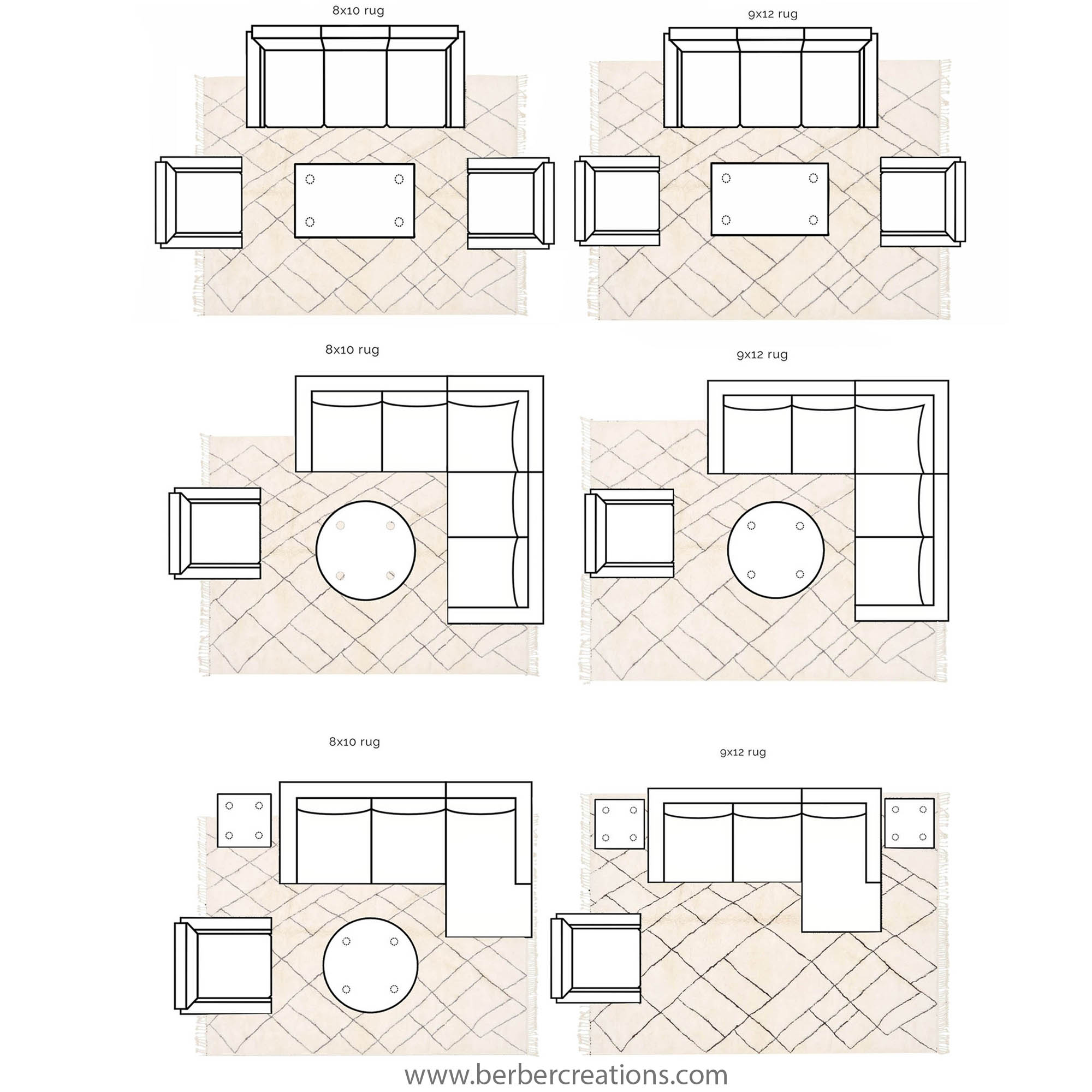
Credit: berbercreations.com
Room Shape: Square, Rectangular, Or Open Plan
The shape of your living room can guide the rug size and shape you need.
- Rectangular rooms: A standard rectangle rug usually fits best, aligning with the room’s lines.
- Square rooms: Consider a square rug, or an oversized rectangular rug centered in the space.
- Open-plan rooms: Rugs can define zones. A large rug under the sofa group separates the living area from dining or kitchen spaces.
Here’s a shape comparison for clarity:
| Room Shape | Recommended Rug Shape | Effect |
|---|---|---|
| Rectangular | Rectangle | Elongates room |
| Square | Square or large rectangle | Balanced look |
| Open Plan | Large rectangle or multiple rugs | Defines zones |
How To Choose The Right Rug Size Based On Sofa Size
The size of your sofa, sectional, or seating group is another key factor. Designers recommend that a rug should extend at least 6–8 inches beyond each side of the sofa. This frames the furniture and prevents the rug from looking too small.
For Standard Sofas
If your sofa is about 6–7 feet long, an 8′ x 10′ rug usually works well. It allows the front legs and side tables to sit on the rug, creating a balanced look.
For Sectionals
L-shaped or U-shaped sectionals need a larger rug. A 9′ x 12′ or even 10′ x 14′ rug is often necessary. The rug should cover the entire seating area, with the front legs of every section on the rug.
Non-obvious insight: For sectionals, always measure the longest and widest points—including the chaise—before choosing your rug.
For Loveseats Or Apartment Sofas
Small sofas (under 6 feet) work with 5′ x 8′ or 6′ x 9′ rugs. But to avoid a “floating” look, try to get the largest size that fits.

Credit: tsarcarpets.com
Common Rug Sizing Mistakes To Avoid
Many people make simple mistakes when choosing a rug. Here’s how to avoid them:
- Choosing a rug that’s too small. This is the most common error. Small rugs make the room look unfinished.
- Ignoring furniture layout. Always consider where your sofa and chairs will go, not just the room size.
- Not leaving a border. Rugs should not touch the walls. Leave at least 8 inches, but not more than 24 inches, of floor showing around the edges.
- Overlapping with other rugs. In open plan spaces, make sure area rugs define zones without awkward overlaps.
- Forgetting about doorways. Make sure the rug doesn’t block doors or create a tripping hazard.
Rug Size For Special Living Room Setups
Not all living rooms are the same. Here are tips for less common setups:
Long And Narrow Rooms
Use a large rectangular rug that follows the shape of the room. This draws the eye down the space and makes it feel wider.
Corner Sofas
Measure from the outer edges of the sectional. Your rug should extend under all pieces, with extra space for side tables.
Floating Furniture
If your seating is not against the wall, place all legs on the rug to create a “room within a room. ” This is popular in open plan designs.
Small Apartments
Go as large as your space allows, even if it feels big. A larger rug actually makes the room look bigger, not smaller.
How Rug Pile And Material Affect Size Choice
While size is key, the rug pile (how thick or flat the rug is) and material also matter. Thicker rugs may need a larger size to avoid looking bulky. Low-pile or flat-weave rugs can be used in bigger sizes without overwhelming the room.
- Wool rugs are durable and can work in any size.
- Jute or sisal are great for layering.
- Synthetic fibers are affordable and easy to clean for larger rugs.
If you have children or pets, choose a material and pile that is easy to clean and won’t show wear quickly.
When To Consider Custom Or Non-standard Rug Sizes
Sometimes, standard sizes don’t fit your room. Custom rugs are a good choice for:
- Very large or very small rooms
- Unique furniture layouts
- Oddly shaped spaces (like L-shaped living rooms)
- Wanting a perfect fit for built-ins or fireplaces
Custom rugs can be more expensive, but they solve problems that standard rugs can’t.
Practical Tips For Buying The Right Rug Size
- Measure more than once. Double-check your measurements before ordering.
- Use painter’s tape. Mark the rug outline on your floor to see how it will look.
- Think about traffic flow. Leave enough space around the rug for walking.
- Check return policies. Always buy from stores that allow returns, in case the rug doesn’t fit as expected.
- Read reviews. Other buyers often mention if a rug size is true to description.
For more in-depth information on rug sizes, you can visit this Architectural Digest Rug Size Guide.
Frequently Asked Questions
What Is The Most Popular Rug Size For Living Rooms?
The 8′ x 10′ rug is the most common choice for living rooms. It fits most furniture arrangements and works in rooms that are medium to large.
Can I Use A Round Rug In My Living Room?
Yes, a round rug can work, especially in square rooms or under round coffee tables. Make sure the rug is large enough to fit at least the front legs of your main furniture.
How Do I Know If My Rug Is Too Small?
If your rug only covers the coffee table or floats far from the seating, it’s probably too small. Ideally, the rug should anchor all furniture or at least the front legs.
Should A Rug Go Under The Sofa Or Just In Front?
For the best look, the rug should go under the front legs of the sofa and chairs. This connects the furniture and makes the space feel larger.
How Much Floor Should Show Around A Rug?
Leave 8 to 24 inches of bare floor around the rug. This creates a border that frames the rug and makes the room feel open.
The right rug size can transform your living room from scattered to stylish. With careful measuring, smart planning, and attention to layout, you can find the perfect rug that fits your space and your lifestyle. Take your time, and don’t settle for “almost right”—your living room deserves a rug that brings everything together beautifully.