
Fleece Vs Sherpa Blanket: Which Is Warmer?
When the temperature drops and you crave comfort, the debate between fleece and Sherpa blankets often comes up. Both are popular for their softness and warmth, but which one is truly warmer? The answer isn’t as simple as it seems. In this article, we’ll explore the materials, warmth, comfort, breathability, durability, maintenance, and real-life uses for both fleece and Sherpa blankets. By the end, you’ll know which is the better choice for your needs—and why.
What Is Fleece?
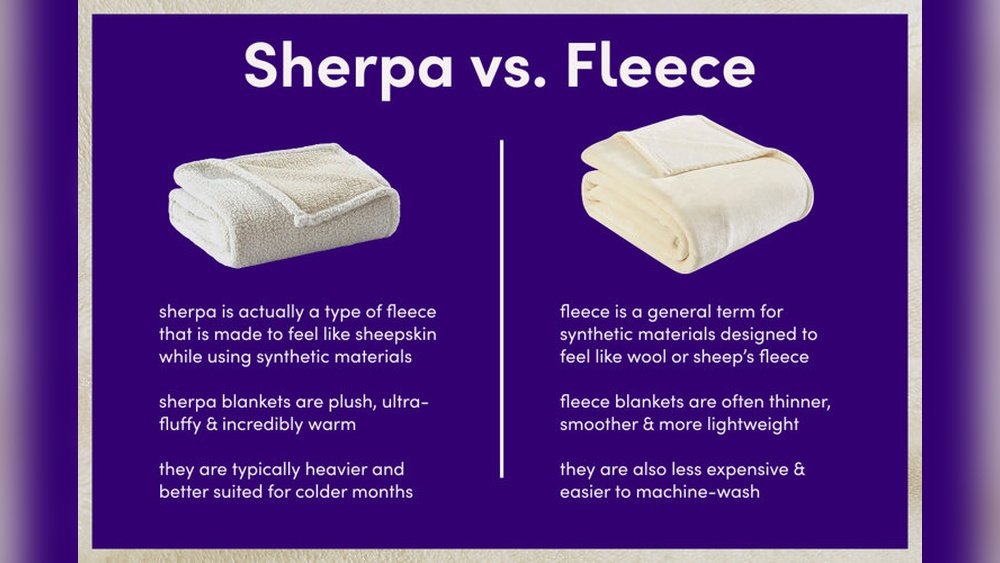
Fleece is a synthetic fabric, usually made from polyester fibers. It was first developed in the late 1970s as a lighter, warmer alternative to wool. Fleece blankets are known for their light weight, soft texture, and great insulation. The fibers are brushed to create a fluffy surface that traps air, helping to retain body heat.
Non-obvious insight: Not all fleece is the same. There are different types, such as microfleece (very thin and lightweight) and polar fleece (thicker and warmer). The warmth of a fleece blanket can vary greatly depending on the type and thickness.
What Is Sherpa?
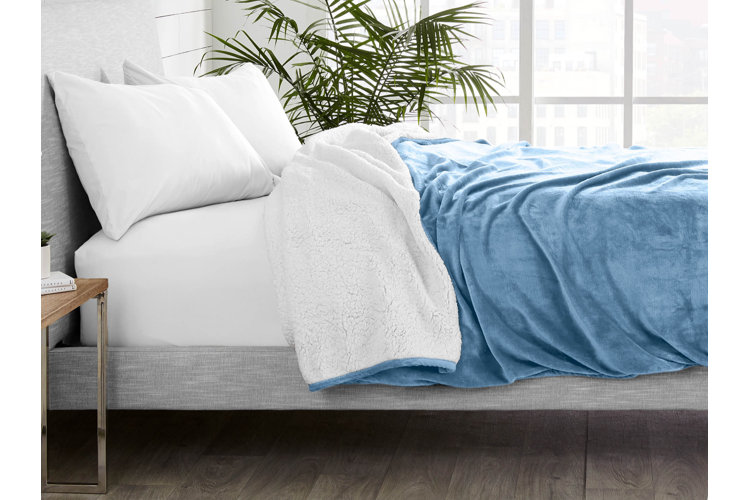
Sherpa, in the context of blankets, refers to a fabric that mimics the look and feel of sheepskin wool. It’s usually made from polyester or a polyester blend. Sherpa is known for its soft, fluffy texture on one side, often paired with a smooth or fleece surface on the other.
Non-obvious insight: Sherpa isn’t a type of animal wool but a synthetic material designed for maximum softness and warmth. Some blankets are double-sided Sherpa, but most combine Sherpa with fleece or microfiber for different textures.
Warmth Comparison: Fleece Vs Sherpa
The most important question is: which keeps you warmer? Let’s break down the science behind each material.
Heat Retention
Both fleece and Sherpa trap air in their fibers, which helps hold in heat. However, Sherpa often has a denser, deeper pile (the soft, raised surface), which means more air pockets to trap warmth.
Lab Test Data
A study comparing insulation values found that thick Sherpa blankets can be about 10-20% warmer than standard polar fleece blankets of similar thickness. However, ultra-thick polar fleece can sometimes match or slightly exceed Sherpa, especially when two layers are sewn together.
Real-life Example
If you sit outside on a cold evening, you’ll likely notice a Sherpa blanket keeps you cozier for longer periods, especially if there’s wind. Fleece does a great job indoors but loses heat faster in very cold conditions.
Here’s a comparison table to illustrate:
| Feature | Fleece Blanket | Sherpa Blanket |
|---|---|---|
| Warmth (Standard) | Good | Very Good |
| Warmth (Thick) | Very Good | Excellent |
| Wind Resistance | Moderate | High |
| Best For | Indoor use, layering | Outdoor, cold nights |
Comfort And Feel
Texture
- Fleece: Smooth, soft, and lightweight. Feels gentle on the skin.
- Sherpa: Fluffy, plush, and cozy. Mimics lamb’s wool.
Weight
Fleece is lighter and less bulky, making it easier to move around with. Sherpa is heavier and gives a “hugged” feeling, which many find comforting.
Sensitivity
If you have sensitive skin, high-quality fleece is less likely to cause irritation. Some low-cost Sherpa blankets may shed fibers at first, which can bother some people.
Breathability And Moisture Control
One common mistake: thinking warmer always means better. Blankets that are too warm but not breathable can make you sweat.
- Fleece is usually more breathable than Sherpa. It wicks away moisture, keeping you dry.
- Sherpa is less breathable due to its thick pile but is better at trapping warmth.
If you’re a “hot sleeper” or live in a milder climate, fleece will likely be more comfortable for you.
Durability And Maintenance
Lifespan
Both fleece and Sherpa are durable, but fleece is generally more resistant to wear and tear. Sherpa can mat down over time, especially after repeated washing.
Care
Fleece is very easy to wash and dries quickly. Sherpa requires a bit more care to keep the fluffy texture. High heat in the dryer or rough washing can flatten Sherpa’s pile, making it less soft and warm.
Here’s a quick care comparison:
| Aspect | Fleece | Sherpa |
|---|---|---|
| Machine Washable | Yes | Yes, but gentle cycle |
| Drying | Quick air or low heat | Air dry or low heat only |
| Shedding | Rare | Possible, especially when new |
| Texture Retention | Very Good | Good (with care) |
Practical tip: To keep a Sherpa blanket fluffy, shake it out after washing and avoid fabric softener.
Credit: www.wayfair.com
Price And Value
Fleece blankets are usually less expensive than Sherpa. You can find a good quality polar fleece blanket for $15–$30. Sherpa blankets, especially those with thick, quality pile, usually cost $25–$60.
Is the extra cost worth it? If warmth is your top priority, many people find Sherpa’s comfort and insulation worth the price, especially for winter or outdoor use.
Style And Appearance
Sherpa blankets often have a “luxury” look, especially when paired with a patterned fleece or microfiber side. Fleece comes in more colors and prints, but Sherpa stands out for its classic, cozy appearance.
Use Cases: When To Choose Each Blanket
Fleece Blanket
- Great for year-round use
- Good for kids and pets (easy to wash)
- Light enough for travel or layering
- Best for people who get hot easily
Sherpa Blanket
- Excellent for cold weather or drafty rooms
- Perfect for outdoor activities (camping, picnics)
- Adds a decorative, upscale touch to beds and sofas
- Good for people who want a “cocoon” feel
Environmental Impact
Both fabrics are synthetic and made mostly from polyester, which is a plastic-based fiber. However, some fleece blankets use recycled PET bottles (check the label). Sherpa can also be made from recycled fibers, but it’s less common.
If sustainability is important, look for recycled fleece blankets. They’re getting easier to find and perform just as well as standard fleece.
Common Buyer Mistakes
- Choosing thickness over quality: Not all thick blankets are warmer. The quality of fibers and the weave matter more.
- Ignoring care instructions: Washing Sherpa on high heat can ruin its texture and warmth.
- Not considering breathability: If you sweat at night, a less breathable Sherpa may make you uncomfortable.
- Assuming all fleece is the same: Microfleece is much less warm than polar fleece.
How To Decide: Fleece Or Sherpa?
Ask yourself:
- Do you need a blanket for extreme cold? Choose Sherpa.
- Do you want something lighter and more versatile? Go with fleece.
- Will you wash it often? Fleece is more forgiving.
- Do you care about style and texture? Sherpa looks and feels cozier.
Real-world User Feedback
Many users say Sherpa is their favorite for cold winter nights, but they switch to fleece in the spring. Pet owners often prefer fleece because it’s easy to clean and doesn’t attract as much hair.
A 2022 survey by a leading bedding retailer found that 68% of buyers chose Sherpa for winter, but 60% used fleece blankets year-round.
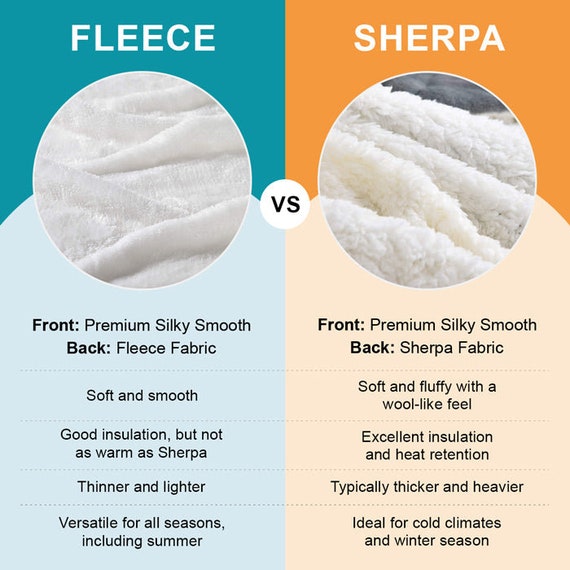
Summary Table: Fleece Vs Sherpa At A Glance
Here’s a final table to help you decide:
| Feature | Fleece | Sherpa |
|---|---|---|
| Warmth | Good–Very Good | Very Good–Excellent |
| Weight | Light | Medium–Heavy |
| Breathability | High | Medium |
| Care | Easy | Gentle needed |
| Price | Lower | Higher |
| Style | Simple, colorful | Cozy, plush |
Credit: www.etsy.com
Final Thoughts
When it comes to fleece vs Sherpa blankets, Sherpa usually wins for pure warmth and coziness, especially in very cold conditions. Fleece offers better breathability, easier care, and is more budget-friendly. The best choice depends on your sleeping habits, climate, and style preferences. Remember: the quality and thickness of the fabric matter as much as the type. If possible, touch and compare in person before you buy.
For more details on textile fabrics and blanket technology, you can check the Fleece (fabric) Wikipedia page.
Frequently Asked Questions
Is Sherpa Warmer Than Fleece?
Yes, Sherpa blankets are usually warmer than standard fleece due to their thicker, plush pile. Sherpa’s structure traps more heat, making it ideal for very cold weather.
Can I Use A Sherpa Blanket In Summer?
Most people find Sherpa too warm for summer, especially in hot climates. Fleece is a better option for year-round use because it’s lighter and more breathable.
Do Sherpa Blankets Shed Fibers?
Some new Sherpa blankets may shed a little at first. This usually stops after one or two washes. High-quality Sherpa sheds less, especially if washed gently.
Which Is Better For Pets: Fleece Or Sherpa?
Fleece is usually better for pets. It’s easy to wash, resists pet hair, and holds up well to scratching and chewing. Sherpa can attract more hair and lose its fluff faster with heavy use.
How Can I Make My Sherpa Blanket Fluffy Again?
Wash on a gentle cycle with cold water, avoid fabric softener, and air dry or tumble dry on low. Shaking the blanket after drying can help restore its fluffiness.

Credit: icefabrics.com