
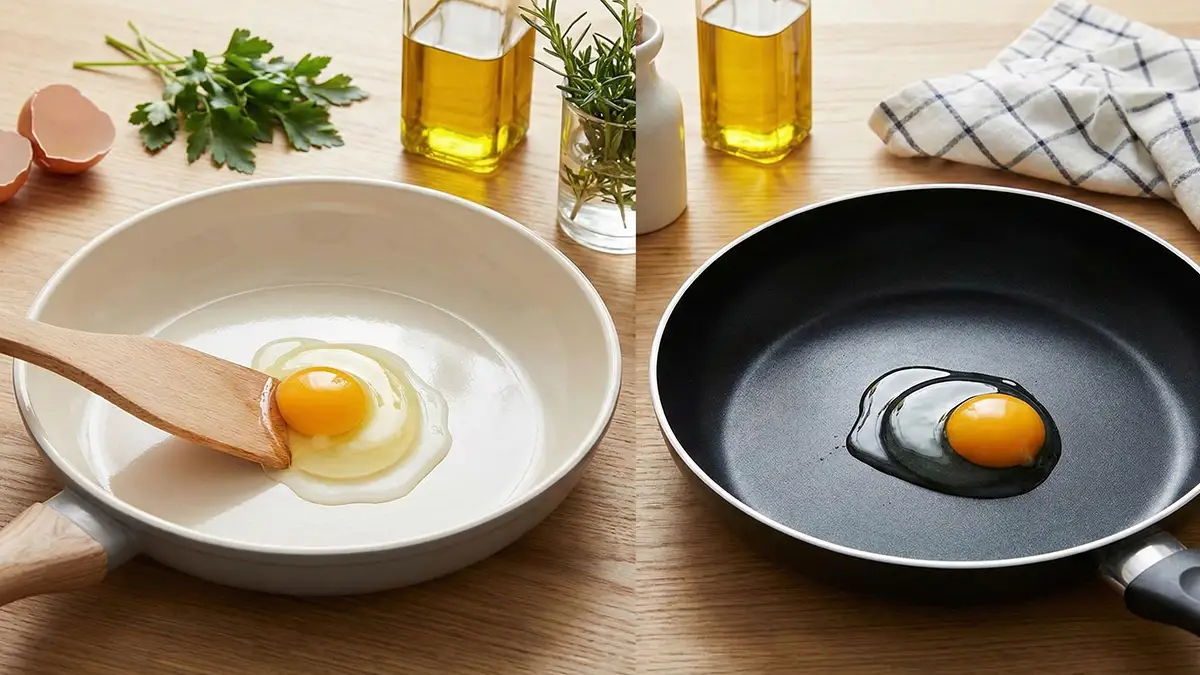
Ceramic cookware typically features a non-stick coating derived from mineral-based materials, often seen as a more natural and environmentally conscious choice. In contrast, Teflon, a brand name for PTFE (polytetrafluoroethylene), uses a synthetic polymer renowned for its exceptionally slick non-stick surface, though historical concerns existed regarding its stability at very high temperatures.
- Ceramic coatings are mineral-based, offering a non-stick surface without traditional PTFE.
- Teflon (PTFE) provides superior non-stick properties due to its synthetic polymer composition.
- Durability varies, with ceramic often being more prone to chipping and Teflon susceptible to scratching.
- Modern Teflon is PFOA-free, addressing past safety concerns.
- Both require proper care to maintain their non-stick qualities and extend lifespan.
- Consider cooking style and heat requirements when choosing between them.
Understanding Ceramic Cookware: Composition and Benefits
Ceramic cookware refers to pots and pans coated with a layer of ceramic material, which is typically a silica-based gel applied to an aluminum or stainless steel base. This coating is then cured at high temperatures, creating a smooth, non-porous, and naturally non-stick surface. Unlike traditional non-stick coatings, ceramic options are often marketed as ‘green’ or ‘eco-friendly’ due to their manufacturing process and the absence of certain chemicals.
The primary benefit of ceramic cookware is its non-stick capability without the use of PTFE. Many consumers prefer ceramic for its perceived health advantages and its ability to cook with less oil or butter. It also tends to heat up quickly and distribute heat evenly, making it suitable for a variety of cooking tasks. The vibrant colors and aesthetic appeal of ceramic-coated pans are also a draw for many home cooks.
Exploring Teflon (PTFE) Cookware: What It Is and Its Advantages
Teflon is a well-known brand name for polytetrafluoroethylene (PTFE), a synthetic fluoropolymer of tetrafluoroethylene. This material is famous for having one of the lowest coefficients of friction of any solid, making it an incredibly effective non-stick coating for cookware. PTFE is applied in multiple layers to a metal base, creating a durable and extremely slick surface that prevents food from sticking.
The main advantage of Teflon cookware lies in its unparalleled non-stick performance. Eggs slide effortlessly, and delicate foods can be cooked and removed with ease, requiring minimal fat. This makes cleanup exceptionally simple. Modern Teflon coatings have undergone significant advancements, addressing earlier concerns about chemical compounds and high-heat degradation, making them a staple in many kitchens worldwide.
The Core Difference Between Ceramic and Teflon: A Detailed Comparison
The fundamental distinction between ceramic and Teflon cookware lies in their non-stick coating composition. Ceramic coatings are inorganic, derived from sand and other mineral materials, and applied as a gel that hardens into a smooth, glass-like surface. This process avoids the use of fluoropolymers.
Conversely, Teflon (PTFE) is an organic, synthetic polymer. Its non-stick properties come from its unique molecular structure, which creates a highly repellent surface. This difference in material science dictates their performance, durability, and safety profiles, influencing how they interact with food and heat during cooking.
Non-Stick Performance: Which Coating Excels?
When it comes to sheer non-stick slipperiness, Teflon (PTFE) generally holds the edge. Its ultra-smooth surface allows food to release with remarkable ease, often requiring almost no oil. This makes it ideal for delicate items like eggs, pancakes, and fish.
Ceramic coatings also offer excellent non-stick properties, especially when new. However, their non-stick performance can degrade more quickly over time compared to Teflon, particularly if not properly maintained or if exposed to high heat frequently. While still very effective, ceramic might require a touch more fat than Teflon for optimal food release.
Durability and Longevity: Ceramic vs. Teflon Lifespan
The durability of both ceramic and Teflon cookware is a common concern for consumers. Ceramic coatings are often harder and more scratch-resistant than older Teflon versions, but they can be more prone to chipping or cracking if dropped or subjected to sudden temperature changes. Once chipped, the non-stick properties in that area are compromised.
Teflon coatings, while historically softer and more susceptible to scratching from metal utensils, have significantly improved in recent years with reinforced layers. However, deep scratches can still expose the underlying metal, leading to sticking. Both types of cookware benefit from gentle handling, silicone or wooden utensils, and avoiding abrasive cleaners to maximize their lifespan.
Safety Concerns: PFOA, PTFE, and High-Heat Considerations
Historically, concerns about non-stick cookware centered around PFOA (perfluorooctanoic acid), a processing aid used in the manufacture of older PTFE coatings. Today, virtually all non-stick cookware, including Teflon-branded products, are PFOA-free. Modern PTFE is considered safe for cooking at normal temperatures.
The main safety consideration for PTFE is overheating. When heated above approximately 500°F (260°C), PTFE can begin to break down, releasing fumes that can cause flu-like symptoms in humans (polymer fume fever) and are particularly harmful to birds. Ceramic coatings, being mineral-based, do not release these specific fumes when overheated, though extreme temperatures can still degrade their non-stick properties.
Heat Resistance and Cooking Versatility
Both ceramic and Teflon cookware are suitable for a wide range of cooking temperatures, but they have different upper limits. Ceramic coatings generally tolerate higher temperatures, often up to 800-1000°F (425-540°C), making them oven-safe for longer periods and at higher settings. This makes ceramic more versatile for dishes that start on the stovetop and finish in the oven.
Teflon (PTFE) cookware typically has a recommended maximum temperature of around 500°F (260°C). Exceeding this temperature can lead to the degradation of the coating and potential fume release. While perfectly adequate for most stovetop cooking, it’s less ideal for high-heat searing or prolonged oven use at very high temperatures.
Maintenance and Care: Keeping Your Non-Stick Cookware Pristine
Proper maintenance is crucial for extending the life and preserving the non-stick qualities of both ceramic and Teflon cookware. For both types, hand washing with warm, soapy water and a soft sponge is highly recommended. Abrasive scrubbers or harsh detergents can damage the non-stick surface.
Avoid using metal utensils, opting instead for silicone, wooden, or plastic tools to prevent scratches. Allow pans to cool completely before washing to prevent thermal shock, which can warp the pan or damage the coating. Storing cookware with pan protectors between stacked items can also prevent scratches and chips, ensuring your investment lasts longer.
Environmental Impact and Sustainability of Each Material
The environmental impact of cookware materials is an increasingly important consideration. Ceramic coatings are often touted as more environmentally friendly because they are derived from natural, inorganic materials like sand and silica. Their manufacturing process typically involves fewer harmful chemicals compared to traditional PTFE production, and they are generally free of PFOA and other perfluorinated compounds.
While modern PTFE manufacturing has eliminated PFOA, the production and disposal of synthetic polymers still raise environmental questions. The longevity of cookware also plays a role in its sustainability; a longer-lasting pan, regardless of material, reduces waste. Recycling options for non-stick cookware are limited due to the mixed materials, making durability and mindful consumption key.
Choosing the Right Cookware for Your Kitchen Needs
Deciding between ceramic and Teflon cookware depends largely on your cooking habits and priorities. If you prioritize maximum non-stick performance for delicate foods and easy cleanup, and you’re mindful of heat limits, Teflon might be your preferred choice. Its exceptional slipperiness is hard to beat.
If you are concerned about synthetic chemicals, prefer a more ‘natural’ coating, or frequently cook at higher temperatures (including oven use), ceramic cookware could be more suitable. Consider your typical recipes, how often you cook, and your willingness to adhere to specific care instructions when making your selection.
Expert Tips for Maximizing Cookware Lifespan
- Seasoning (for some ceramic): Some ceramic pans benefit from light seasoning with a small amount of oil before first use and periodically thereafter.
- Low to Medium Heat: Most non-stick pans perform best on low to medium heat. High heat can degrade the coating over time, regardless of material.
- Proper Utensils: Always use wooden, silicone, or plastic utensils to prevent scratching the non-stick surface.
- Gentle Cleaning: Hand wash with mild soap and a soft sponge. Avoid abrasive cleaners, steel wool, or harsh scrubbing pads.
- Cool Before Washing: Allow pans to cool completely before immersing them in water to prevent warping or thermal shock to the coating.
- Storage: Use pan protectors or place a soft cloth between pans when stacking to prevent scratches.
- Avoid Cooking Sprays: Some cooking sprays can leave a residue that builds up and degrades the non-stick surface over time. Use a small amount of oil or butter instead.
Frequently Asked Questions
What is the main difference between ceramic and Teflon non-stick coatings?The primary distinction lies in their composition: ceramic coatings are mineral-based and inorganic, while Teflon (PTFE) is a synthetic, organic polymer. This fundamental difference affects their non-stick properties, heat resistance, and overall durability in the kitchen.
Is ceramic cookware safer than Teflon?Modern Teflon (PTFE) cookware is PFOA-free and considered safe for normal cooking temperatures. Ceramic cookware is also considered safe and does not release specific fumes if overheated, making it a popular choice for those seeking alternatives to fluoropolymer coatings.
Which type of cookware, ceramic or Teflon, offers better non-stick performance?Teflon (PTFE) generally provides a superior and more consistent non-stick experience, allowing food to slide off with minimal effort. Ceramic coatings are also very effective, especially when new, but their non-stick properties can diminish more quickly over time with frequent use and high heat.
How does the durability of ceramic compare to Teflon?Ceramic coatings are often harder and more resistant to scratches but can be prone to chipping or cracking. Teflon, while historically softer, has improved in durability with reinforced layers, though it can still scratch. Both require careful handling to maintain their integrity.
Can I use metal utensils with ceramic or Teflon cookware?It is strongly recommended to avoid metal utensils with both ceramic and Teflon cookware. Metal can scratch, chip, or otherwise damage the non-stick surface, leading to reduced performance and a shorter lifespan for the pan. Opt for silicone, wooden, or plastic tools instead.
Which is better for high-heat cooking: ceramic or Teflon?Ceramic cookware generally tolerates higher temperatures, often being oven-safe to much higher degrees than Teflon. Teflon (PTFE) has a lower recommended maximum temperature, typically around 500°F (260°C), beyond which its coating can degrade and potentially release fumes.
Conclusion
Understanding the difference between ceramic and Teflon cookware is essential for making an informed choice for your kitchen. Ceramic offers a mineral-based, often perceived as a more natural non-stick solution with higher heat tolerance, while Teflon provides unparalleled slipperiness and ease of cleanup. Both have evolved significantly, addressing past concerns and offering reliable performance when properly cared for. Consider your cooking style, heat requirements, and maintenance preferences to select the cookware that best suits your culinary adventures.
{“@context”:”https://schema.org”,”@type”:”Article”,”headline”:”The Ultimate Guide to the Difference Between Ceramic and Teflon Cookware”,”mainEntityOfPage”:”https://homegeartoday.com/?p=876″,”datePublished”:”2025-12-09T19:24:08+00:00″,”dateModified”:”2025-12-09T19:24:08+00:00″}
Ceramic non-stick coatings are made from silica-based materials (sand-derived) and are free from PTFE and PFAS chemicals. Teflon (PTFE) coatings are synthetic fluoropolymers that are highly effective but can release fumes above 500°F. Ceramic is considered the safer, more eco-friendly option.
Ceramic coating is free from PTFE, PFOA, PFAS, lead, and cadmium — making it the safer choice from a chemical exposure perspective. Modern PTFE (Teflon) cookware is PFOA-free since 2013 but still contains PTFE, which can degrade at very high temperatures (above 500°F).
Ceramic coatings typically have a shorter lifespan (2–5 years) than quality PTFE coatings (5–10 years) under daily use. Ceramic coatings are harder on the surface but become less non-stick more quickly than PTFE. Both require gentle care with non-metal utensils and soft sponges.
For everyday cooking at normal temperatures, ceramic pans are an excellent choice — they are non-stick, free from PTFE concerns, and easy to clean. For high-heat searing (above 450°F), neither ceramic nor Teflon is ideal — use stainless steel or cast iron for high-heat cooking.
Hand wash only (dishwasher degrades ceramic coating faster), use low to medium heat (ceramic conducts heat efficiently and does not need high heat), use only non-scratch utensils, and avoid spraying aerosol cooking sprays (they polymerize on ceramic and form a permanent sticky residue).
