
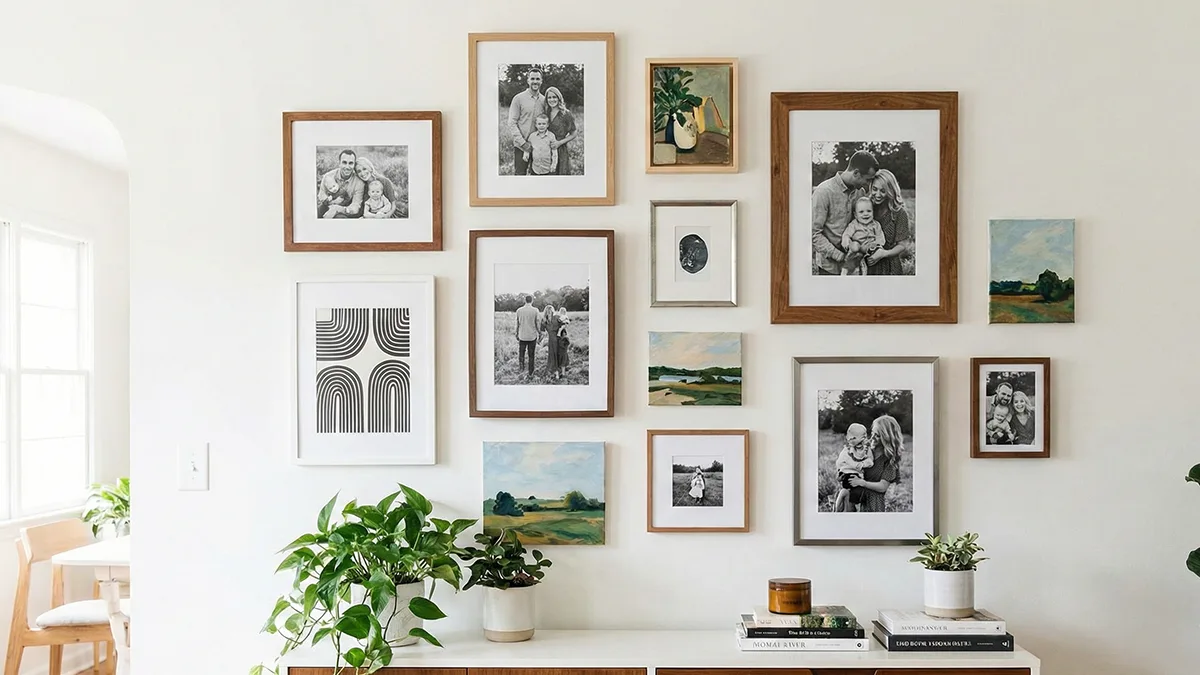
To effectively combine photos and art on one wall, focus on creating visual harmony through consistent framing, a balanced layout, and a unifying theme or color palette. Mix different sizes and orientations while maintaining a cohesive aesthetic to tell a unique story that reflects your personal style and memories.
- Achieve cohesion through consistent elements.
- Balance diverse pieces for visual appeal.
- Define a theme or color story for unity.
- Experiment with various layout strategies.
- Prioritize secure hanging and proper lighting.
Why Blend Photos and Art? The Power of a Personalized Gallery Wall
Blending photographs and various art forms on a single wall transforms a simple display into a dynamic narrative. This approach allows for a deeply personal expression, showcasing cherished memories alongside curated artistic tastes. A well-executed mixed-media gallery wall becomes a focal point, inviting viewers to explore the stories and aesthetics it presents.
Beyond mere decoration, a combined display adds layers of depth and interest that individual pieces might lack. It breaks the monotony of a uniform collection, introducing varied textures, mediums, and perspectives. This fusion creates a richer visual experience, reflecting the complexity and individuality of the homeowner.
Such a gallery wall can also serve as a powerful conversation starter. Each piece, whether a candid family photo, a vibrant abstract painting, or a vintage print, contributes to a larger, evolving story. It’s an opportunity to celebrate personal history, artistic appreciation, and the unique blend of both that defines a space.
Pre-Planning Your Mixed Media Gallery: Essential Steps Before You Hang
Before any holes are made, thorough pre-planning is crucial for a successful gallery wall. This initial phase involves defining your vision, assessing your space, and carefully curating your collection. Taking the time for these steps ensures a cohesive and visually appealing outcome.
Define Your Vision and Theme
Start by envisioning the overall mood and message you want your gallery wall to convey. Do you prefer a vibrant, eclectic feel, or a more serene, monochromatic display? Establishing a theme, whether it’s a specific color palette, a historical period, a travel narrative, or a family story, will guide your selection and arrangement process. This theme acts as a unifying thread for diverse pieces.
Assess Your Space
Consider the wall itself. Its size, shape, and location within the room will influence the scale and layout of your gallery. Account for existing furniture, architectural features like windows or doorways, and the room’s overall decor. Natural light sources and artificial lighting options should also be noted, as they impact how your art and photos will be perceived.
Gather Your Collection
Collect all potential pieces you might want to include: photographs, paintings, drawings, prints, mirrors, or even small sculptural objects. Lay them out on a large floor space to get a preliminary sense of their collective presence. This allows for easy swapping and rearrangement without committing to hanging anything yet.
Combining Photos and Art on One Wall: Key Design Principles
Successfully combining photos and art on one wall hinges on understanding fundamental design principles. These guidelines help transform a disparate collection into a harmonious and engaging display, ensuring each piece contributes to the overall aesthetic without overwhelming the viewer.
Achieving Visual Harmony
Visual harmony is paramount when mixing different types of media. This doesn’t mean every piece must be identical, but rather that they should share some common ground. This commonality could be a recurring color, a similar subject matter, a consistent style (e.g., all black and white, all abstract), or even a shared emotional tone. The goal is for the eye to flow smoothly across the display, perceiving it as a unified composition rather than a jumble of individual items.
Balance and Proportion
Distributing visual weight evenly across the wall is essential for balance. Avoid grouping all large or heavy pieces together, which can make one section feel dense while another feels sparse. Instead, intersperse larger items with smaller ones, and darker tones with lighter ones, to create an equilibrium. Proportion refers to how the pieces relate to each other and to the wall space. Ensure there’s enough negative space around the pieces to allow them to breathe, preventing a cluttered appearance.
Creating a Focal Point
A strong gallery wall often benefits from a focal point—a central piece that draws the eye first. This could be the largest artwork, a particularly vibrant photograph, or a piece with significant personal meaning. Once the focal point is established, other pieces can be arranged around it, creating a natural hierarchy and guiding the viewer’s gaze through the collection.
Negative Space
The empty space around and between your framed pieces is just as important as the pieces themselves. Negative space provides visual rest, preventing the wall from feeling too busy or overwhelming. It allows each artwork and photo to stand out and be appreciated individually, while still contributing to the larger composition. Consider consistent spacing between frames to enhance this sense of order and calm.
Curating Your Collection: Selecting Photos, Art, and Memorabilia
The heart of any gallery wall lies in its curated collection. Thoughtful selection ensures that each piece not only holds personal significance but also contributes to the overall aesthetic and narrative of the display. This process involves a careful balance of personal taste and design considerations.
Photo Selection
When choosing photographs, prioritize images that are clear, well-composed, and hold emotional resonance. Consider a mix of candid shots, portraits, and scenic views. Black and white photos can offer a timeless, unifying element, while color photos can introduce vibrancy. Ensure the quality of the print is high, as this will significantly impact its presentation alongside art pieces.
Art Piece Integration
Integrating various art pieces requires an eye for how different mediums and styles interact. A watercolor might complement a charcoal sketch, or a bold abstract painting could provide a striking contrast to a delicate print. Look for connections in color, line, or subject matter that can bridge diverse art forms. Don’t be afraid to mix original art with prints or reproductions, as long as they contribute to your overall theme.
Incorporating Memorabilia
Beyond flat art, incorporating three-dimensional objects or memorabilia can add unique texture and depth. Small mirrors, decorative plates, vintage maps, framed textiles, or even shadow boxes containing cherished trinkets can be seamlessly woven into the display. These items add an extra layer of storytelling and personalization, making the wall truly one-of-a-kind. Ensure any objects are securely mounted and do not protrude excessively.
Framing and Matting: Unifying Diverse Pieces for a Cohesive Look
Framing and matting play a pivotal role in creating a cohesive gallery wall, especially when combining photos and art. They act as visual bridges, tying together disparate elements and elevating the presentation of each individual piece. Thoughtful choices in these areas can transform a collection into a polished display.
Choosing Frame Styles
You have two main approaches for frame styles: consistent or eclectic. A consistent approach uses frames of the same color, material, or even exact style, which instantly creates a sense of unity and order. This is particularly effective for a more formal or minimalist aesthetic. An eclectic approach involves mixing different frame styles, colors, and materials. To maintain cohesion, try to find a common element, such as all metallic frames, or frames that share a similar era or finish. A mix of thin and thick frames can add visual interest without creating chaos.
The Role of Matting
Matting, the border placed between the artwork and the frame, is a powerful tool for unification. Using consistent matting—same color, same width, or both—across different pieces can instantly bring harmony to a diverse collection. White or off-white mats are classic choices that provide a clean, neutral space around the artwork, allowing the eye to focus on the piece itself. Matting also creates a sense of importance and can make smaller pieces appear larger and more substantial, helping them hold their own against bigger artworks.
Glass Types
The type of glass used in your frames can impact both the appearance and preservation of your art and photos. Standard clear glass is common, but consider options like non-glare glass to reduce reflections, especially in brightly lit rooms. UV-protective glass is highly recommended for valuable or irreplaceable pieces, as it helps prevent fading and damage from sunlight exposure over time. Investing in quality glass protects your cherished items and enhances their long-term display.
Layout Strategies: Mastering Symmetrical Grids, Asymmetrical Balance, and Salon Styles
The arrangement of your pieces is critical to the success of your combined gallery wall. Different layout strategies offer distinct visual impacts, from formal and orderly to dynamic and eclectic. Experimenting with these approaches will help you find the perfect fit for your space and collection.
The Symmetrical Grid
A symmetrical grid layout is characterized by uniform spacing and alignment, creating a highly organized and formal appearance. Pieces are typically of similar size and framed identically, arranged in neat rows and columns. This style works well for a minimalist aesthetic or when you want to emphasize the uniformity of a series of prints or photographs. It offers a clean, sophisticated look that is easy on the eye.
Asymmetrical Balance
Asymmetrical balance achieves harmony without strict mirroring. It involves arranging pieces of varying sizes and shapes in a way that their visual weight is evenly distributed, even if their positions are not identical. This creates a more dynamic and modern feel than a symmetrical grid. To achieve this, you might balance a large artwork on one side with several smaller pieces on the other, ensuring the overall composition feels stable and engaging.
Salon Style (Organic/Freeform)
The salon style, also known as organic or freeform, is perhaps the most popular for mixed media gallery walls. It involves arranging pieces in a seemingly spontaneous, yet carefully considered, cluster. This style is excellent for showcasing a wide variety of sizes, shapes, and subjects. Often, a central piece acts as an anchor, with other items radiating outwards. The key is to maintain consistent spacing between frames to prevent a cluttered appearance, even within an eclectic arrangement.
Template Creation
Before making any holes, create paper templates of each framed piece. Cut out paper shapes matching the exact dimensions of your framed art and photos. Arrange these templates on your wall using painter’s tape. This allows you to experiment with different layouts, adjust spacing, and visualize the final composition without any commitment. Step back frequently to assess the arrangement from various angles and distances.
Hanging Your Gallery: Practical Tools and Techniques for a Secure Display
Once your layout is finalized, the next crucial step is securely hanging your combined photos and art. Proper tools and techniques not only ensure your display looks professional but also prevents damage to your walls and precious items. Safety and precision are key during this phase.
Essential Tools
Gathering the right tools before you begin will streamline the hanging process. You’ll need a tape measure for accurate spacing, a level to ensure straight alignment, a pencil for marking, and a hammer or drill depending on your chosen hardware. Painter’s tape is invaluable for holding paper templates in place and for marking precise hanging points. A stud finder can be useful for heavier pieces, ensuring they are anchored into wall studs for maximum security.
Measuring and Marking
Precision in measuring and marking is paramount. If using paper templates, mark the exact spot where the hanger will go on each template. Then, transfer these marks directly to the wall. For pieces without templates, measure the distance from the top of the frame to the hanging wire or hook on the back. Then, measure down from your desired top frame line on the wall by that same distance to mark your hanging point. Double-check all measurements before making any holes.
Secure Hanging Methods
The type of hanger you use should be appropriate for the weight of your framed piece. For lighter items, small picture hooks with thin nails are often sufficient. For medium-weight pieces, consider using D-rings or sawtooth hangers with wall anchors if studs are not available. Heavy artworks require more robust solutions, such as wall anchors designed for significant weight, or ideally, hanging directly into wall studs. Always ensure the hanger is rated for more than the weight of your item to provide a safety margin.
Lighting Your Wall Art: Enhancing Your Combined Display
Effective lighting can dramatically enhance your combined photos and art display, bringing out colors, textures, and details that might otherwise be overlooked. Thoughtful illumination not only highlights your collection but also contributes to the overall ambiance of the room.
Accent Lighting
Accent lighting is specifically designed to draw attention to individual pieces or sections of your gallery wall. Picture lights, which are small fixtures mounted directly above a frame, provide focused illumination. Track lighting systems offer flexibility, allowing you to adjust individual lights to highlight different artworks. Recessed lighting with adjustable gimbals can also be angled to wash light over your display. When choosing accent lighting, consider the color temperature of the bulbs; warmer tones often complement traditional art, while cooler tones can enhance modern pieces.
Ambient Light Considerations
While accent lighting highlights, ambient light sets the general mood of the room and interacts with your display. Consider how natural light from windows falls on your wall throughout the day. Direct, intense sunlight can cause glare and, over time, fade photographs and artwork, so positioning your gallery away from direct sun or using UV-protective glass is advisable. In the evening, the room’s general lighting (e.g., ceiling fixtures, lamps) will also affect how your gallery wall is perceived. Aim for a balance where your accent lighting enhances without creating harsh shadows or overwhelming the ambient light.
Troubleshooting and Refining Your Gallery Wall
Even with meticulous planning, a gallery wall might need minor adjustments after the initial hang. Troubleshooting and refining are essential steps to ensure your combined photos and art display achieves its full potential and truly reflects your vision.
Stepping Back and Assessing
Once everything is hung, take a significant step back—even leave the room and re-enter—to view the wall with fresh eyes. Observe the overall balance, the flow of the eye, and whether any single piece feels out of place or overwhelmed. Look for consistent spacing and alignment. Sometimes, a piece that looked perfect on the floor might appear slightly off once on the wall.
Minor Adjustments
Don’t hesitate to make minor adjustments. This might involve slightly shifting a frame to correct alignment, adjusting the spacing between two pieces, or even swapping the positions of a couple of items. Often, small changes can have a significant impact on the overall harmony and balance of the display. Use a level to ensure everything is perfectly straight after any adjustments.
Living with Your Wall
Allow yourself time to live with your newly arranged gallery wall. What looks good immediately might feel different after a few days or weeks. You might notice new connections between pieces or identify areas that could be improved. A gallery wall is a living display, and it’s perfectly acceptable to make further refinements as your taste evolves or as you acquire new pieces to integrate.
Maintaining Your Display: Keeping Your Combined Art and Photos Pristine
Proper maintenance ensures that your combined photos and art gallery wall remains a beautiful and vibrant focal point for years to come. Protecting your cherished pieces from environmental factors and regular cleaning will preserve their quality and appearance.
Regular Cleaning
Dust is the primary enemy of framed art and photos. Regularly dust your frames and glass with a soft, dry microfiber cloth. For glass, a gentle, ammonia-free glass cleaner applied to the cloth (not directly to the glass) can remove smudges and fingerprints. Avoid harsh chemicals or abrasive materials, which can damage frames, mats, or the artwork itself. Ensure the cloth is clean to prevent scratching.
Environmental Control
Environmental factors like humidity and direct sunlight can significantly impact the longevity of your art and photos. High humidity can cause paper to warp and encourage mold growth, while very dry conditions can make materials brittle. Aim for a stable indoor environment. As mentioned previously, direct sunlight causes fading and degradation of colors and materials over time. If a wall receives significant direct sun, consider using UV-protective glass or repositioning the display.
Long-Term Preservation
For truly valuable or irreplaceable pieces, consider using archival-quality materials for framing and matting. These materials are acid-free and designed to prevent degradation over time. If you have original artwork or antique photographs, consulting with a professional conservator can provide tailored advice on long-term preservation strategies, ensuring your collection remains pristine for future generations.
Frequently Asked Questions
How do I start combining photos and art on one wall?
Begin by defining a theme or color palette to unify your collection. Gather all potential pieces, including photos, art, and memorabilia, and lay them out on the floor to experiment with different arrangements. This allows you to visualize the composition before committing to hanging anything.
Can I mix different frame styles when combining photos and art?
Yes, mixing frame styles can add character and depth to your gallery wall. To maintain cohesion, try to find a common element, such as a consistent frame color, material finish, or a similar matting style, to tie the diverse frames together visually.
What’s the best way to arrange a gallery wall with both photos and art?
There isn’t one {“@context”:”https://schema.org”,”@type”:”Article”,”headline”:”The Ultimate Guide to Combining Photos and Art on One Wall: Create a Stunning Gallery”,”mainEntityOfPage”:”https://homegeartoday.com/?p=900″,”datePublished”:”2025-12-12T01:31:14+00:00″,”dateModified”:”2025-12-12T01:31:14+00:00″}
Use a consistent element to unify different types: matching frame styles (all black, all natural wood), a limited 2–3 color palette across all pieces, or consistent matting. Unity through consistency makes mixing artwork and photography look intentional and curated.
Uniform frame style (all identical black frames in various sizes) creates the most cohesive look when mixing artwork and photography. A complementary frame mix (black, white, and natural wood together) works when pieces are visually related through color or subject matter.
Trace all frames on kraft paper, cut out the shapes, and arrange them on the wall with painter’s tape. Photograph the arrangement, adjust as needed, then use the paper templates to mark hanging positions before committing to the final layout.
2–3 inches between frames creates a cohesive grouping that reads as a single visual unit. More than 4 inches can make the gallery feel disconnected. Less than 1.5 inches looks too tight and makes individual pieces hard to appreciate as distinct works.
Yes, mixing large (16×20), medium (11×14), and small (5×7 or 8×10) pieces creates dynamic visual movement. Start with the largest piece as the anchor, then build the arrangement outward, balancing visual weight evenly between the large and small pieces.