
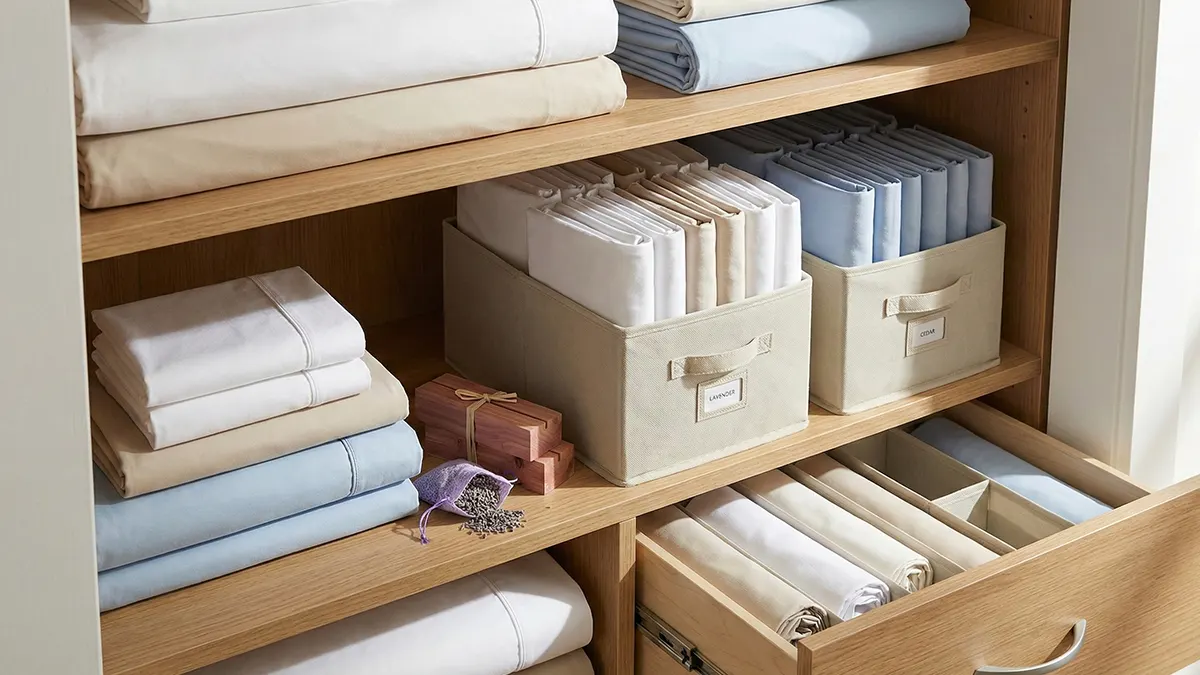
Effective bedsheet storage and folding involves mastering techniques like the ‘envelope fold’ for fitted sheets, utilizing space-saving solutions such as bins, vacuum bags, or drawer dividers, and ensuring linens are clean and dry before storage to maintain freshness and prevent wrinkles. Proper organization not only saves space but also extends the life of your bedding and makes linen changes a breeze.
- Master the ‘envelope fold’ for neat fitted sheets.
- Utilize vertical space with shelves and stackable bins.
- Store full sheet sets inside their matching pillowcases.
- Ensure linens are completely dry to prevent mildew.
- Consider vacuum bags for long-term or seasonal storage.
- Label storage containers for quick identification.
Why Proper Bedsheet Storage is Essential
Proper bedsheet storage goes beyond mere tidiness; it’s a fundamental practice for maintaining the quality and longevity of your bedding. When sheets are stored correctly, they remain fresh, free from dust and allergens, and are less prone to developing permanent creases. This attention to detail ensures that your linens are always ready for use, contributing to a more organized and serene home environment.
Beyond aesthetics, effective storage protects your investment. High-quality sheets can be a significant purchase, and improper storage, such as cramming them into tight spaces or storing them while damp, can lead to damage, discoloration, or the growth of mildew. By adopting thoughtful storage methods, you safeguard your linens from these common pitfalls, preserving their softness, color, and structural integrity over time.
Mastering the Art of Folding Bedsheets
Folding bedsheets, especially fitted ones, can seem like a daunting task, but with a few simple techniques, it becomes an effortless part of your laundry routine. The goal is to create compact, uniform bundles that are easy to store and retrieve, maximizing space and minimizing wrinkles.
Folding Fitted Sheets: The Envelope Method
The ‘envelope method’ is a popular and effective way to fold fitted sheets, transforming their elasticized edges into a neat, rectangular package. This technique ensures they lie flat and stack beautifully with other linens.
- Turn the fitted sheet inside out and place your hands into two adjacent corners.
- Bring one corner over the other, tucking the elasticized edge of the first corner into the second.
- Repeat with the remaining two corners, bringing them over and tucking them into the already combined corners. You should now have all four elasticized corners neatly nested together.
- Lay the sheet flat on a clean surface, with the elastic edges forming a curved line along one side.
- Fold the curved elastic edge inward to create a straight line, forming a long rectangle.
- Fold the sheet into thirds or quarters, depending on its size, to create a compact, flat rectangle.
Folding Flat Sheets and Pillowcases
Flat sheets and pillowcases are generally simpler to fold due to their lack of elastic. The key is to create consistent sizes that can be easily stacked or stored alongside their fitted counterparts.
- For flat sheets, lay them out lengthwise on a clean, flat surface.
- Fold the sheet in half lengthwise, then in half again.
- Fold the resulting long strip into thirds or quarters to create a neat rectangle.
- For pillowcases, lay them flat and fold them in half lengthwise, then in half again.
- They can then be folded into thirds to match the size of your folded sheets.
Innovative Bedsheet Storage and Folding Ideas for Every Home
Implementing creative bedsheet storage and folding ideas can transform cluttered linen closets into organized havens. These strategies cater to various home layouts and storage needs, ensuring your linens are always accessible and well-maintained.
Drawer Dividers and Bins
Drawer dividers and fabric bins are excellent tools for containing folded sheets and preventing them from unraveling or mixing. They create distinct compartments within drawers or shelves, allowing you to categorize sheets by size, season, or room. Opt for clear bins to easily identify contents without needing to pull everything out.
Vacuum Storage Bags
For seasonal bedding or sheets not in regular rotation, vacuum storage bags are a game-changer. These bags compress bulky items, drastically reducing their volume and protecting them from dust, moisture, and pests. They are ideal for storing duvet covers, heavy blankets, and spare sheet sets, freeing up valuable space in your linen closet.
Sheet Sets in Pillowcases
One of the most popular and effective bedsheet storage and folding ideas is to store an entire sheet set (fitted sheet, flat sheet, and one or two pillowcases) inside one of its matching pillowcases. This method keeps sets together, prevents individual pieces from getting lost, and creates a tidy, uniform package that’s easy to stack and retrieve.
Rolling vs. Folding
While folding is traditional, rolling bedsheets can also be an effective storage method, especially for smaller spaces or drawers. Rolling can minimize hard creases and make it easier to see all your linens at a glance when stored vertically. Experiment with both methods to see which works best for your specific storage solutions and sheet types.
Space-Saving Solutions for Small Linen Closets
Small linen closets often present a challenge, but with smart space-saving solutions, you can maximize every inch. The goal is to utilize vertical space and introduce organizational aids that keep items contained and accessible.
Vertical Storage
Embrace vertical storage by adding extra shelves, stackable bins, or cubbies to your linen closet. This allows you to stack items higher without them toppling over, creating more usable space. Consider adjustable shelving units to customize the height for different types of bedding.
Over-the-Door Organizers
An often-overlooked storage area is the back of a closet door. Over-the-door organizers with clear pockets or shelves can be perfect for storing smaller items like pillowcases, extra duvet covers, or even individual sheets. This keeps them visible and easily accessible without taking up prime shelf space.
Under-Bed Storage
If closet space is truly limited, look to under-bed storage solutions. Flat, wheeled containers or fabric bags designed to slide under beds can house off-season bedding or guest linens. Ensure these containers are breathable to prevent moisture buildup, especially if storing for extended periods.
Keeping Your Linens Fresh and Organized
Maintaining the freshness and organization of your stored linens is crucial for a pleasant sleeping experience. A few simple habits can make a significant difference in how your sheets look and smell when you pull them out for use.
Ensure Linens are Completely Dry
The most critical step before storing any linen is to ensure it is completely dry. Even a slight amount of moisture can lead to mildew, a musty odor, and potential fabric damage. If in doubt, air dry sheets for an extra hour or two after machine drying before folding and putting them away.
Use Scent Boosters or Sachets
To keep your stored bedsheets smelling fresh, place lavender sachets, cedar blocks, or dryer sheets between folded sets. These natural deodorizers can impart a pleasant scent and help deter pests. Ensure any scented items do not directly touch the fabric for prolonged periods to avoid potential staining.
Regular Rotation
If you have multiple sets of sheets, rotate them regularly. This not only ensures even wear but also prevents any one set from sitting in storage for too long, potentially developing a stale odor. A good practice is to use the newly laundered set and put the previously used set into storage.
Common Mistakes to Avoid When Storing Sheets
Even with the best intentions, certain practices can undermine your efforts to keep linens fresh and organized. Being aware of these common mistakes can help you avoid them and maintain the quality of your bedding.
Storing Damp Sheets
As mentioned, storing sheets that are even slightly damp is a primary cause of mildew, unpleasant odors, and fabric damage. Always double-check that linens are thoroughly dry before folding and putting them away.
Overstuffing Storage Areas
Cramming too many sheets into a small space not only makes it difficult to retrieve items but also causes excessive wrinkling and can restrict air circulation, leading to mustiness. Aim for a storage system where items can breathe and are easily accessible.
Ignoring Material Care Instructions
Different sheet materials have specific care requirements. Ignoring these can lead to damage during washing or improper storage. Always check the care labels for washing, drying, and storage recommendations, especially for delicate fabrics like silk or linen.
Special Considerations for Different Sheet Materials
The type of fabric your sheets are made from can influence the best storage practices. Understanding these nuances ensures your bedding remains in pristine condition.
Cotton and Linen
Cotton and linen sheets are durable and breathable. They benefit from being stored in breathable fabric bags or on open shelves to allow for air circulation. Avoid plastic containers for long-term storage, as they can trap moisture and lead to yellowing or mildew over time.
Silk and Satin
Silk and satin sheets are delicate and prone to snagging. Store them in individual breathable garment bags or wrapped in acid-free tissue paper to protect their delicate fibers. Keep them away from direct sunlight, which can cause fading and deterioration.
Flannel and Fleece
Flannel and fleece sheets are bulky and can attract dust. Vacuum storage bags are an excellent option for these materials, especially for off-season storage, as they compress the bulk and protect against dust and pests. Ensure they are thoroughly clean and dry before sealing.
Creating a Functional Linen Organization System
A truly effective linen organization system is one that is functional, sustainable, and tailored to your specific needs. It involves more than just folding; it’s about creating a streamlined process.
Declutter and Purge
Start by decluttering your current linen collection. Remove any worn-out, stained, or unused sheets. Keep only the sets you regularly use and enjoy. A good rule of thumb is to have two to three sets per bed: one on the bed, one in the laundry, and one in storage.
Categorize and Label
Once you’ve decluttered, categorize your sheets by bed size (twin, full, queen, king), material, or season. Use labels on shelves, bins, or drawer fronts to clearly indicate where each type of sheet belongs. This makes it easy for anyone in the household to find and put away linens.
Maintain Consistency
The key to a lasting organization system is consistency. Make it a habit to fold and store sheets immediately after they are laundered. Regularly review your system and make adjustments as your needs change. A well-maintained system ensures your linens remain fresh, accessible, and a joy to use.
Frequently Asked Questions
What are the best bedsheet storage and folding ideas for fitted sheets?
The ‘envelope method’ is highly recommended for fitted sheets. This technique involves tucking the elasticized corners into each other to create a neat, flat rectangle, which can then be folded into a compact square or rectangle for easy storage and stacking.
How can I store bedsheets without a linen closet?
If you lack a linen closet, consider alternative storage locations such as under-bed storage containers, dresser drawers, or even decorative baskets in a bedroom. Over-the-door organizers or vacuum-sealed bags can also provide space-saving solutions in other areas of your home.
What are some creative bedsheet storage ideas for small spaces?
For small spaces, utilize vertical storage with shelves or stackable bins. Storing entire sheet sets inside one of their matching pillowcases keeps them together and tidy. Rolling sheets instead of folding them can also save space in drawers or on shelves.
How do I keep my stored bedsheets smelling fresh?
Ensure sheets are completely dry before storage to prevent mustiness. Place lavender sachets, cedar blocks, or dryer sheets between folded sets. Regularly air out your storage area and rotate your linens to maintain a fresh scent.
Is it better to fold or roll bedsheets for storage?
Both folding and rolling have benefits. Folding creates neat, stackable packages, ideal for shelves. Rolling can minimize hard creases and is excellent for drawers or when storing vertically. The best method depends on your storage space and personal preference.
What are the benefits of using bedsheet storage and folding ideas?
Implementing effective bedsheet storage and folding ideas offers numerous benefits, including maximizing storage space, extending the lifespan of your linens, preventing wrinkles, and ensuring your bedding remains fresh and easily accessible whenever you need it.
Conclusion
Mastering bedsheet storage and folding ideas is a simple yet impactful way to enhance the organization and freshness of your home. By adopting techniques like the ‘envelope fold’ for fitted sheets, utilizing space-saving solutions, and ensuring proper care, you can transform your linen closet into an efficient and aesthetically pleasing space. These practices not only preserve the quality of your bedding but also streamline your household routines, making linen changes a more enjoyable task. Embrace these strategies to keep your sheets in pristine condition, ready to provide comfort and style whenever called upon.
{“@context”:”https://schema.org”,”@type”:”Article”,”headline”:”Ultimate Guide to Bedsheet Storage and Folding Ideas: Maximize Space & Keep Linens Fresh”,”mainEntityOfPage”:”https://homegeartoday.com/?p=891″,”datePublished”:”2025-12-11T07:28:39+00:00″,”dateModified”:”2025-12-11T07:28:39+00:00″}
The pillowcase method: fold the entire sheet set (flat sheet, fitted sheet, and one pillowcase) together, then store the bundle inside the remaining pillowcase. This keeps sets together, takes minimal shelf space, and keeps contents visible and accessible.
Stand holding two top corners inside out. Tuck one corner into the other, then repeat with the bottom corners. Fold the curved end into a neat rectangle, then fold into thirds. The key is using the tucks to eliminate the gathered curved corners.
Store sheets in the bedroom linen closet or in a dedicated shelf in the bedroom wardrobe for easiest access when changing bedding. Organize by bed size (king, queen, twin) in labeled sections or color-coded storage bags to quickly find the right set.
Three sets per bed is the ideal number: one on the bed, one in the wash, and one spare ready to use. This ensures you always have clean sheets available without overloading storage space with excess sets that rarely see use.
Use the pillowcase bundling method to keep sets compact. Stack by bed size with the most-used size at the front. Add a shelf riser to double available vertical space. Small ottomans or under-bed storage bags accommodate overflow sets outside the main linen closet.
